Chronicle Editor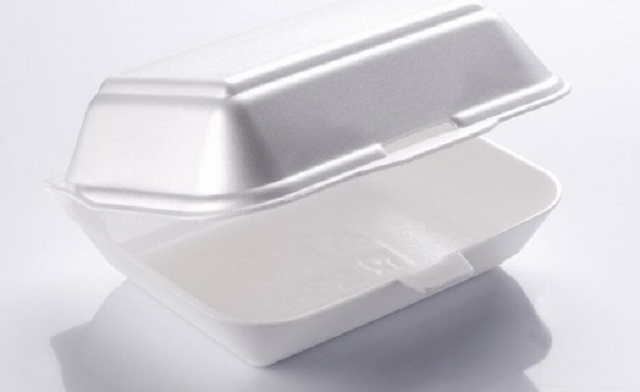
Christopher Farai Charamba
The ban on expanded polystyrene, commonly known as kaylite, came into effect last week. The Environment Management Agency (EMA) saw fit to activate Statutory Instrument 84 of 2012, Environmental Management (Plastic Packaging and Plastic bottles) (Amendment) Regulations, after both the environmental and health risks were considered.
Reacting to the ban, retailers, particularly in the food industry panicked.
Many did not see this ban coming and had already stocked up on kaylite packaging.
EMA has given manufacturers, retailers and users of kaylite a three-month reprieve to wind up their operations and switch to alternatives.
But some of the members in the industry have bemoaned that this is not enough time. Mai Chipo who sells lunches from the boot of her car along Angwa said when the ban came she had already stocked up on enough kaylite packaging to last till December.
“A few weeks ago I ordered my kaylite packaging to last me till the end of the year. I sell about 30 lunches a day on average and had purchased the kaylites in bulk this time around.
“When the ban came last week I was so unprepared and stressed. I do not know what I am going to do with the over 3 000 kaylilte packages that I have in my possession.
“Now I must either sell more than my usual orders to get rid of the stock I have or just incur a loss because no one is going to buy kaylite anymore,” she said.
According to Mai Chipo she is not sure what alternatives she can turn.
“The food I sell is hot and has soups with it. I can’t put those things in cardboard or paper boxes. I will contact my supplier of kaylite and see what they have on offer but I know that it will likely be more expensive and will eat into the little profit I already make.
“I get my kaylites at 10c per box. I can only imagine that plastic containers are going to be a lot more than that. I just hope that I can find something within the next three months otherwise I will be out of business,” she said.
Mai Chipo is not the only one struggling with what to do in terms of alternatives. Many fast food outlets in the City Centre, particularly those that sell sadza and stews, are still using kaylite packaging during this reprieve period.
In terms of alternatives only the major retailers and bigger fast food chains have started to make some changes.
Pick n Pay has moved to using hard plastic packaging for their hot foods, Steers and Chicken Slice have swapped to cardboard and paper packaging for their fast food items.
But for many the question on sustainable alternatives still remains. Ones that are good for the environment, people’s health and are also cost effective.
Moldon Total Food Service Solutions in Harare offers a wide variety of food packaging options.
They too have been affected though by the ban of kaylite as they no longer have anyone to offload the stock they currently have.
“There is a long list of alternatives to kaylite that we supply including clear plastic that folds over which comes in different sizes as well,” said Pat a sales and marketing representative at the company.
The company’s catalogue available on their website lists the different options and the prices at which they are available.
Greaseproof hot dog bags cost $17.95 for 1 000, medium size meal boxes cost $27.26 for 100, 750ml clear plastic containers cost $13.74 for 100, a two-division foil container costs $24.04 for 100, 250ml clear round folder-over containers cost $29.95 for 250.
These options however are a lot pricier than the kaylite options sold by the same company. A two-division kaylite container for example costs $19.25 for 300, which is 18c cheaper per container than the similar foil container.
Other alternatives to kaylite that suppliers can explore include sugarcane pulp packaging. This packaging is made from bagasse, a natural by-product of sugarcane processing which is not only made from plant based renewable resources, but is also compostable and biodegradable.
A basic online search shows that to import from China it costs 5c-7c per container with a minimum number of containers that one is allowed to purchase.
Once one factors in shipping and duty costs however, the price of one container is likely to shoot up well above the 7c initial price.
Zimbabwe however is blessed to have a sugarcane producing region and this is one of by-products that can be explored.
According to Senior lecturer at the National University of Science and Technology Busiso Mtunzi currently the bagasse produced during the milling season is used for the generation of electricity.
“(The) Bagasse is usually combusted as in boilers to generate steam for downstream processes, this results in the combined use of managing the waste and utilisation of bagasse as fuel,” he said.
In his research on “Bagasse-based co-generation at Hippo Valley Estates sugar factory in Zimbabwe” he found the plant “operated under conditions where excess bagasse caused operational problems of storage and handling and as a result bagasse was burnt inefficiently.”
Excess bagasse could therefore be used to produce paper products and food packaging.
Green Fuel is a renewable energy company operating in Zimbabwe. According to Aleck who works at the plant in Chisumbanje they too use bagasse as an alternative energy source.
“Bagasse is the solid stuff from sugarcane. Currently we burn it and use it to make steam as an alternative to coal but we don’t make any products from it,” he said.
One of the by-products of bagasse listed on the Green Fuel website is paper and with the current demand for packaging especially in the food industry it might be prudent for players in the manufacturing industry to look into the production of bagasse packaging.
Not only with this alleviate the pressure felt by the kaylite ban but it would also create jobs, and be great for value addition to produce in Zimbabwe.



 Online Reporter