Online Reporter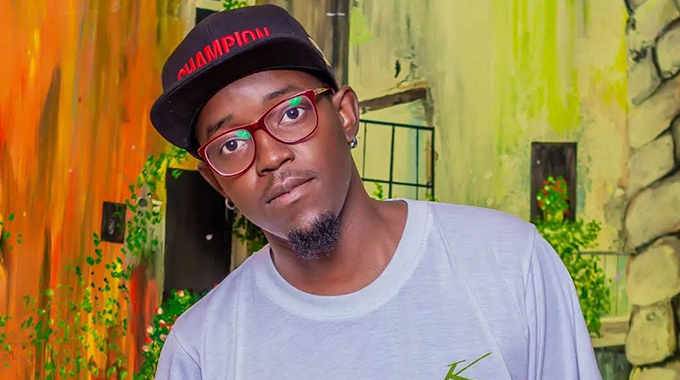
Langelihle Dube, [email protected]
Banele Thabiso Mbuya, popularly known as DJ Kead Wikead, is a product of Mpopoma South whose journey from the township streets to the decks has become a masterclass in longevity.
Having attended Marist Brothers High in Dete and later Gloag High School, he has spent the past 20 years navigating and conquering one of the most unpredictable industries.
In a city where nightclubs rise and fall overnight, and trends disappear just as quickly, DJ Kead Wikead has done the near-impossible: remain relevant, grounded, and in tune with his roots.
More than a survivor of the nightlife, he has helped shape it. From humble block parties to the high-stakes arena of hosting international stars, his story is a masterclass in adaptation.
The story of Kead Wikead does not begin with a lucky break or a viral moment. It begins with a choice that many would have considered reckless. By 2007, the economic landscape in Zimbabwe was challenging, and the arts were seen by many as a luxury rather than a livelihood. But for Kead Wikead, the pull of the decks was too strong to ignore.
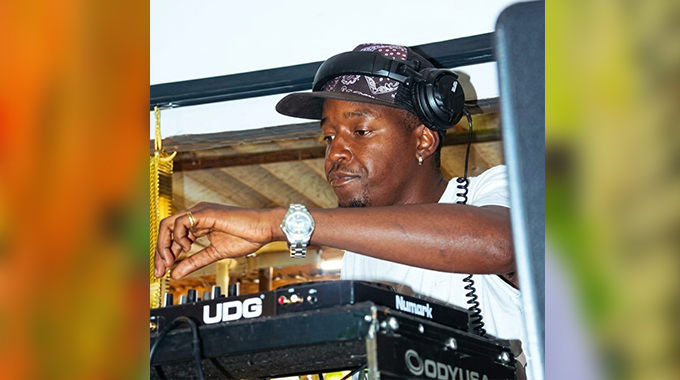
“My first time on a mixer? Hard to recall. But I knew this was my path in 2007, when I took up the residency at Visions Nightclub. It was this or nothing,” he said.
That residency at Visions, one of the city’s hottest clubs at the time, lasted until 2008, after which he moved to the decks at Brass Monkey before a brief stint across the border in South Africa. By mid-2009, he was back in Bulawayo, reclaiming his spot at Kudu Bar.
That “this or nothing” mentality has sustained him through two decades of constant change in the nightlife scene.
While some artistes search the glossy pages of international magazines for guidance, Kead Wikead looked to the streets of his own neighbourhood and the lessons learnt in school. Without celebrity mentors or elite academies, he drew his education from the local legends and the guys on his block, those who understood the unique, often gritty musical identity of Bulawayo.
He credits figures like Chango and the late Mellow T for laying the foundational “gold” he still relies on every time he steps behind the decks. These were not complex theories, but simple, disciplined practices: knowing every track in your collection, mastering the tempo, and keeping an orderly library. In today’s world of DJing, where software handles much of the work, Kead Wikead’s dedication to these fundamentals is what earns him the reputation of a true “DJ’s DJ”.
Many people assume being a DJ is just about playing the hits. But watching Kead Wikead in action reveals it is more akin to being a psychologist. He is not chasing the obvious reactions; he is reading the room, searching for the “unseen” connections that make a crowd move as one.
“The number one rule has always been to play the music people don’t yet know they want to hear, and the songs they’ve forgotten they love. It’s a subtle art, requiring the humility to serve the crowd while having the confidence to guide them into sounds they might initially resist.”
Kead Wikead began in the world of hip-hop, a culture notoriously protective of its “purity”, and has occasionally faced whispers that he abandoned his roots for the commercial appeal of House and Gqom. But he dismisses the notion of being a purist. To him, professionalism means loving all music, not just one corner of it.
“I never started as a purist. I just loved music. Like any musician, I followed the origins of each genre and its growth in the city and country. I’m simply a DJ who loves all types of music. The line between professionalism and predictability is so blurred that I don’t even know where its centre lies.”
For Kead Wikead, the true mark of an artiste is the ability to weave a commercial set that still retains “soul”. He does not see it as selling out; it is about mastering his library. If he can introduce a new sound amid a mainstream set, he knows he has done his job.
His technical curiosity soon extended beyond the DJ booth into production. Through Krafted Ideas, a creative outlet he founded, Kead Wikead began crafting his own stories rather than spinning others’. While many struggle to move from DJing to producing, Kead Wikead finds the two roles naturally complement each other.
“Krafted Ideas is a whole different world from DJing. Headphones are essential, anyone who’s tried jamming without a set knows it’s almost impossible to do what I do.”
Ask anyone about the “golden era” of recent Bulawayo nightlife, and they will point to the Cecil Hotel. Between 2016 and 2018, Kead Wikead was the face of the now-defunct Club Connect, a venue at the hotel that felt truly international. The upmarket club was a powerhouse in the local entertainment scene. It was not just about drawing a crowd; it was about setting a standard of excellence. During his stint there, Kead Wikead shared the stage with South
African heavyweights such as Distruction Boyz, DJ Tira, and Zodwa Wabantu.
This period cemented his reputation as a powerhouse, but also sparked a familiar Bulawayo debate: why don’t our legends stay? In an industry where the expectation is to move to Harare or South Africa to “make it”, Kead Wikead chose to remain loyal to the city that raised him.
“I considered relocating at one point or another, but the city kept giving me opportunities to do what I love, my way. The sky has never been a limit; it’s just another dance floor.”
This loyalty is why stars like Kotwane Hikwa, the current “King of the City”, hold him in such high regard. Being called an OG by the new generation is a rare honour in an industry that often chews up its elders. Kead Wikead is humbled by the recognition, noting that he has watched Kotwane’s rise from the start and deeply respects the talent emerging behind him.
The “All-Star” life may look glamorous from the outside, but a DJ’s reality is often disciplined and solitary. While the city celebrates, Kead Wikead is working, a sacrifice that has shaped his adult life.
“I’ve missed almost 20 years of holidays with my family — Easter, Christmas, Heroes Day, and New Year. I had a day job once, but as gigs piled up, I had to quit to focus on music.”
This level of dedication is what allows him to maintain the brand, but he is very careful to separate the persona from the person. When the club lights go up and the speakers go silent, Kead Wikead does not exist. There is only Banele.
“Does the music ever stop? I tell myself I’m ‘Kead Wikead,’ not just a brand. When the name gets loud, I pause and remind myself how blessed I am to be here.”
Looking ahead, Kead Wikead is not chasing monuments or grand gestures. His focus is on raising the profile of Bulawayo’s DJ scene, ensuring it is treated with the professional respect it deserves. He mentors young DJs, emphasising that raw drive is valuable but incomplete without the “manual” of the old school. Too often, the next generation overlooks the wisdom of veterans, missing essential lessons like beat counting, flow, and “breathing” the dance floor. Kead Wikead sees himself in them, but hopes they learn to value the craft as much as the fame.
“I’m not after a legacy. I’d be proud if my work helps push the DJ industry in Bulawayo and beyond forward,” he said.