Online Reporter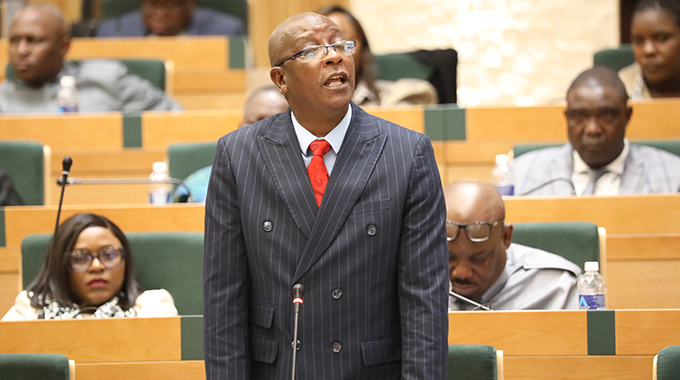
Farirai Machivenyika, Senior Reporter
PARLIAMENT wants to be consulted before the appointment of an additional 10 senators envisaged by the Constitution of Zimbabwe Amendment Bill (No. 3), while the Zimbabwe Gender Commission (ZGC) will be retained, among revisions that were made during last week’s debate in the National Assembly.
CAB3 was passed overwhelmingly after securing 216 votes in the National Assembly, comfortably surpassing the 187 votes required for a two-thirds majority. Forty-two legislators voted against the Bill.
The outcome reflected significant cross-party support, with at least 35 opposition MPs joining ZANU PF legislators in backing the amendments.
One of the most significant changes was the reversal of a proposal to abolish the ZGC and merge its functions with the Zimbabwe Human Rights Commission.
The move followed sustained lobbying by legislators, who argued that the commission should remain an independent constitutional body dedicated to promoting gender equality and women’s rights. A provision in the Bill relating to the appointment of senators was also amended.
Under the revised clause, the President will appoint 10 senators on the basis of professional skills and competencies, but only after consultation with Parliament.
Justice, Legal and Parliamentary Affairs Minister Ziyambi Ziyambi accepted the proposal from Bulawayo North legislator Minenhle Gumede.
“Honourable chair, I listened carefully to Honourable Gumede’s contribution. I agree with ‘after consultation with Parliament’, but I want the number, 10, to be there.
“So, I think her proposal makes sense and I propose that Clause 8(e) be amended to read that ‘10 (senators) appointed by the President chosen for their professional skills and other competencies after consultation with Parliament’,” he said.
However, Minister Ziyambi rejected proposals that the appointed senators should not have voting rights.
“We cannot say these are non-voting because these are not Executive appointments to ministries. These are MPs to execute their duties within Parliament the same as what proportional representation MPs and youth quota do.
“They are full MPs with full voting rights, bringing in whatever expectations the President would have identified as necessary for the proper legislative function of both Houses.”
Another amendment corrected a provision that would have required a designated judge to preside over the election of a President in Parliament, with that responsibility remaining with the Zimbabwe Electoral Commission.
“Honourable chair, I am proposing to maintain Clause 3 as it is a typo that happened when we sent the Bill to the printers on sub clause 5, so that it just reads, ‘the Zimbabwe Electoral Commission shall preside over the election and the procedure and remove any designated judge’. That is what I am proposing,” said Minister Ziyambi.
The Bill was also amended to provide for the establishment of the office of President of the Supreme Court.
“I am proposing the insertion of a new Clause after 13. This is basically to clean up issues to do with our Judiciary.
“We have a Judge President and the proposal is that we must also have the president of the Supreme Court and other judges of the Supreme Court,” Minister Ziyambi said.
Further judicial reforms include allowing suitably qualified legal practitioners, and not only retired judges, to serve as acting judges, as is being done in South Africa.
Changes were also made to the proposed Zimbabwe Delimitation Commission, whose board will now include a demographer, a cartographer and a representative of the Zimbabwe Chiefs Council.
The House further approved amendments extending the population census cycle from 10 years to 14 years.
Lawmakers also retained “upholding the Constitution” as one of the functions of the defence forces after Government accepted proposals from opposition legislators to restore the provision.
The revised clause reads: “Functions of the defence forces and then we start by saying, subject to Sections 207 and 208, the function of the defence forces is to protect Zimbabwe, its people, its national security, interests, its territorial integrity and to uphold the Constitution.
“You know, Chapter 11 is about security forces, and Section 207 lists them and what they are supposed to do. In Section 207(2), it says that the security forces are subject to the authority of this Constitution, the President and Cabinet, and are subject to parliamentary oversight.
“It is a stand-alone section that was not speaking to the other two. So, what I am proposing is that in doing the upholding function which we all do, we take an oath here in Parliament to uphold the Constitution, that must be done subject to this section, which is the general section of the security sector and Section 208 on conduct of the security sector,” said Minister Ziyambi.
The Bill was also amended to align the tenure of the National and Provincial Assemblies of Chiefs with the proposed extension of the electoral cycle from five to seven years.
CAB3 will be heading to the Senate for debate this week.