Online Reporter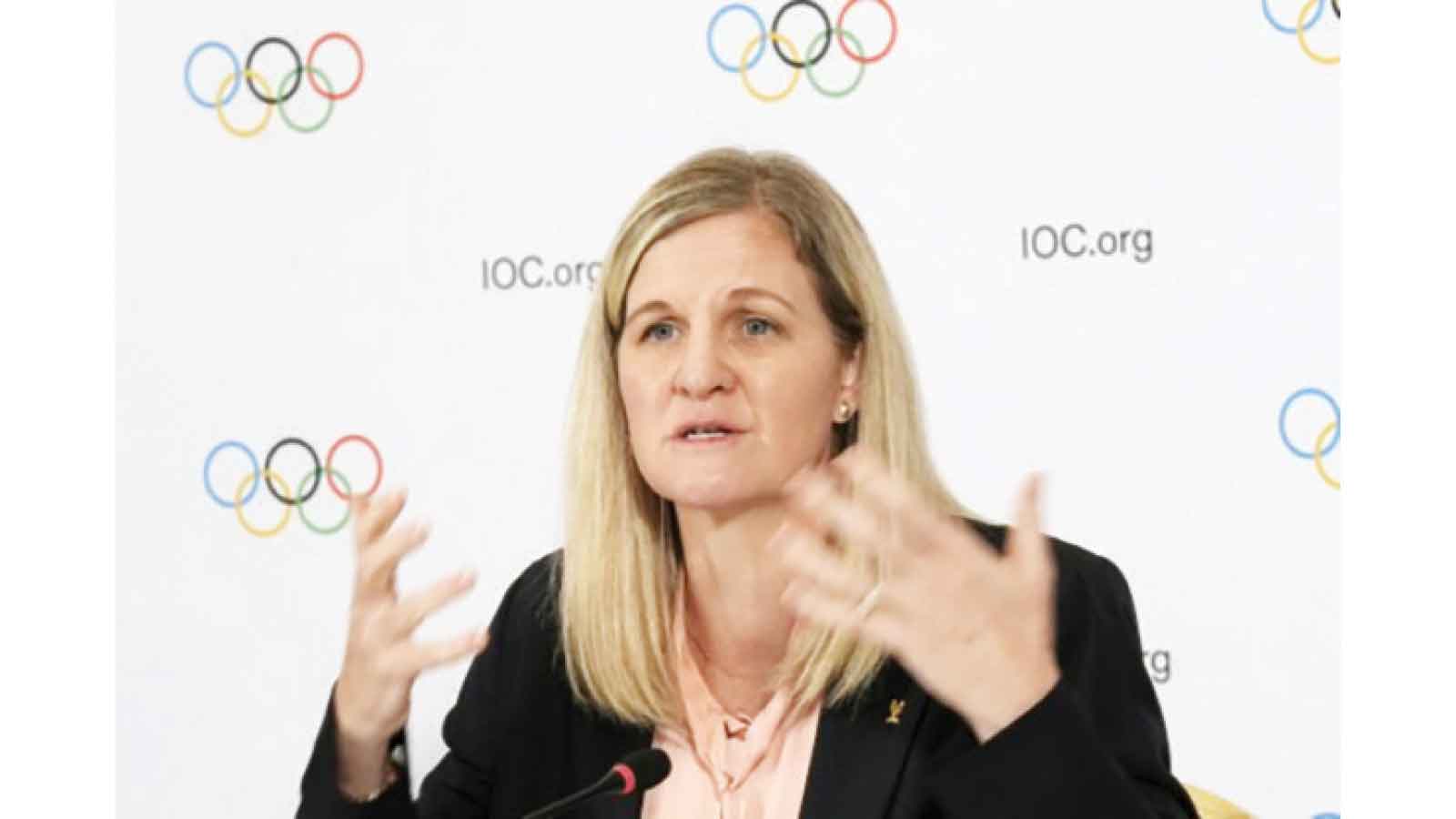
BEYOND the landscape of emotions painted this week by the lighting of the Olympic Flame in Olympia, the ceremony also featured a hopeful moment led by the president of the International Olympic Committee, Kirsty Coventry, who left open the possibility that Russian athletes could compete in the upcoming Winter Games.
Just over two months before the cauldron lights up San Siro stadium to officially inaugurate the multi-sport event, the IOC has once again shown signs of what its short-term stance might be regarding Russia’s presence on Olympic soil, a topic that seems endless and continues to be fuelled by the war between Russia and Ukraine.
Since the conflict erupted, the IOC has only allowed Russian athletes to compete at the Olympic level individually and under neutral status.
However, floating in the air, remote as it may seem, is the possibility that the Eurasian country could return to competing under its flag and national symbols if a peace agreement is reached in the ongoing negotiations.
Milano Cortina 2026 could be the perfect stage for Russia’s comeback, and the news channel Euronews asked Coventry about this, to which she responded that “we will have to wait and see what happens.”
The Zimbabwean leader’s comment did not go unnoticed among sports analysts, who interpret her words as a sign of openness, albeit heavily conditioned by external factors.
The likelihood of Russia regaining its identity at the Games remains small, but the fact that the IOC does not completely rule it out fuels the debate about the role of sport in times of conflict.
Meanwhile, international federations remain watchful, aware that any shift in the geopolitical situation could alter the competitive landscape.
Far from this tone of optimism, in statements to CNN Sports, Ukraine’s Minister of Youth and Sports Matviy Bidnyi said it is “too early” to talk about the possibility of seeing Russian and Belarusian athletes participating under their nations’ flags at next year’s Winter Games, especially when peace talks to end the war are still ongoing.
“We (Ukraine) have a lot of issues with the preparation to competition. We have a lot of killed coaches and athletes, we have had a lot of losses because of the war, because of Russia. I think we are too far from the final position where we can say that justice was achieved,” Bidnyi told CNN.
The minister believes negotiations for the reintegration of Russian and Belarusian athletes should only take place if a strong ceasefire is agreed and implemented. “Everybody should understand the war is not politics, the war is a crime.”
In an international scenario eroded by polarisation, the United Nations last week sealed an Olympic Truce in New York for Milano Cortina.
The resolution was adopted by consensus and calls for a pause aimed at preventing geopolitical conflicts from affecting the 2026 Games, a decision driven by diplomacy and the joint efforts of Italy and the IOC. Coventry warned in her speech that “Around the world, conflict and division continue to cause untold suffering,” and argued that sport creates an exceptional space where people can meet as equals.
“When athletes come together, they do not see nationality, religion or background. They see one an-other as fellow athletes,” she stated, presenting the Olympic Truce as “a call to set aside what divides us — and rather to focus on what unites us.”
With this starting point, Coventry used the flame-lighting ceremony in Olympia to underline the significance of the Olympic Truce.
“In a world as divided as the one we live in today, the Games play a truly emblematic role, and it is our duty to ensure that athletes from all over the world can gather peacefully. The Olympic Games will al-ways exist to pull down the walls raised in our path.”
Her remarks highlighted the role of the Games in a global context marked by ongoing conflicts.
IOC president described it as “the true Olympic spirit” and said that “Athletes live the values that unite us.
They show us the best of humanity, where there is no discrimination on the playing field. That spirit can only flourish when all eligible athletes, teams and officials can participate and can inspire the dreams and the hopes of those watching them around the world.”
As the Olympic torch begins its journey to Italy, where it will travel through all regions before reaching Milan on February 6, the narrative accompanying the next Games is already taking shape: an event that aspires to be a refuge from global division, yet at the same time must navigate diplomatic tensions, demands for justice, political pressures and a complex international chessboard that conditions every step. — insidethegames.com.