Online Reporter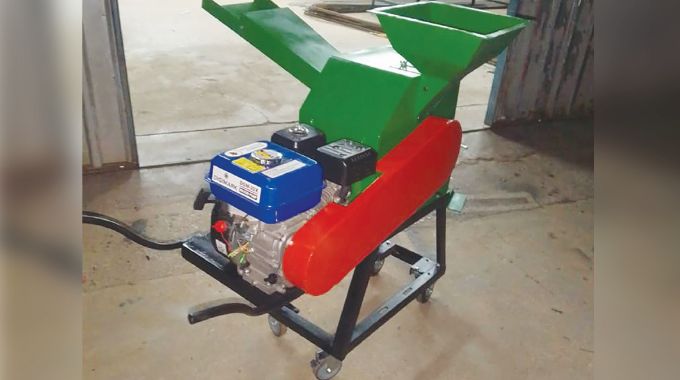
Patrick Chitumba, [email protected]
A KWEKWE Polytechnic student has developed a portable grinding mill that is set to transform grain processing for communities across Zimbabwe. The innovative mill, mounted on wheels, can be easily transported to different locations, removing the need for fixed milling infrastructure.
The invention aligns with the Education 5.0 model. Running on diesel, the portable mill provides a dependable alternative for rural communities where electricity supply is often unreliable.
Kwekwe Polytechnic is positioning itself as a key driver of the country’s industrialisation agenda, advancing agro processing technologies, recycling machinery and smart ICT solutions in line with Vision 2030.
Last year, the college generated revenue through diversified income streams, with funds directed towards infrastructure upgrades, staff retention and strengthening innovation hubs, in line with Government’s push for higher learning institutions to become self-sustaining.
The institution’s commercialisation initiatives came under the spotlight this week during a visit by the Minister of Higher and Tertiary Education, Innovation, Science and Technology Development, Dr Frederick Shava, who toured innovation hubs and community focused projects at the Kwekwe campus.
Kwekwe Polytechnic media and publicity officer, Mr Bruno Shora, said the college is advancing Education 5.0 as a transformative tool for communities.
“We are not only creating jobs, but also providing a much-needed service that will improve the lives of many people. The college has been working tirelessly to promote entrepreneurship and job creation, in line with Vision 2030,” he said.
Mr Shora said the portable grinding mill is one of several ongoing projects aimed at empowering students with practical skills for the modern economy.
“We are proud of our students for thinking outside the box and coming up with solutions to real-world problems. This is what Education 5.0 is all about – innovation, job creation, and making a difference in our communities,” he said.
“In fact, as its name suggests, Gayazvose, the 4 in 1 silage making machine, is also capable of preparing stockfeed of varying granules according to the customers’ needs. So instead of having many different machines for maize meal and stock feed, this one combines them all.”
Mr Shora said relevant documents had been filed with the patents office as part of the process to secure Intellectual Property Rights Protection.
“This innovation was done during the course of the year 2025 by one of our students, Godwin Rusike. Due to limited resources, we have been doing as per order, but we have now put in place mechanisms and a partnership with industry, which should see the production of more of these units on a large and commercial scale,” he said.
Mr Shora said students had also designed a mobile Pfumvudza/Intwasa hole digger based on engine powered rotary drilling to create planting holes efficiently.
“A small petrol engine drives a rotating auger through a shaft system. As the machine moves across the field, the auger drills holes into the soil to the required diameter. The frame and guide system ensures accurate alignment, automatically marking the correct in-row and inter-row spacing for Pfumvudza planting.”
Mr Shora said a depth control mechanism stops the auger once the required hole depth is reached.
“This machine reduces physical strain on farmers, improves planting precision, and increases the speed and efficiency of land preparation for conservation agriculture practices,” he said.
Kwekwe Polytechnic engineer, Godwin Tamuka Rusike, said the polytechnic is developing practical technologies tailored to the needs of local industry and rural communities, from agricultural value addition to waste recycling systems.
“Plastic is non-biodegradable, and this recycling machine was requested by the Gokwe-Nembudziya community. Most machines are not tailor-made for Africa, but this one is simple, affordable and efficient for our local communities. Anyone can operate it,” he said.
College principal Mr Evans Musara said the projects are grounded in the Education 5.0 framework, which integrates teaching, research, innovation, industrialisation and community service.
“We have embraced Education 5.0 to develop solutions for the needs of communities and the economic development of the country,” he noted.
During the tour, Dr Shava praised the institution’s commitment to rural industrialisation.
“The Ministry applauds your leadership in championing rural industrialisation. I urge you to expedite rural-focused programmes in agro-processing, renewable energy and mineral exploration, which are critical pillars of the National Development Strategy 2. The Ministry stands ready to support you,” he said.
Dr Shava also acknowledged Kwekwe Polytechnic’s achievement in winning the 2025 Multi-purpose Wheelchair Presidential Innovation Award.
The institution has incorporated artificial intelligence and advanced ICT tools into its curriculum to produce graduates who are globally competitive. It is also implementing the Inclusive Education Policy, including assistive technologies and a “work for fees” programme.