Chronicle Editor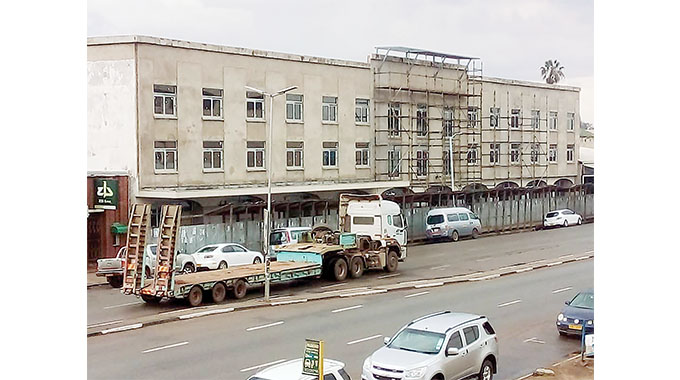
Michael Magoronga, Midlands Correspondent
THE quality of infrastructure in an economy is a measure of the quality of life of the citizens in a country while the amount of a nation’s infrastructure and worth have an important bearing on sustainable long-term economic growth.
In Zimbabwe however, infrastructure development in towns and cities has been poor with old, derelict buildings standing tall and crying out for refurbishment and revamping in line with the smart city concept and as the nation strains for an upper-middle income economy by 2030.
Little points to that, at least if one takes a look at the level of infrastructure growth and general cleanliness in the country’s towns and cities.
In Kwekwe like any other town in the country there are a number of buildings that are an eyesore and do not speak to modernity.
A traveller cannot fail to notice some of the centrally positioned buildings in the mining town’s central business district (CBD) such as Shamwari Hotel along the Bulawayo-Harare Highway that has been closed for a number of years with snail-paced action that doesn’t suggest the urgency or appetite to open the hotel.
One cannot help but see safety barricades and scaffolds usually associated with construction works at a number of buildings.
The barricades are meant to caution and protect people going about their business from being injured in the construction or refurbishment process.
The barricading tape has been there for the past decade or so leaving people wondering when the refurbishment at one of the once popular hotels in Zimbabwe will be completed.
The hotel was reportedly purchased by a Harare-based business tycoon who is said to have purchased almost half of the mining town including lodges and a garage where fuel has reportedly been stocked underneath for years.
But ever since taking over most of the buildings, a number of them have been closed allegedly for renovations while others have turned into an eyesore.
Some of the abandoned buildings are literally ‘decaying’ and have become havens for those who are into various illegalities and to the mining town’s destitutes and vagabonds.
Kwekwe Town Clerk, Dr Lucia Mnkandla described the buying and locking of premises and buildings in the city by businesspeople as anti-development.
She said people were in need of space to work and the closed buildings could be used to accommodate them.
“As Kwekwe City Council, we are not happy about the state of some of the buildings in the city that were bought by individuals and corporates. Whilst they are busy acquiring properties, it is important that they expeditiously work on them and avail people with working space, let alone maintain or spruce them up in line with smart cities and urban renewal concept.
“They should ensure that their actions do not militate against our efforts to spruce up the city, and give it a new image that a smart ambience attractive to investors,” said Dr Mnkandla.
The issue was raised recently during a business development meeting in Kwekwe, where members of the business community complained about the lack of activity at some of the city’s buildings.
Responding to the concerns raised during the meeting, Director of Works, Engineer John Mhike agreed that the state of some buildings were painting a bad picture of the city.
He said they were engaging the owners of the buildings to ensure they look after them better.
“It is true we have also noted with concern the state of affairs at such buildings and we have engaged the property owners. They have promised to speed up the refurbishments at Shamwari Hotel. We are also going to make follow-ups on other buildings that have been bought and are now owned by individuals and try to find a way to agree going forward,” said Eng Mhike.
This comes as the City of Kwekwe is making significant strides in line with the urban renewal concept where some new buildings are being constructed in most parts of the town.
The local authority has also embarked on a drive to refurbish key infrastructure around the city and has ordered building owners to do the same.
The Second Republic ushered in the smart cities and urban renewal concepts as it seeks to spruce up infrastructure and ensure construction of state-of-the-art buildings that are up to date as a way of improving people’s lives and luring investors.
Zimbabwe has for the past two decades been marred by economic challenges, which led to difficulties in ensuring the continuous rehabilitation and maintenance of infrastructure including expansion of critical areas.
This has at least according to NDS1 resulted in Zimbabwe being ranked number 127 out of 138 countries in the Infrastructure Index under the 2017-2018 World Economic Forum Global Competitiveness Report.
The decline in the infrastructure stemmed from numerous factors, including but not limited to – inadequate levels of public expenditure for routine and periodic maintenance including maintenance and rehabilitation of the infrastructure networks, lack of an integrated approach in infrastructure investment planning compounded by substantial loss of skills.
They also include lack of progress in building institutional capacities for management and regulation of the basic services and low investment in infrastructure by both public and private sectors.
Under the Second Republic however, a lot of strides have been made in the area of infrastructure development with roads and bridges being constructed in many parts of the country. However, there has been a yawning gap with local authorities failing to replicate what the central government is doing.
Calls are however growing louder for towns and cities to ensure they move with the vision of having an upper-middle-income economy by 2030 as espoused in NDS1.



 Online Reporter