Online Reporter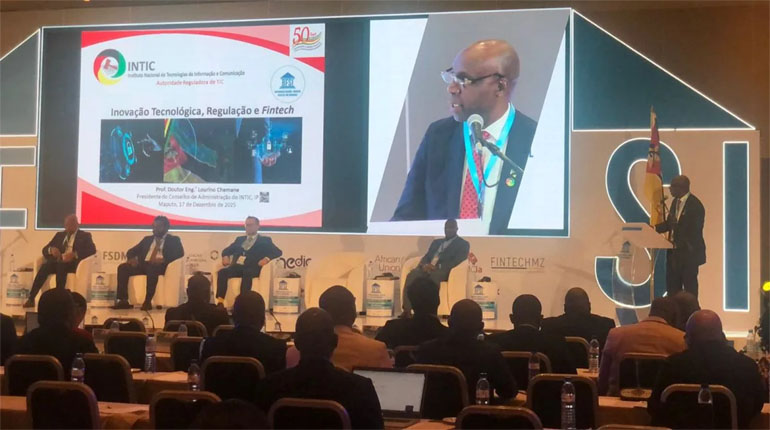
Dr Evans Sagomba
Everything AI
THERE are moments when a neighbour’s bold decision should stir us from complacency.
Mozambique has just made such a move by establishing its National Commission for Artificial Intelligence (CNIA).
This is not a token gesture, but a serious institutional framework designed to guide the country through the ethical, legal, and economic challenges posed by AI.
For Zimbabwe, with its proud tradition of education and innovation, this should be a wake up call. The Ministry of Information, Communication Technology and Courier Services must seize this moment and urgently set up a National Commission for Artificial Intelligence to ensure that our nation does not fall behind in shaping the future.
Artificial Intelligence is no longer confined to distant laboratories in Silicon Valley. It is already influencing how we work, learn, and govern. Mozambique’s CNIA is structured to ensure that this powerful technology is harnessed responsibly and strategically.
Zimbabwe must do the same, and do it now, before the tide of technology sweeps past us.
Mozambique’s commission reports directly to the Council of Ministers and carries a broad mandate: advising on ethics, law, security, education, and the labour market.
It prepares opinions on policies, strategies, and action plans, while monitoring international recommendations and guiding investment in AI programmes.
In short, it is a compass for a nation navigating uncharted waters.
Zimbabwe should take this as a clear signal.
If our neighbour is already building frameworks to manage AI’s impact on jobs, education, and governance, then we must recognise that the same challenges are pressing at our door. The digital tide does not respect borders; it transforms societies whether governments are ready or not.
The urgency for Zimbabwe lies in three critical areas. First, the workforce. AI is already automating tasks in banking, agriculture, and health. Without a clear strategy, jobs will vanish without replacement, leaving workers stranded. A commission can advise on retraining, workforce adaptation, and the creation of new opportunities.
Second, ethics and law. AI raises profound questions about privacy, accountability, and fairness. Who is responsible when an algorithm makes a harmful decision? How do we protect citizens from misuse of data? These are not abstract puzzles but urgent realities.
Third, education and research. Zimbabwe’s universities must be supported to develop expertise in AI. Without national coordination, efforts will remain scattered and underfunded. A commission can guide investment, establish centres of excellence, and ensure that our students are prepared for the future.
Mozambique’s CNIA is chaired by the minister responsible for information and communication technologies, with defence and education ministers as vice chairs.
This signals that AI is, not just a technical matter, but a national priority touching security and education. Zimbabwe should adopt a similar model. Our commission must be anchored in Government, but include voices from academia, civil society, and the private sector. Only then will it reflect the full spectrum of national interests. The remit must be broad: advising on policies, monitoring international standards, guiding investment, and promoting cooperation with allies. AI touches agriculture, health, finance, education, and defence. A commission must therefore be empowered to advise across sectors, ensuring coherence and avoiding duplication.
The regional dimension is equally important. Southern Africa cannot afford fragmented approaches to AI. If Mozambique builds frameworks while Zimbabwe hesitates, we risk divergence that weakens regional cooperation.
Investors will favour the country with clarity and stability. Zimbabwe must therefore act, not only for its own sake, but to strengthen regional integration. International partners are watching too.
Donors, investors, and allies want to see African countries taking AI seriously. Mozambique’s commission will attract attention and support. Zimbabwe must not be left out of these opportunities. A commission will signal seriousness, readiness, and commitment to responsible innovation.Ethics and law deserve special emphasis. AI can be a force for good, but it can also entrench inequality and erode rights.
Without oversight, algorithms can discriminate, data can be misused, and citizens can be left vulnerable.
Mozambique has recognised this and placed ethics at the heart of its commission’s mandate. Zimbabwe must do the same. We cannot wait for scandals or crises before acting.
Proactive regulation is always better than reactive damage control. Law is equally urgent. AI challenges traditional legal frameworks. Issues of liability, intellectual property, and data protection require fresh thinking.
A commission can prepare opinions on proposed laws, ensuring that they are fit for purpose. Without such guidance, legislation will lag behind technology, leaving gaps that harm citizens and businesses alike.
The workforce challenge is pressing. AI will reshape the labour market. Some jobs will disappear, others will change, and new ones will emerge. Mozambique’s CNIA will advise on workforce training and adaptation. Zimbabwe must follow suit. Our workers need guidance, retraining, and support.
A commission can prepare strategies for vocational training, university curricula, and lifelong learning. Consider agriculture, a cornerstone of our economy. AI can optimise planting, monitor crops, and predict yields. But farmers need training to use these tools. A commission can design programmes that bridge the gap between technology and practice. The same applies to health, finance, and education. Workforce adaptation is not optional; it is essential.Education and research are equally vital. Zimbabwe’s universities are full of talent, but talent needs support.
Mozambique’s commission will advise on establishing research institutions and centres of excellence. Zimbabwe should do the same.
A commission can guide investment, coordinate efforts, and ensure that our universities are connected to global networks. This is how we build capacity, attract funding, and prepare students for the future. Education is not just about universities.
Schools must also prepare students for a world shaped by AI. A commission can advise on curricula, teacher training, and resources. Without this, our education system will remain rooted in the past while the world moves ahead.
International cooperation is another frontier. Mozambique’s CNIA will prepare opinions on opportunities for collaboration. Zimbabwe must not be left behind. AI is global. Standards, regulations, and innovations cross borders. A commission can ensure that Zimbabwe participates in these conversations, aligns with international norms, and benefits from partnerships. Without this, we risk isolation and irrelevance. Investment and innovation also require guidance.
Mozambique’s commission will advise on funding strategic programmes. Zimbabwe must do the same. A commission can identify priorities, guide investors, and ensure that funds are used effectively. This is how we build innovation ecosystems, support start ups, and attract international partners. Without guidance, investment will be scattered and ineffective.
Mozambique has acted. Zimbabwe must not delay. The Ministry of Information, Communication Technology, Postal and Courier Services should urgently establish a National Commission for Artificial Intelligence.
This commission must advise on ethics, law, workforce, education, research, cooperation, and investment. It must be inclusive, authoritative, and proactive. The future will not wait. If we hesitate, we will be left behind. If we act, we can shape AI to serve our people, our economy, and our nation. The urgency is real, the opportunity immense, and the choice ours. Zimbabwe must follow Mozambique’s footprint and establish its own commission now, before the tide of technology sweeps past us.
Dr Evans Sagomba is a Doctor of Philosophy and Chartered Marketer (CMktr, FCIM) with an MPhil and PhD in Philosophy. He specialises in AI, Ethics, and Policy Research, and is an AI Governance and Policy Consultant. Master’s and PhD supervisor. AI Ethics and Governance Lecturer. [email protected]; Social media handles; LinkedIn; @ Dr. Evans Sagomba (MSc Marketing) (FCIM)(MPhil) (PhD) X: @esagomba