

 dyton mupawaenda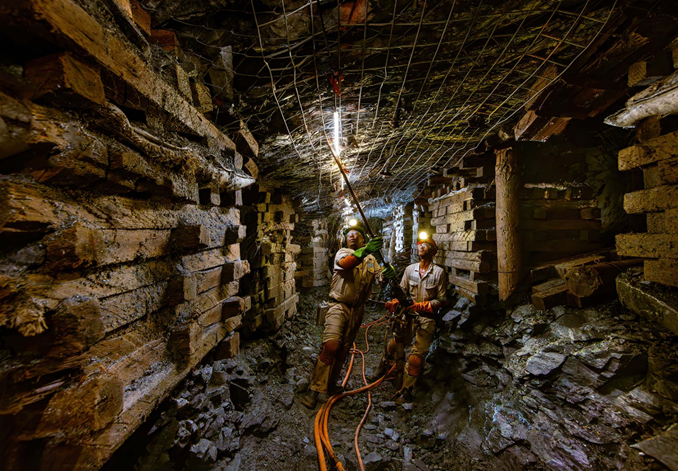
Business Writer
The dust of the mine had settled, but for Chenayi Moyo, the silence was deafening. Her husband, Tendai, a dedicated miner for over 20 years, had tragically passed away in an accident, leaving her and their two daughters, Sekai and Matilda, adrift in a sea of grief. Tendai had always been the rock, the provider, and now, he was gone.
Fear gnawed at Chenayi – how would she manage? How would she ensure her children’s future?
Then, she remembered Tendai’s mention of his pension fund, the Mining Industry Pension Fund (MIPF).
With a flicker of hope, she reached out, and what she discovered was a lifeline, a testament to Tendai’s foresight and the fund’s commitment to its members’ families.
Tendai had opted for the Joint and Survivorship Pension Option, a decision that would prove to be Chenayi’s salvation. He had chosen to cover his and Chenayi’s lives, ensuring that if he passed away, she and their children would continue to receive a monthly pension. Moreover, he had chosen a ten-year guarantee period.
This meant that even if Chenayi were to pass away within those ten years, Sekai and Matilda would continue to receive the pension until the period expired.
The news was a balm to Chenayi’s wounded soul. She realised that Tendai, even in his absence, had secured their future. The monthly pension, though a reduced amount compared to what he would have received had he lived, provided a stable income, allowing her to focus on her children’s well-being and education, rather than the immediate fear of financial ruin.
“It was like Tendai was still taking care of us,” Chenayi shared, her voice filled with gratitude. “Knowing that my girls would be provided for, regardless of what happened, gave me the strength to carry on.”
Chenayi, as she navigated her grief, began to understand that Tendai’s choice of the Joint and Survivorship option was just one thread in a rich tapestry of benefits woven by the Mining Industry Pension Fund. She learned that
MIPF understood the diverse journeys of its members, offering a range of pathways to a secure retirement.
Imagine, for instance, a miner named Elias, who, after years of hard work, felt the weariness in his bones long before the traditional retirement age. He discovered that MIPF allowed him to retire as early as 55, or even earlier, between 50 and 54, provided he had dedicated at least 15 years to the industry. This early exit, a chance to rest and enjoy his hard-earned years, was a blessing he had not anticipated.
Then there was Martha, a meticulous planner, who had always envisioned retiring at 60. When that milestone arrived, she found herself not quite ready to hang up her boots. MIPF, understanding that life’s rhythms vary, allowed her to defer her retirement for up to five more years, giving her the flexibility she needed.
And what of old Mr. Zondo, who, in his later years, simply forgot to claim his pension? MIPF, rather than abandoning him, ensured that his benefit continued to accrue interest, growing with each passing year until he or his family finally claimed it. This act of care spoke volumes about the fund’s commitment to its members.
As Chenayi delved deeper, she realised that MIPF offered a spectrum of pension options, each designed to fit different needs. Members could choose a full monthly pension, a steady stream of income for life. Or, they could opt for a one-third commutation, taking a portion as a lump sum for immediate needs, with the remainder providing a reduced monthly pension.
She learned about the flexibility of commutation itself. If a member’s pension was substantial, they could take up to one-third as a lump sum, a significant amount to invest or spend as they saw fit. For those with smaller pensions, the fund allowed them to take the entire amount as a lump sum, a welcome financial boost.
Most importantly, Chenayi understood the profound security offered by the guarantee periods. Every pension, regardless of the chosen option, was guaranteed for either five or 10 years. This meant that even if a member passed away shortly after retirement, their beneficiaries would continue to receive the pension for the remainder of the chosen period. This guarantee, she realised, was a powerful testament to MIPF’s dedication to protecting families.
To access these benefits, MIPF had established a clear and transparent process. It began with the Advice of Withdrawal Form (Form BN1), a simple document that, once completed by the employer and member, or just the member if needed, set the wheels in motion.
Next, proof of identity was required – a copy of the member’s National ID, passport, or driver’s license. For tax assessment purposes, the last payslip was also essential.
Upon receiving the claim, MIPF would send a pension options letter, outlining the various choices available. The member or beneficiary would then select their preferred option and complete the BN2 Form, providing necessary personal details.
In cases where the Joint and Survivorship option was chosen, like Tendai’s, proof of relationship was required, ensuring the designated beneficiary received their rightful entitlement.
This streamlined process, Chenayi realised, was designed to ease the burden on members and their families, making the transition to retirement or the claiming of benefits as smooth as possible.
The MIPF, through its comprehensive benefits and clear processes, was more than just a financial institution. It was a lifeline, a protector, a testament to the enduring bond between the mining industry and its dedicated workers. For Chenayi and her daughters, and for countless others, it was a source of strength, security, and peace of mind.



 Online Reporter