Tendai Gukutikwa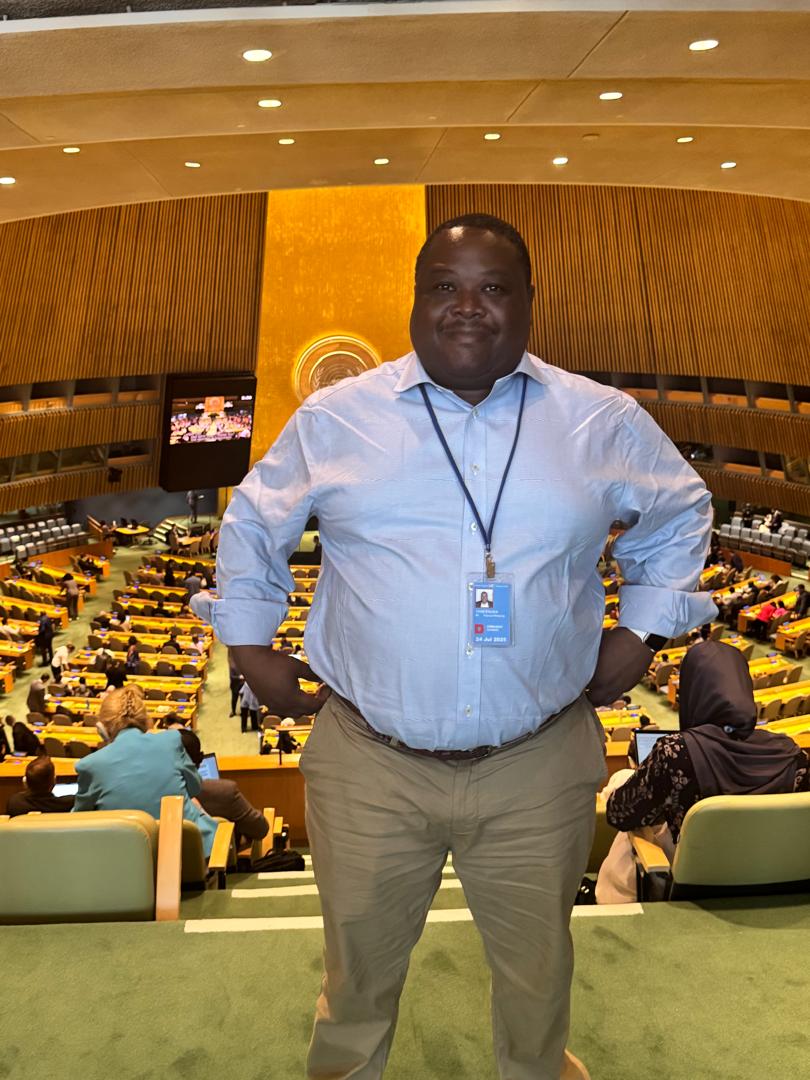
Ray Bande
Senior Reporter
A RECENT discovery in the United States of America (USA) has inspired Mutare City Council Town Clerk, Mr Blessing Chafesuka, to champion the adoption of a quota system that prioritises local companies in the awarding of tenders, resultantly supporting their growth and boost local economic development.
At local level in the USA, local authorities operate a quota system that ensures a significant number of tenders are awarded to local businesses, thereby supporting their growth, leaving Mr Chafesuka keen to replicate this model locally.
This was the major takeaway that the Town Clerk noted from his recent visit, and profoundly wishes to have a similar model adopted in the country, all in pursuit of growth of local businesses.
The Mutare City Council Town Clerk, along with his counterparts from Bulawayo City and Bikita Rural District Council, recently visited the USA, specifically New York City, accompanied by Central Government officials from various ministries, including the Ministry of Local Government and Public Works, Ministry of Public Service, Labour and Social Welfare, and Office of the President and Cabinet.
The Zimbabwean delegation attended a high-level political forum on Sustainable Development Goals (SDGs), where Mr Chafesuka made a presentation on behalf of local authorities.
SDGs, also known as the Global Goals, are a set of 17 interconnected goals adopted by all United Nations Member States in 2015 as part of the 2030 Agenda for Sustainable Development.
These goals aim to achieve peace and prosperity for people and the planet by 2030, addressing critical global challenges such as poverty, hunger, inequality, climate change, and environmental degradation.
Mr Chafesuka said: “I provided updates on the progress made by local authorities in Zimbabwe in implementing Voluntary Local Reviews (VLR). It was a productive interaction with other cities worldwide, learning how they are transforming their communities through the implementation of Sustainable Development Goals.”
Mr Chafesuka explained that VLR is a report that each council should prepare to demonstrate how it is localising the implementation of SDGs, as adopted by Government, and how SDGs are influencing planning and programming at that level.
To date, 60 percent of local authorities have received training and are at various stages of preparing their VLRs.
Mutare City Council, alongside City of Harare, City of Bulawayo, City of Victoria Falls, Buhera Rural District Council and Murehwa RDC, are among the few local authorities, who, by 2024, had already completed their VLRs.
However, by June 2025, approximately 57 councils had completed their VLRs. This significant shift was influenced by the Government’s push, making it mandatory rather than voluntary.
After the UN programme, the delegation embarked on another learning exchange visit, facilitated by the USA Embassy, which took them to various cities in the USA, including engagements in Albany City, Springfield City in Massachusetts, Easthampton City, as well as visits to Georgia and Saratoga.
Mr Chafesuka said: “Their governance structure is very different from ours, as they use a federal system. Laws are not made at the centre, but by local state governments. Their service funding models are very strong, with great support coming from the federal Government.”
On the lessons learnt, Mr Chafesuka said: “My major takeaway is how they support Small to Medium Enterprises (SMEs). At the local level, they have a quota system where the council ensures they award tenders to local enterprises to support their growth. I think this is a good initiative that can be used to encourage formalization of illegal operators. If Government can adopt this, it will be helpful to our small businesses, where we can say at least 30 percent of tenders should be awarded to local SMEs. I am working on a paper to lobby for this.”



 Online Reporter