

 Online Reporter
Stanford Chiwanga, [email protected]
TREY Nyoni’s reported decision to decline a meeting with Warriors coach Mario Marinica has set the nation ablaze with indignation, as if the quiet, private dreams of an 18‑year‑old could ever amount to treason.
In bars, WhatsApp groups, Facebook and comment sections, the outrage has swelled – not because of confirmed truth, but because of the power of rumour to stir a restless people.
Reports emerging from the United Kingdom claim Nyoni opted not to meet the national coach during Marinica’s talent‑scouting tour, yet none of the principals — neither Nyoni himself, nor Liverpool, nor ZIfa — has put their name to the story.
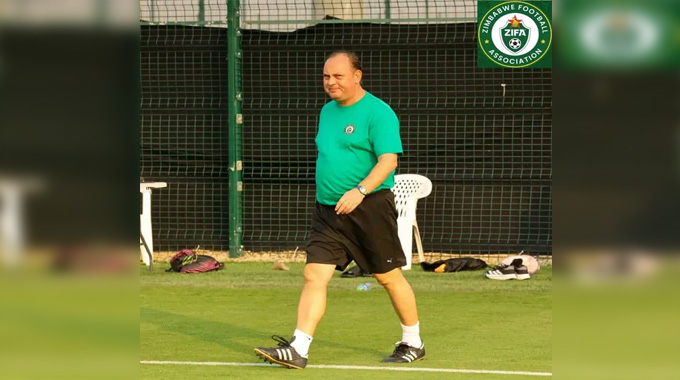
What is undeniable, however, is that this gifted midfielder, born in England to Zimbabwean parents, is moving with the caution and clarity one expects from a young man aware of the crossroads before him.
He is taking time to study his future, nurturing the possibility of breaking into England’s senior setup — something echoed elsewhere in reporting that he is “taking time to consider his international future” as he keeps the Three Lions pathway open.
The anger directed at him is not rooted in fact; it is rooted in yearning. Zimbabweans see in him the kind of prodigy who could transform the Warriors, and the fear of losing such a player has made many confuse hope with entitlement.
But Nyoni has done nothing wrong. In fact, he has done nothing unusual. If anything, his caution mirrors the quiet dilemmas that have shaped many football stories long before he was born.
Bruce Grobbelaar, the greatest goalkeeper Zimbabwe ever produced, once looked across the border of identity and opportunity and openly declared his desire to play for England.
In 1990, with Peter Shilton stepping aside, Grobbelaar announced: “I want to succeed Peter Shilton as your No. 1 . . . If I was a rugby player or a cricketer I could be playing for England now.” That was not disloyalty; that was ambition.
And while Fifa laws blocked him from realising that dream, Zimbabweans today speak his name with reverence, not resentment.
Brendan Zibusiso Galloway walked the same tightrope. At Everton, in the vivid prime of his youth, he too dreamed of England.
And who could blame him? When you are playing in the Premier League, the England jersey is not just fabric — it is validation.
Yet when his journey later brought him home to Zimbabwe, we welcomed him with open arms, not with accusations of betrayal. Because we understood. Because life is not linear. Because identity is not a cage.
And the world is full of stories that mirror Nyoni’s crossroads. Wilfried Zaha, bright as a comet in English academies, represented England in two friendlies but later chose the Ivory Coast when competitive caps never came.
Munir El Haddadi spent years trapped in an eligibility limbo after Spain gave him one competitive minute at 19, only for Fifa to change its rules in 2020 to right that injustice.
Brahim Díaz left Spain for Morocco in 2024 after just one cap, aligning his future with his heritage in a way that felt utterly organic.
Adnan Januzaj could have played for England through residency had bureaucracy not moved slower than his talent, and he eventually chose Belgium, the country of his birth, flourishing on the world stage. Simone Perrotta was born in England – literally raised on English soil – yet the Three Lions never noticed him. He returned to Italy, and Italy made him a world champion. These decisions do not diminish a player. They define them.
So Zimbabweans must hold their fire. Leave Nyoni alone. Let him pursue the light he sees. A teenager at Liverpool, polishing his craft in one of Europe’s most competitive academies, has every right to explore his ceiling. To mock him for dreaming of England is to mock every Zimbabwean child who dares to dream beyond their village, beyond their borders, beyond their beginnings.
And to Trey Nyoni himself: walk your path boldly. If England is the journey you choose, chase it with courage. And if one day the winds change and Zimbabwe becomes the destination your heart seeks, know that the door is wide open.
The nation will not greet you with bitterness but with drums, ululations, and the warm certainty that you have come home.
FIFA’s rules make that possible. Under the current eligibility framework – reshaped in 2020 because of cases like Munir – players can switch national teams even after representing another country at youth level or in limited senior circumstances. You are not tied to a nation unless you have played a competitive senior match in an official, binding competition such as a World Cup qualifier, continental qualifier, or major tournament. Youth caps do not cap tie you.
Friendly senior matches do not cap tie you. Even certain competitive appearances before the age of 21, provided they are limited and outside major finals, can still allow a one-time switch. The process is simple: prove your Zimbabwean citizenship or lineage, submit the request through FIFA’s one time switch mechanism, and wait for approval. It is procedural, not emotional.
And should you choose Zimbabwe someday, come with your whole spirit – bring your lungs, your legs, your courage, and that quiet fire that has carried you this far. Come not for caps, nor convenience, nor applause. Come because it matters. Because wearing a national jersey is not a souvenir from a journey; it is a covenant. It is a badge of honour, stitched with memory, sweat and sacrifice.
As a nation, our task is not to hound you, insult you, or box you into a corner. Our task is to build a home worthy of your return. To shape a Warriors project that a boy at Liverpool can believe in. To make the idea of Zimbabwe not just familiar, but magnetic – a place that pulls at you gently, insistently, like a drumbeat you recognise from childhood even if you heard it from across an ocean.
Dream your dreams, Trey. Dream them loudly. And Zimbabwe, give the boy space to breathe and space to choose. Because sometimes the world must turn a few more times before a young man finally discovers the flag that makes his heartbeat settle, not in conflict, but in certainty.
@plainstan



While that could be the case that Trey should be given his space, it is important to advise the young man that guarantees of anything in life are a slippery slope hence he must remain humble. Meeting the Warriors coach and listening to what he had to say would not have derailed whatever ambitions he has. In fact he would have learnt a big lesson that of how football enthusiasts value him. The take would have been his personal decision. What people are concerned about comes from the undeniable fact that discrimination in football especially in Europe is character, it lies within Europe’s DNA and black players with African roots have to be very careful about holding ambition to play for countries of their birth as opposed to their countries of their origins. And snubbing one’s country of one’s ancestors brings bad luck. Sean Dundee saga of years gone by involving Germany and South Africa comes to mind. He made a hasty decision to snub Bafana Bafana only to fail to make an impact in Germany leading him to retiring from the game a frustrated man. Instead of giving Trey Nyoni a blank cheque for his future in football, he must be warned of challenges players, particularly black players, face in the business of the game. There are a lot of challenges that come with such ambitions particularly in England. The Fashanu brothers, John and Justi, originally from Nigeria faced major challenges when they tried to play for England .