

 admin
admin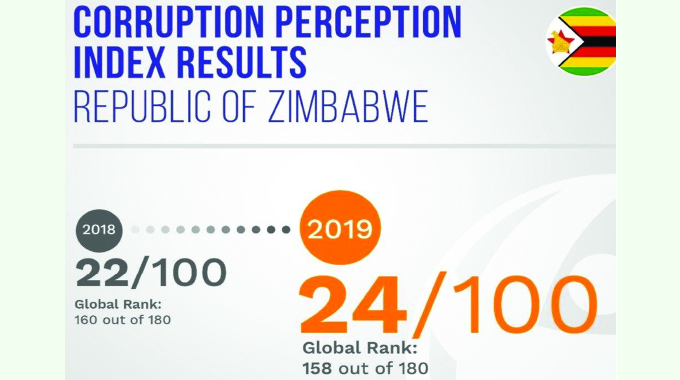
Kudzanayi Sharara
“Prisca Mupfumira case. Matter has been set down for trial on 19 June 2020. However, the Defence counsel has been making one application after the other and this has delayed the trial from taking off. Our docket is complete and State is ready,” reads a tweet sent out by the Zimbabwe Anti-Corruption Commission (ZACC) on Wednesday, through its Twitter handle @ZACConline.
The tweet comes at a time when questions were being asked on the sincerity of ZACC to conclude corruption cases that have been under investigation for over a year now.
The tweet also comes amid reports that former Cabinet minister Samuel Undenge, lost his case in which he was appealing against a 30-month jail sentence after he was convicted of criminal abuse of office in 2018.
Undenge was convicted of criminal abuse of office after he hand-picked a public relations company for ZPC without going to tender, something which Justice Joseph Musakwa said was an act of subverting corporate governance.
The tweet also comes after former Principal Director of State residences in the Office of the President and Cabinet Douglas Tapfuma, was sentenced to four years for engaging in corrupt activities.
Again this week the Supreme Court reversed Wicknell Chivayo’s acquittal by the High Court for allegedly defrauding the Government of US$5,6 million. Again this week, High Court judge, Justice Tawanda Chitapi, said the courts must expedite trials in high-profile corruption cases, as delays have the potential to put the Judiciary and criminal justice system into disrepute.
He made the remarks on Friday while dismissing an application for permanent stay of prosecution by former Midlands Provincial Affairs Minister Jason Machaya, former Mashonaland West provincial administrator Cecilia Chitiyo, and six other senior Government employees who are facing charges of criminal abuse of office.
What Justice Chitapi meant is that delays in concluding corruption cases serve as an incentive for criminals to engage in further corrupt activities as precedence is that one would be left scot-free with no criminal consequences.
It is will be like a catch-and-release scenario.
Already, cases of fraud and abuse of office are increasing, with the Government having to cancel procurement deals that reek of corruption.
While its early days yet, such efforts will go a long way in improving the country’s ranking on the Corruption Perceptions Index where it ranked 158 out of 180 in 2019.
The CPI, which ranks 180 countries and territories by their perceived levels of public sector corruption according to experts and businesspeople, uses a scale of zero to 100, where zero is highly corrupt and 100 is very clean. Zimbabwe scored 24 on that index.
We have written before that apart from economic sanctions imposed on the country by Western powers, abuse of office and of course other ill-conceived economic policies, corruption should rank as one of the biggest problems that have affected the country’s economy.
Personal interests, greed and avarice continue to undermine the Government’s capacity to allocate resources effectively and to deliver services.
The result is poverty and deprivation which in turn has led to frustration, disillusionment. Even without the CPI’s ranking, there’s growing evidence that corruption has resulted in the ineffective use of state resources aimed at providing essential services. Corruption in the public and private sectors has led to neglect in providing healthcare, education, employment opportunities, housing, roads and security.
Finding solutions
Given the country’s low ranking on the CPI, what measures can Zimbabwe take to stem the debilitating theft of public resources?
First, the legal system must make corruption expensive and unattractive for perpetrators by the imposition of mandatory jail sentences.
Second, all the proceeds of corruption must be forfeited to the State.
Third, there are scientific mechanisms for detecting unethical people before they are selected.
Strict standards of ethical conduct could be imposed for anyone holding a public office.
Fourth, appointment to key Government institutions must be on merit. Without that expect no change. Maybe such appointments must be done through parliamentary processes or public interviews. Like what was done when ZACC commissioners were appointed.
Fifth, collective campaigns for public procurement transparency by the business community can also prevent politicians from using the private sector to plunder State funds.
The scourge of corruption in Zimbabwe must be urgently addressed otherwise it could bring the economy to its knees.


 Online Reporter