Chronicle Editor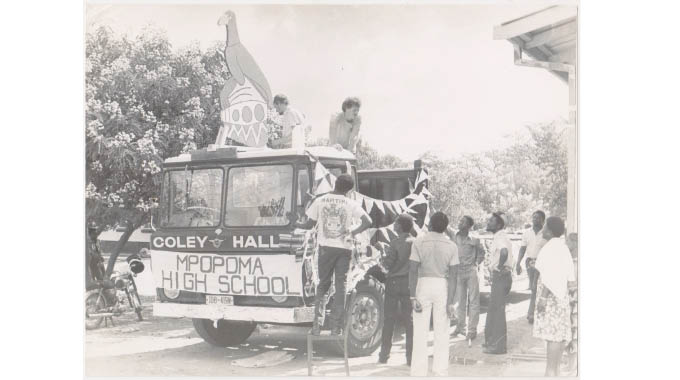
Nduduzo Tshuma, Political Editor
FOR the Zipra combatants participating in the liberation war that ushered the country’s Independence in 1980, the first enemy was not the settlers from whose clutches they wanted to liberate Zimbabwe but the crocodile infested Zambezi.
War veteran and former Zipra regional commander Cde Watson Twoboy Tshipha led a Chronicle news crew to one of the PF Zapu’s military wing’s crossing points, Kataitai in Deka, Hwange District, where fighters had to navigate 500 metres of the deadly Zambezi from Zambia to Zimbabwe.
The crossing point along the Northern Front 1 (NF1) that he commanded is so special to Cde Tshipa, he built a homestead a few metres from it.
He wakes up everyday to the memory of the perilous mission to cross the Zambezi before an equally dangerous one of fighting the oppressor.
The NF1 stretched from Kazungula along the Zambezi to the Gwayi River mouth then along the Bulawayo Victoria Falls Road to Bulawayo. The boundary then was the railway line from Bulawayo to the Plumtree border.
According to Cde Tshipa, a retired Colonel with the Zimbabwe National Army, the scary crocodiles were the least of their worries as they also had to contend with the unpredictable rising tides and powerful rapids in the Zambezi River that could end the life of an unwary freedom fighter in the blink of an eye.
Freedom fighters took the spine-chilling adversities in their stride as they crossed from their base in Zambia to carry out various assaults on the Rhodesian forces.
First, before encountering the Rhodesian forces, Cde Tshipha shares, the combatants had to tame the Zambezi River whose insatiable belly was always ready to devour any unfortunate combatant who was either grabbed by crocodiles of fell into the powerful rapids, most without the ability to swim.
The crossing point at the Deka area, was 64 kilometres from the Zipra base in Livingstone and it took two hours to walk from the base to the crossing point.
Cde Tshipha who trained in Morogoro, Tanzania, says the Kataitai crossing point was ideal for crossing a large number of combatants compared to the crossing points located in gorges which were steep and hard to navigate.
“If we had small numbers, we would use the crossing points at the gorges but with large numbers, Kataitai was ideal. We would cross at night and by dawn, the combatants would have moved inland towards Hwange.
“We were later to establish a perfect crossing point in Kazungula where we moved both Zipra combatants and those from the ANC’s Umkhonto Wesizwe,” said Cde Tshipha.
“We didn’t want to spend a lot of time in the river so the crossing was done as quickly as possible to avoid detection and bombing by the whites.”
Cde Tshipha said they initially used makeshift canoes made from planks, popularly referred to by the combatants as Tsotsi, and later used dinghies supplied by Zipra. They then moved to boats intercepted and taken from white fishing clubs.
“We never knew that the river would rise after 8pm and it took us time to notice that so we stopped crossing at 8pm.
“We had to learn to navigate the rapids because one of the crossing points at the NF1 was right at the gorge after rapid Number 3. No one among us had any experience on how to navigate rapids and we learnt everything with experience and no one had life jackets,” said Cde Tshipha.
He said as a matter of strategy, they would not maintain a single spot but would move 100 metres either up or downstream where they would cross.
After crossing the combatants had to carefully find their way into the country as the Rhodesians had planted landmines which when stepped would blow up their limbs.
“When we crossed the Zambezi, we got to a big baobab tree where we would put on our shoes. I told my comrades that one day I will build a homestead here and they just dismissed me saying I was dreaming but now the dream has come true,” said Cde Tshipha.
Cde Tshipha said when they faced challenges transporting large numbers of Zipra and Umkhonto We Sizwe combatants until they established a crossing point in Kazungula.
The crossing point in Kazungula, involved combatants crossing the Zambezi into a swamp measuring two kilometres where they would wade through to reach trucks that would transport them to Zimbabwe via Botswana.
“From Livingstone it became hard to get people down to there and with the cooperation we had with Umkhonto Wesizwe there was need to send people in bulk before they get into confrontations,” said Cde Tshipha.
“What we used to do is that we would escort, Umkhonto Wesizwe combatants through Rhodesia then into the Southern Front and into South Africa. We were also trying to do the same with our soldiers into the Southern Front. The Rhodesians had operation Repulse trying to block us from going to the Southern Front.”
He said the swamp made it difficult for the Rhodesian forces to detect the combatants as they crossed from Kazungula straight into Botswana.
“Civilians were asked to help out in the transportation of combatants. I wrote a letter to Colley Hall asking to use his trucks which were travelling from Bulawayo to Francistown up to Kazungula,” said Cde Tshipha.
“On their way back, they were always empty. I wrote a note because the drivers could not afford us such a favour, and asked for the use of his trucks and he gave me authority to use them.
“We had established a base in Kazungula and what would happen is that when the trucks were making their way back, they would pass through the base. They would either be told to wait or proceed. We then had large groups being transported.”
Cde Tshipha said in the olden days, a section or group of five would be given a dinghy to cross the Zambezi River, hide it on the Rhodesian side, go for operations and collect it after two months to cross back to Zambia.
“We had changed tactics and used navy platoons composed of 45 combatants using up to 30 dinghies per time. We now could afford to cross a large number of people and equipment. We would cross right at the corner of Botswana, Namibia and Zambia, there was a two-kilometre-long swamp into the Botswana side that we used for cover,” said Cde Tshipha.
“The Rhodesians could not deploy in our front because it was swampy. What would happen is that the trucks would transport the guerrillas into Francistown and while there, logistics would be made that Mercedes Benz 2011 were brought, one by ANC and another by Zipra.
“The Zipra truck would be used to ferry guerrillas to the Southern Front while the ANC one would ferry their combatants right to Krugersdorp. Theirs was just to cross the border to South Africa. This happened for almost a year and a half until such a time that aircrafts flying recruits from Francistown were being overpowered.
“We would use those trucks also to transport equipment but for personnel we would use Colley Hall. We would like to acknowledge Colley Hall because it hasn’t been mentioned that they assisted the struggle because you can imagine, the Southern Front and the ANC were fully supplied.”
Cde Tshipha said he would send a bullet to Colley Hall as communication that they had used his trucks so that the drivers would not get into trouble for delays.
“We did that until one of the drivers was caught with a bullet and was seriously beaten by the police. After that incident Colley Hall said we could just use the trucks without sending confirmation because he didn’t want his drivers getting in trouble with the authorities,” he said.
Cde Tshipha said the Umkhonto Wesizwe combatants would leave Kazungula around 8pm and by 3pm to 4pm they would be reporting that they had arrived in Johannesburg while those Zipra combatants going to Tsholotsho and Gwanda would arrive around 8am.
“That really changed the modus operandi. What would happen is that Chris Hani would accompany the Umkhonto Wesizwe combatants to the crossing point and would not leave Livingstone until he received reports that the combatants had arrived in Johannesburg,” said Cde Tshipha.
“After arriving in Johannesburg, they would then separate and spread into different towns. The case was different from us, they couldn’t fight bush guerrilla warfare and resorted to urban guerrilla warfare.”



 Online Reporter