admin
admin
Freedom Mutanda
Post Correspondent
Due to social constructions, women have historically been looked down upon.
However, the First and Second Chimurenga eliminated the flawed theories and put men and women on an equal footing in their quest to liberate Zimbabwe.
Many women went on to be the protagonists of the African struggle against slavery and imperialism.
Several women made a mark in the liberation struggle.
Indeed, as the late Chinese leader, Mao Ze Dong said, women hold half the sky and it would be folly of the highest order to belittle their immense contribution towards the realisation of new beginnings in 1980.
To begin with, the guardian spirit of the Chimurenga was premised on Mbuya Nehanda.
Secondly, the spirit medium who interceded with the spirit realm in 1964 was one of Mwakopa, the 10th king of the Mutema Dynasty, and ‘resided’ in a female ‘pocket.’
Initially, there were a few female combatants.
Perhaps at that time going to war was ascribed to the males.
A deluge of female combatants then skipped the border to be trained as liberation fighters in the 1970s.
As the struggle for independence intensified, females carried weapons from the rear to the front.
That was deliberate.
Very few whites at roadblocks would suspect the women of subterfuge.
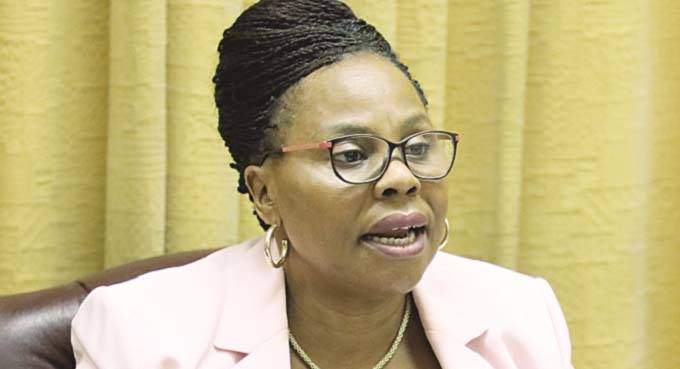
Cde Monica Mguni joined ZIPRA in 1977 and rose to the position of instructor at Mkushi in Zambia.
She was one of the many women who joined ZIPRA and went on to make an impact at the front. Even after independence, she showed loyalty to the cause until her death in 2016.
Cde Sheba Tavarwisa became a member of The High Command during the war, but it is an indictment of the First Republic that her efforts and convictions were not fully appreciated.
She joined the thousands of female combatants who went largely unnoticed for one reason or the other.
Among the first female commanders in ZANLA are the former Vice President, Cde Joyce Mujuru, and Cde Sheba Tavarwisa.
From schools also came a majority of the female fighters, some even went to war when they were too young to be active at the front.
The late national heroine, Cde Thenjiwe Lesabe, is a ZAPU female luminary who joined the struggle for independence in spite of her being a teacher.
Her political activism led her to resign from teaching in 1949 and from that year up to her death in 2011, her love for this country showed that females are indefatigable when it comes to national matters.
Cdes Monica Mutsvangwa and Zanu PF national chairperson, Oppah Muchinguri-Kashiri, also went to war as teenagers and made a huge impact.
Cde Irene Zindi and the late national heroine, Cde Vivian Mwashita, are also luminaries of the liberation war and through their lobbying, the 1983 LAMA (Legal Age of Majority Act) was promulgated and it kick-started the legislative drive to empower women in every facet.
However, not only those fighting at the front were responsible for the liberation of Zimbabwe.
Young girls, some barely in their teens, cooked and carried food to the guerrillas at the war front.
With their equally young male counterparts, the girls acted as couriers of information, which was very vital in the prosecution of the war.
Without these girls’ intelligence gathering services, the war could have taken much longer to bring the white man to the negotiation table.
Cde Cannan Alice Sithole (nee Mafu) is one female leader who led from the front. She is Reverend Ndabaningi Sithole’s first wife.
She was very instrumental in coordinating the Famous Crocodile Gang which carried out sabotage activities, culminating in the killing of a white Melsetter foreman in 1964.
She is not the only one.
National heroines, Cdes Sally Mugabe, Joana Nkomo, Thombi Takawira, Victoria Chitepo, Julia Zvobgo, Ruth Chinamano and many others proved their mettle in the struggle for Zimbabwe.
Nationalist leaders’ wives also lived a life of looking over their shoulders.
Among the earliest academics to dump their lucrative contracts as lecturers at universities was Cde Fay Chung.
Cde Chung was conscious of the racist regime’s disdain for anyone who was not Caucasian.
She turned from a sympathiser into one prepared to leave the comfort of the University of Zambia to be in the bush.
Alongside the late national hero, Cde Dzingai Mutumbuka and Cde Chitofu, Cde Chung is the brains behind ZINTEC which started off at Chimoio.
The programme trained thousands of primary school teachers after independence as the numbers of school children at primary school swelled.
It was also Cde Chung and her staff who championed Education With Production which birthed ZIMFEP.
To date, ZIMFEP schools are shining examples of boarding schools that sustain themselves since their learners are exposed to practical subjects.
This is a step in the right direction for a country that has a vision to transform itself industrially.
Today, Zimbabwe salutes the various women’s selfless stand against colonialism.
They are models to the women in our midst as the country move a gear up in economic development.
Inclusivity is now the mantra.
Considering their sacrifices in liberating this country, now is not the time to engage in petty chauvinistic antics to deny the women some space in any sector.


 Online Reporter