admin
admin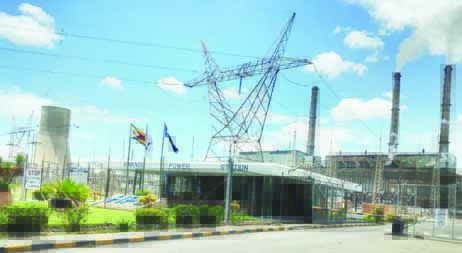
Samuel Kadungure
Senior Reporter
ELECTRICITY is key to economic development.
About 45 percent of our power is consumed by industry, 22 percent by commerce and the public sector and six percent by agriculture.
Only 29 percent is consumed by households.
As Zimbabwe trudges towards attaining an upper middle income economy, universal access to modern forms of energy is essential for the country’s underdeveloped regions to fully participate in pursuing Vision 2030.
Government, through the Ministry of Energy and Power Development, duly launched the National Energy Policy to ensure that all people in Zimbabwe have access to reliable, affordable and environmentally friendly energy services.
All this comes from the understanding that electricity is an enabler for industrial development, social welfare and improved healthcare, and its role is only increasing in importance as the world becomes more modernised.
In 2022, the Zimbabwe Energy Regulatory Authority (ZERA) revealed that the energy supply in the country was a mix of hydropower (68.17 percent), coal and renewable energy sources (31.83 percent).
Of late, the country has been facing power shortages, mainly because output from the country’s largest power plant – Kariba South Hydro Station on the Zambezi River, which produces 1 050 megawatts – was curtailed by successive droughts linked to climate change.
It is currently capped at a third of its capacity, thereby leaving the country having to import significant amounts of electricity from its neighbours Zambia, Mozambique and South Africa.
To plug the deficit, Government put the investment in new power generation capacity at the centre of its development programme.
“We have to increase our internal power generation, possibly threefold, if we are to avoid throttling our growth, and if we are to lessen our dependency on power imports.
“Our experts estimate that we can generate a further 600mw from solar, with an additional 120mw coming from small hydropower projects. Potentially, we can also raise 1 000 MW from biomass, with our geothermal energy potential giving us an additional 50mw.
“Wind power has a potential to give us 1,872 MW, according to our experts,” he recently wrote in his weekly column in The Sunday Mail.
According to the National Development Strategy (NDS1), Government is targeting an installed generation capacity of 3.467MW by 2025 and construction of 280km of transmission and distribution lines.
This can be realised through completion of ongoing energy projects as well as construction of new energy generating capacity and upgrading, rehabilitation and maintenance of the existing energy infrastructure.
Of the 3.467MW targeted, 1.100MW will come from renewable energy sources.
In 2020, the ZERA (2021-2025) Strategic Plan was approved, and among other targets, it sought to increase the number of operational IPPs from the current 30 to 90 by 2023; increase energy efficiency by 10 percent and improve uptake of renewable energy technological innovations.
“This energy supply position would mean that there will be no more energy imports by 2025,” reads the NDS1.
The completion of the US$1.5 billion Hwange Power Station Unit Seven and Eight and their synchronization has seen an additional 600MW being fed into the national grid, thereby significantly reducing load shedding in the country.
The project was spearheaded by the Second Republic as part of its bold steps to eradicate power outages and boost productivity.
The Hwange Expansion Project is the country’s biggest energy investment since independence in 1980, and among the biggest energy investments projects on the continent over the last two decades.
RioZim, one of the country’s biggest mining companies is developing a 2 800MW coal power station in Sengwa, where massive coal reserves have been discovered.
The US$3 billion project ran into turbulence last year and RioZim is now scouting for new financiers.
Also in the pipeline is the proposed 2 100MW Lusulu thermal power project that is currently seeking funding.
Further, Government has secured a US$310 million loan from India’s Export-Import Bank to fund the life extension of six units at the Hwange Coal Power Station by up to 25 years.
The project will restore generation to 96 percent of its 920MW capacity. Works are expected to be completed by the end of 2028.
Recently, China Energy Engineering Corporation proposed the construction of a 1 000MW solar plant at the Kariba Dam at a cost of nearly US$1 billion.
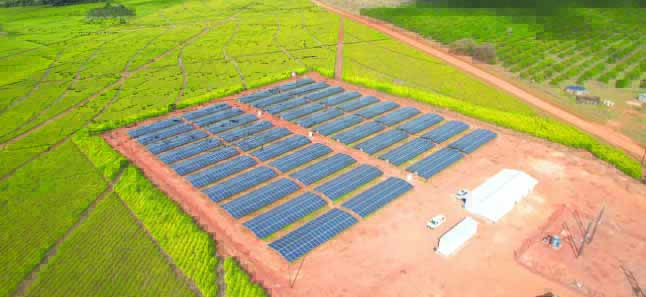
Chinese companies have so far signed agreements for solar projects totalling at least 350MW in capacity, according to a briefing by the International Institute of Green Finance at China’s Central University of Finance and Economics.
Chinese firm, Yaowei Technology, also plans to establish a US$15 million solar panel manufacturing plant in the country.
It will manufacture about 500 solar panels per day.
Government last year announced incentive programmes to support $1 billion of solar power projects planned by IPPs.
Over the past five years, independent power producers (IPPs) have explored alternative energy sources such as solar, wind, geothermal, biofuels and biomass following the promulgation of the National Renewable Energy Policy in 2019.
The policy’s aim is to raise the share of renewables in the energy mix by creating incentives from supply to distribution and demand, in both urban and rural settings.
On March 23 2023, the Zimbabwe Electricity Transmission and Distribution Company (ZETDC) and HDF Energy signed an MOU worth US$300 million with French independent power producer, HDF Energy, to develop the country’s green hydrogen power plant.
The deal is expected to attract other IPPs into the country.
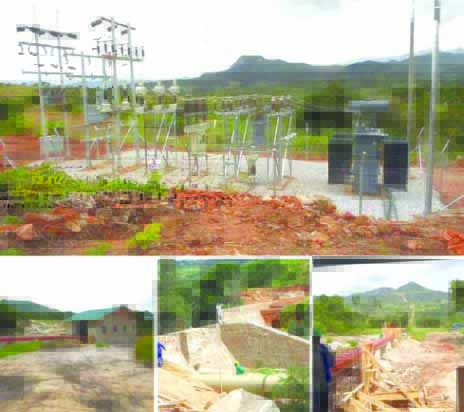
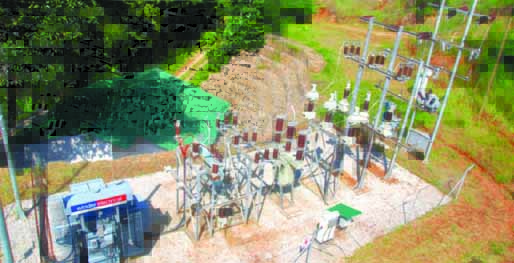
Manicaland boosts of key energy infrastructure which has seen Nyangani Renewable Energy (PVT) Ltd setting up six mini-hydropower stations generating energy and feeding into the national grind.
The six IPP sites operating in Mutasa are producing 30MW, which is more than enough to satisfy the district’s energy requirements.
Other projects include GreenFuel’s ethanol plant in Chipinge, as well as Tsanga B Power Station in Nyanga.

The Pungwe B hydropower plant produces 15MW; Nyamhingura (1.1MW); Pungwe A (2.7MW), Duru (2.2MW), Pungwe C (3.7MW) and Hauna (2.1MW).
The Infrastructure Development Bank of Zimbabwe (IDBZ) is also working on the Osborne mini-hydro power project that will see 2.5MW being fed into the national grid.
Nyangani sells the power generated to ZETDC.
The organisation’s managing director, Mr Ian Mckersie said the hydropower sites are on rivers flowing from the Nyangani massif in the Eastern Highlands.
Mr Mckersie said private players need to work with Government in transforming the energy sector.
Engineer Tendai Danana of Mutasa Rural District Council said the local authority is getting substantial revenue from Nyangani through development levies and fees on the power generated.
He also said some investors are lining up for potential mini-hydro sites along Odzani River and in Penhalonga.
In addition to mini-hydro power generation sites, solar farms are also being set up across the province.
A 12-hectare solar farm in Sherukuru will produce 10MW, while a 24ha piece of land in Vhumbunu will produce 30MW.
As a result, the country has made great strides in electrifying rural areas to improve the people’s quality of life and spur economic growth.
In 2021, 3 316 of the country’s 5 324 primary schools (62 percent), 1 637 of 2 213 secondary schools (74 percent), 1 217 of 1 365 health centres (90 percent), 267 of 289 chieftainship homesteads (92 percent) and 20 percent of rural households have been electrified across the country.
Of these, 1 882 institutions are in Manicaland.
True to Government’s commitment which is in line with Sustainable Development Goal 7 which seeks to ensure access to affordable, reliable and sustainable energy as a way of delivering economic development and eradicating poverty by 2030, noone and no place is being left behind.


 Online Reporter