tawandamusarurwa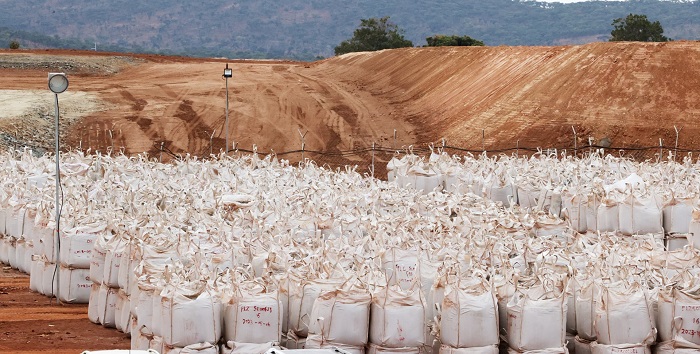
Kuda Bwititi
Zimpapers Elections Desk
THE gigantic Prospect Lithium Zimbabwe (PLZ) processing plant towers imposingly in Goromonzi, Mashonaland East.
This industrial plant is Africa’s largest lithium processing factory and it is transforming the lives of the people of Mashonaland East in a massive way.
Constructed by Chinese investor Huayou Cobalt, the PLZ lithium project was developed in a record-breaking nine months, in what was an authoritative statement of the Second Republic’s commitment to rapid economic transformation.
President Mnangagwa officially commissioned the US$300 million plant last month and the people of Goromonzi are riding on the success of the venture, which PLZ says is the “largest single lithium concentrate production line in the world”.
Gogo Faustina Marembo from Chigora village in Goromonzi said, for decades, they thought the area where lithium mining is now taking place was just an abandoned forest.
“There were many snakes in the area where they are now mining. We used to tell our children to stay away from those mountains. It is amazing to see the transformation that has taken place so fast. To have such a large mine that is now employing hundreds of our children from this area is truly amazing. PLZ has improved the road network, which was barely navigable, and the company is also helping us to build our local Vhuta Primary School. It is really good to see the benefits of lithium in our community,” said the 67-year-old grandmother.
Another Goromonzi resident, Mr Peter Farumario, said: “Things are developing fast in this area and it is great.”
The PLZ lithium plant is one of the signature projects in Mashonaland East, which is benefiting from the Second Republic’s unwavering willpower to uplift the lives of people in the province.
From 2018 to December 2022, the Second Republic had implemented 861 projects in Mashonaland East, with 604 completed and 257 ongoing, to improve the livelihoods of 1,73 million people who live in the province.
Dams
Major dams — including Muchekeranwa, Marovanyati and Chivi — were all commissioned in Mashonaland East.
When President Mnangagwa commissioned Chivhu Dam on June 15 this year, there was boundless joy among beneficiaries of irrigation and fisheries projects that are supported by the dam.
The Government funded the entire dam project to the tune of US$42 million using internal resources. The project has three components — the earth dam with a holding capacity of 26 million cubic metres, a treatment plant with a capacity of 450 cubic metres per hour to supply water for domestic and industrial use to the expanding town of Chivhu, which now has an estimated population of 45 000, and an irrigation scheme with 120 hectares of arable and irrigable land.
Chairperson of Chivhu Irrigation Scheme Private Limited Mr Wilfred Dzimba said they are now taking agriculture as a business.
“I thank the President for uplifting our lives. We thought money is only found in Harare, but now we are aware that our land is a source of money. We now have land; we are involved in agricultural activities and earning a living. All this will lead to the attainment of Vision 2030,” he said.
Mr Chomumwe Nhoto, a member of the irrigation scheme, commended the Government.
“We are now empowered and we are benefiting a lot from this scheme. Government has done a commendable job, which is transforming our livelihoods. When the dam was constructed, we were hopeless, thinking that Government will just abandon us.”
Road rehabilitation
A large section of the Harare-Mutare highway stretches past Mashonaland East. The road is undergoing dualisation, with the Goromonzi-Melfort stretch now dualised.
Grassroots roads in the province are also being revamped. A total of 3 975 kilometres were covered. The work involved grading, tarring and gravelling. At the same time, 311 bridges and culverts were constructed.
In Chikomba, for example, there has been motorised grading of 124km of road, while towed grading has been done over a stretch of 442km.
Rural industrialisation
According to a document on the compendium of successful projects implemented by the Second Republic, Government’s policies are supportive of the establishment of rural industries.
“In that regard, the Rich Basin Black Granite Processing Plant, and the Mutoko market that promotes value addition of granite and horticulture produce are among rural industries that have been established. These initiatives have helped to curb post-harvest losses and enabled beneficiaries to generate more income,” the document says.
One of the prime examples of successful projects implemented under rural industrialisation is the Mutoko Tomato Plant commissioned by President Mnangagwa in 2021.
The fruit and vegetable processing plant is empowering youths and promoting value addition.
Mutoko Royal Fruits and Veggies, a company jointly owned by local farmers, holds 60 percent shareholding in the project, and the Government 40 percent.
Farmers from the surrounding areas of Murewa, Uzumba and Makaha are benefitting enormously from the plant, which has also saved them from the burden of transporting their produce to Harare.
Manhize Steel Plant
This project — which is set to be, arguably, Africa’s biggest steel plant — straddles the three provinces of Mashonaland East, Mashonaland West and Midlands.
Mashonaland East will benefit immensely from the US$1,5 billion steel plant. There will be upstream and downstream benefits for people in areas such as Chivhu and Featherstone.


 Online Reporter