tawandamusarurwa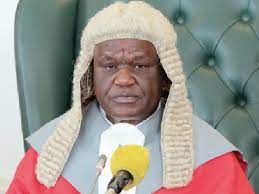
Retired Major Action Mandingo
IN 2021, President Mnangagwa made a statement that shows his respect for the independence of the Judiciary.
He said: “In Zimbabwe, the independence of our Judiciary is vital to the survival of our democracy. When our courts speak, all Zimbabweans should listen. The Government of Zimbabwe wholeheartedly respects the independence of our Judiciary.”
Despite this assurance, it looks like whenever the Judiciary makes decisions that the opposition does not like, accusations about judicial capture by ZANU PF are amplified.
About a week ago, the usual suspects were at it again.
Furore
There was a furore from CCC leaders and their supporters when Bulawayo High Court judge Justice Bongani Ndlovu ordered that 12 CCC National Assembly candidates and four from other opposition parties be struck off the ballot after they failed to file their nomination papers on time.
In the ruling, which was delivered on his behalf by Justice Nokuthula Moyo, Justice Ndlovu upheld a challenge by some political activists, who argued that the Zimbabwe Electoral Commission (ZEC) breached electoral regulations by accepting nomination papers from opposition candidates after the 4pm deadline.
Soon after this decision by the High Court, CCC leaders and their supporters went into overdrive, accusing the country’s Judiciary of being captured by the ZANU PF Government.
Even though there was room to appeal to the Supreme Court, the opposition members would not listen to reason.
Well, a few days later, the furore died down after the Supreme Court gave the 12 CCC aspiring parliamentarians the greenlight to contest the August 23 elections.
But, in typical fashion, they failed to walk back their allegations.
To them, the damage to the reputation of the Judiciary does not matter.
Professor Welshman Ncube, one of the CCC candidates’ lawyers, said: “They reversed the judgment of the High Court disqualifying the 12 candidates. CCC candidates for Bulawayo are very relieved that finally justice has prevailed. It should have never gotten there because there was never a case. Thankfully, the Supreme Court has now confirmed that it was improper to disqualify them in the first place. Now, they can go back to campaigning.”
Yes, indeed, the CCC candidates can go back to campaign, but what about the reputational damage to the Judiciary?
The damage does not matter because it is the CCC? They can tarnish the image of institutions and get away with it? What exactly is a captured Judiciary or a captured court?
According to legal experts, a captured Judiciary or a captured court rubber stamps the wishes of a political party or interest group, rather than apply the law.
Over the past few years, the Judiciary has been accused of being captured by the ZANU PF Government, especially after making decisions that do not meet the expectations of opposition parties.
These accusations have never been backed by any evidence. It is all vitriol from opposition members, who think the Judiciary should always rule in their favour.
It is sickening!
Speaking at the Judicial Service Commission symposium in Gweru a few days ago, Chief Justice Luke Malaba showed that he is fed up with the reckless accusations.
“Politics is for politicians and judges know no slogans. In any case, I don’t think judges know what a slogan is. We are totally apolitical; we don’t think politically but legally, and to us the law is the master,” he said.
“I want to emphasise this because there is a mistake — a terrible mistake — to think that judges must decide in a particular manner, which is ridiculous. In a constitutional democracy, where the rule of law is a foundational value, you cannot speak of the rule of law without judges. You must have confidence in the judges; you put them there because you have confidence in them.
“They qualify to be called judges because they are impartial. Section 164 of the Constitution of Zimbabwe specifically entrenches judicial independence and states that courts must apply the law and Constitution impartially, expeditiously and without fear, favour or prejudice.
“So, I don’t believe and I don’t accept a situation where some people want to make it fashionable to criticise judges for the decisions they make. It just doesn’t make sense . . .”
Section 164 of the Constitution provides for independence of the Judiciary.
“The independence and effectiveness of the courts are central to the rule of law and governance,” it reads.
Section 165 (4) also states that members of the Judiciary must not engage in any political activities, hold office in or be members of any political organisation.
Principles guiding judicial independence
While opposition leaders and their supporters have mastered the art of discrediting the country’s Judiciary, it is important to go into the archives and point out some of the basic principles that United Nations (UN) member states should adhere to in justice delivery.
These basic principles were adopted by the Seventh United Nations Congress on the Prevention of Crime and the Treatment of Offenders held in Milan in 1985.
They were endorsed by General Assembly resolutions 40/32 of November 25, 1985 and 40/146 of December 13 the same year.
According to the UN, the basic principles — formulated to assist member states in their task of securing and promoting the independence of the judiciary — should be taken into account and respected by governments within the framework of their national legislation and practice, and be brought to the attention of judges, lawyers, members of the executive, the legislature and the public.
With regard to the “independence of the judiciary”, the UN states that “the independence of the judiciary shall be guaranteed by the state and enshrined in the constitution or the law of the country”.
It also says it is the duty of all governmental institutions and others to respect and observe the independence of the judiciary.
Among many expectations, it also enjoins the judiciary to decide matters before them impartially, on the basis of facts and in accordance with the law, without any restrictions, improper influences, inducements, pressures, threats or interferences, direct or indirect, from any quarter or for any reason.
“There shall not be any inappropriate or unwarranted interference with the judicial process, nor shall judicial decisions by the courts be subject to revision.
“This principle is without prejudice to judicial review or to mitigation or commutation by competent authorities of sentences imposed by the judiciary, in accordance with the law,” adds the UN.
“Everyone shall have the right to be tried by ordinary courts or tribunals using established legal procedures. Tribunals that do not use the duly established procedures of the legal process shall not be created to displace the jurisdiction belonging to the ordinary courts or judicial tribunals.”
No more turning around and lying
Zimbabwe’s Judiciary has never broken any of these basic principles. The opposition, however, always throws accusations in its futile bid to undermine the Judiciary.
Now that the Supreme Court has granted the 12 CCC candidates the greenlight to contest in the forthcoming elections, and the opposition members have welcomed this decision, let us hope, when the courts make decisions they do not like in future, they will not turn around again and start casting aspersions on the Judiciary.
We will be listening and watching closely!


 Online Reporter