Online Reporter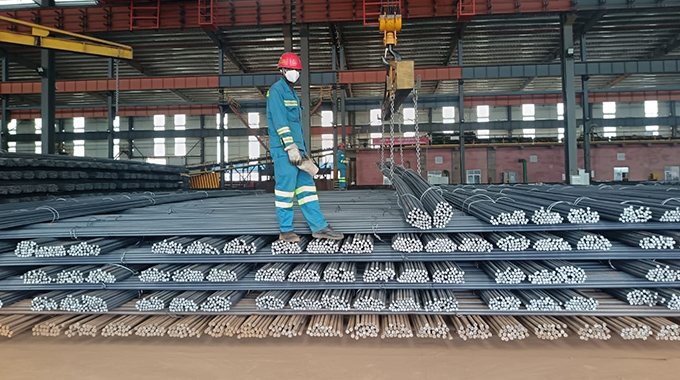
Patrick Chitumba, [email protected]
THE arrival of the US$1,5 billion Dinson Iron and Steel Company (Disco) has begun to fundamentally reshape Zimbabwe’s iron and steel sector, reducing imports, stimulating downstream industries and marking a significant step forward in the country’s industrialisation agenda.
Since becoming operational, Disco has enabled the country to save about US$500 million annually on steel imports, underscoring the progress of Government’s import substitution policy under the National Development Strategy 2 (NDS2).
In a further boost to local manufacturing and mining, the Manhize-based steel producer has expanded its product line to include hot wire rods and mill steel balls — critical inputs previously sourced from abroad at high cost. Disco already manufactures pig iron, steel billets and deformed bars, positioning itself as a key domestic supplier to construction, manufacturing and mining companies while reducing reliance on foreign steel.
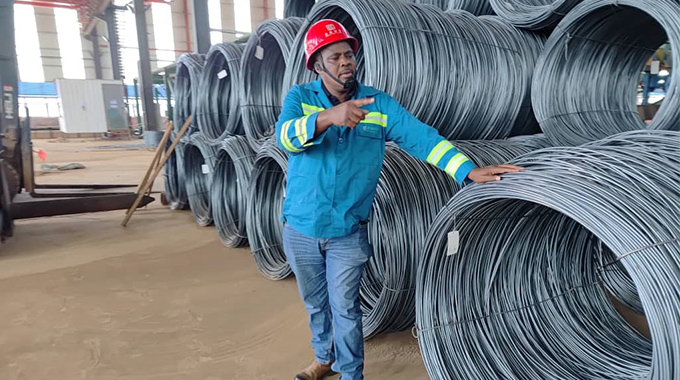
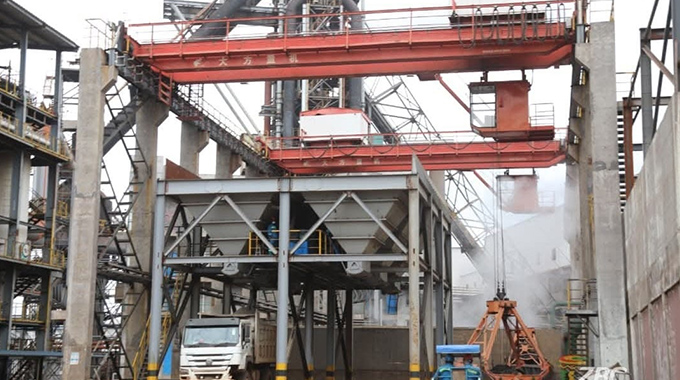
Once fully operational, Disco is projected to become one of the largest steel producers in sub-Saharan Africa, placing Zimbabwe among emerging players in the global steel value chain. Disco project manager, Mr Wilfred Motsi, said the Manhize Steel Plant was already making a measurable contribution to national economic growth.
“Since the day we commenced production, the company has been actively involved in the socio-economic development of Zimbabwe. We currently employ about 2 000 workers, including 190 engineers, which is a significant boost to skills development and employment,” he said.
Mr Motsi noted that Zimbabwe previously imported around 100 000 tonnes of steel reinforcement bars (rebar) annually, but imports had now dropped to zero.
“In 2024, the country’s iron and steel imports fell to US$256 million, down from US$410 million in 2023,” he said.
He added that in the first quarter of 2025, exports of steel products had been dominated by pig iron and steel billets, as domestic output increasingly exceeds local consumption.
“Import substitution has exceeded US$500 million worth of steel products. Under local economic growth, Disco is stimulating industries such as construction, manufacturing and mining,” he said.
Mr Motsi said expansion of the company’s product portfolio further strengthens Disco’s value addition and beneficiation strategy, key pillars of Government’s industrialisation thrust.
“The mass production of steel products at this plant will play a pivotal role in fulfilling the dictates of the NDS2 policy document,” he said.
In terms of capacity, Mr Motsi said Disco had already reached 100 percent utilisation under Phase One, targeting production of 600 000 tonnes of steel per year.
“Production has exceeded local demand and we are now exporting to countries such as Zambia, South Africa and Malawi,” he said.
Beyond steel production, Disco’s investment includes plans for a Smart City — Manhize Town — and a science university, developments expected to transform the Midlands Province into an industrial and innovation hub.
“The Smart City plan has already been approved. Several companies have expressed interest in setting up operations here, and we also have plans for a hotel,” said Mr Motsi.
Disco director, Mr Leo Leit, said the company was proud to invest in Zimbabwe and partner Government on national development initiatives.
“We are happy to be building the Zimbabwe we all want together. We are producing steel that will be a force to reckon with in Africa and globally,” he said.
Mr Leit said the wider Dinson portfolio includes investments in Selous and Hwange, and reiterated that Disco Manhize would become Africa’s largest steel company.
“We commend the Governments of Zimbabwe and China for the support we have received. Steel by steel, brick by brick, we are confident we will build Zimbabwe,” he said.
Disco is a subsidiary of Tsingshan Holdings Group Limited, the world’s largest stainless steel producer, which also operates Dinson Colliery in Hwange and Afrochine Smelting in Selous. Under its long-term expansion plan, Disco is expected to produce 600 000 tonnes in Phase One, 1,2 million tonnes in Phase Two, 3,2 million tonnes in Phase Three and eventually five million tonnes annually in the final phase.
The project’s growth trajectory is anticipated to generate hundreds of millions of dollars in foreign currency earnings, accelerate industrialisation and anchor Zimbabwe’s transition from a raw material exporter to a value-added industrial economy.