Chronicle Editor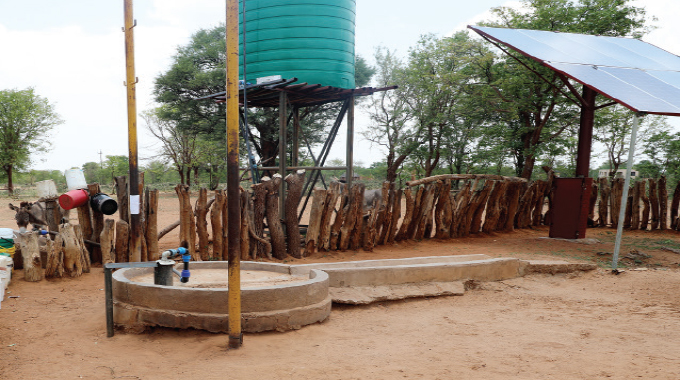
An unflinching intrepidity to fill sunken bellies whether the weather be good, whether the weather be bad, is the sterner stuff of which a government of the people by the people for the people is made.
The Zanu (PF) government which wrested power in 1980 from a tight- fisted illegal Rhodesian regime has stubbornly refused to knuckle under economic sanctions imposed two decades ago by Western imperialists to bring about regime change as punishment for repossession of land occupied by force by white settler farmers. As a result of the brutal economic embargo Zimbabweans have experienced harsh living conditions as among many if not most
African countries faced with lean if not altogether tenuous food supplies with threats to national security and stability.
These conditions have therefore necessitated a choice between bold economic politics and power politics to put in harness the cantankerous rebel perambulating between empty beliies and thick heads and seeking a match-stick to ignite a conflagration to consume the entire nation if that suits the rebel.
Luckily for us Zimbabweans, our second republic government has and continues to introduce economic policies that have the wherewithal to avert any potential national instability and security provoked by persistent sniped or open provocations by foreigners still licking their wounded knees after being given short shrift with the AK rifle by our gallant sons and daughters of the soil in 1980 to settle the question of to whom this country truly belongs.
Devolving power from central government to rural government authorities is one such policy intended to transform the outlook of the countryside or periphery as white colonial rulers regarded the country merely as the backyard where animals and not people with souls such as theirs dwelt.
Now is the time to give a true identity of the owners of the land rich with various minerals and given to blacks by God as their natural endowment.
This suggests that the owners of this land must identify themselves with it by developing it as an inheritance for future generations as well.
The latest government policy of an industry setup in every district surely says volumes about the need for our own black people who have rusticated themselves and remain encamped in big cities vacated by white settlers in their flight from black rule, to become diasporas for these locals to transfer as individuals or business consortiums the wealth garnered in the white man’s ruins to the districts for investment in order to give the white man’s periphery a brave new lease of lives as vibrant industrial zones and with that create employment and other, better livelihoods for rural dwellers.
It must be regarded as naïve and unthinkable of any uninverted Zimbabwean patriot to expect our government to invite overseas investors to transform living conditions in our rural areas.
In fact, the monied and politically powered in our midst should have as a condition for future national appointments examples of what contributions they have made to the development of their provinces or districts as a guarantee that they will not fail to live up to their new expectations.
Of course, opportunities galore under the incumbent government for Zimbabwean diasporans – that is, blacks working abroad – to reinvest their earnings in their native districts and provinces where they and generations stand to benefit from the sweat of their kith and kin.
Surely, the government should not be expected to march wealthy business people to set aside some of their money for investment to transform their rural areas.
And yet some will not stop short of lambasting this writer for suggesting that today some rich black Zimbabweans would wish helicopters would be made available to lift them from bus stops on highways to their villages many if not most of which have become difficult to reach with access roads now virtual rivulets or dongas, so to speak, due to neglect.
Others, both men and women long to visit homesteads where they were born and raised or where their next of kin still live but the thought of travelling long distances to the river to do their laundry or to bath or to fetch water for domestic use or to go to the bush to harvest firewood makes them regard the saying “home sweet home” as referring to their urban dwellings where they flick a switch for power to cook their meals and turn a tap for water to do whatever they wish with the liquid.
Therefore the onus must lie squarely on every unmitigated Zimbabwean to consider our entire land mass and not just urban centres as our responsibility to develop for present and future generations and not for the government to crack a whip as if at a span of oxen not to wonder away from the farrow to browse on fluffy grass on the side with in the process the plough leaving behind ugly banks on which weeds are bound to grow, choke and render the fledgling young crops incapable of realising its full potential.


 Online Reporter