

 admin
admin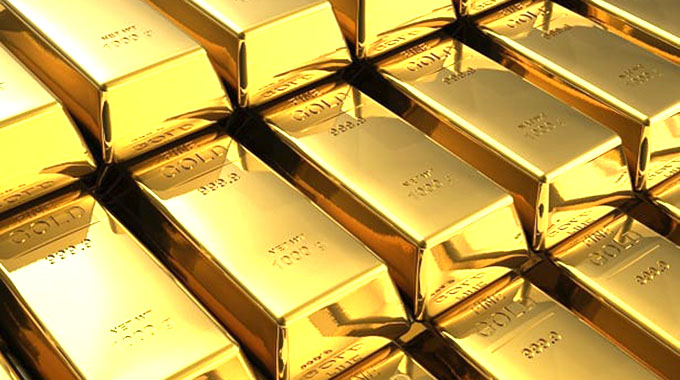
The Rhodesia Herald, 2 September, 1976
SOUTH AFRICA and Rhodesia were the richest known areas of the Earth’s crust, said Professor Des Pretorius, of Witwatersrand University, at Metallogenesis ’76 symposium held at the University of Rhodesia this week.
He said Rhodesia was ranked fourth in Southern Africa in the value of sales a square kilometre in 1971. The unit regional value for Rhodesia was US$364 a square kilometre compared with $876 for Zambia, $1713 for Swaziland and $1796 for South Africa.
Rhodesia was ahead of South West Africa and Angola. He said up to 1971 South Africa’s value of minerals a square kilometre was twice that of the United States and was much higher than in Canada or Australia.
Professor Pretorius said the symposium was examining the formation of mineral deposits. It was the first meeting of its kind in Southern Africa.
The object was to build up an overall picture and fill in some of the gaps so that a pattern could be developed. He said geologists tended to be too specialised in their approach rather than take an overall view.
A lot of data gathered with the help of new techniques was being sifted by computers. “We have never been in a better position to undertake this exercise,” he said.
An overall picture of metal deposits could make it possible to develop new search models.
Of the 30 papers being presented at the symposium 29 were on Southern Africa.
Of these 19 were on Rhodesia and eight were on South African topics.
The symposium, organised by the Rhodesian branch of the Geological Society of Rhodesia, ends tomorrow. Delegates came from Germany, France, Canada, South West Africa, South Africa and Rhodesia.
LESSONS FOR TODAY
- Zimbabwe is endowed with a wealth of mineral resources that play a crucial role in both the national economy and the global market.
- There are 63 minerals including gold, lithium, platinum, coal, chrome, copper, diamonds and many others making it a haven for mining investments. Every one of the country’s 64 districts hosts at least one or more minerals making it one of the richest countries in terms of mineral resources.
- The country has made significant strides in prioritising the ease of doing business within its mining sector, aiming to capitalise on the increasing global demand for critical minerals, particularly those used in renewable technologies.
- Zimbabwe possesses over 4 000 recorded gold deposits, making it one of the richest countries in terms of gold reserves per square kilometre globally. Gold is Zimbabwe’s largest export and serves as a primary driver of economic growth.
- With approximately 2,8 billion tonnes of platinum group metals (PGMs), Zimbabwe ranks second globally in platinum deposits. The growing global demand for PGMs as catalysts in renewable energy technologies positions Zimbabwe favourably for future economic development
- Zimbabwe boasts the sixth-largest lithium reserves worldwide and is the largest producer in Africa. Lithium is increasingly important due to its critical role in electric vehicle batteries and other renewable energy applications.
- The Government aims to become the world’s largest exporter of lithium, targeting to supply 20 percent of global demand once all resources are fully exploited. The Bikita Lithium mine is notable for its substantial reserve of approximately 11 million tonnes.
- Zimbabwe holds approximately 10 billion tonnes of high-grade chromium ores, ranking second globally in chromium reserves. Chrome ore production is essential for various industries, including stainless steel manufacturing. Annually, Zimbabwe produces between 800 000 and 1 million tonnes of chrome ore.


 Online Reporter