Chronicle Editor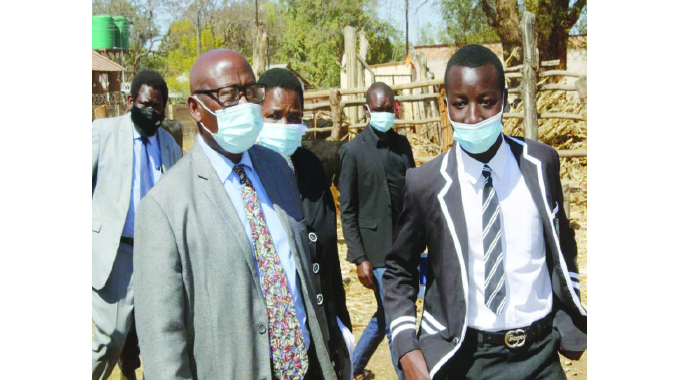
Patrick Chitumba, Midlands Bureau Chief
WHEN Loreto High School in Silobela was closed during the war of liberation, it never dawned on anyone’s mind that it would be reopened and turn into a success story set to realise US$150 000 by year-end from commercial activities.
At independence in 1980, the Catholic-run school became a centre to accommodate Zimbabweans returning from Mozambique before it was reopened in 1981.
Fast forward to 2021, the school now prides itself for being one of the schools contributing to the country’s economy.
Loreto High School which has over 800 pupils and a staff complement of about 50 teachers, runs a fishery project with four fish ponds with an estimated 50 000 fish expected to raise at least US$50 000. The school also harvested 120 tonnes of maize worth US$45 000.
The school managed to produce 3 tonnes of sunflower, 1 tonne of beans and another tonne of groundnuts. There is a poultry project that is projected to raise US$30 000. The egg project is expected to raise US$15 000, and so is the horticulture project.
The school has 11 dairy cows and 12 beef cattle and 46 pigs as well as 46 rabbits. The Minister of Primary and Secondary Education Cain Mathema toured the schools’ projects last Friday where he also officially launched the Vision of Primary and Secondary Education (Vopse) 2030 in Midlands Province aimed at ensuring that pupils gain skills and knowledge.
The school, Minister Mathema said, is turning commercial and soon the benefits from the projects will result in the reduction in school fees.
“What we are witnessing here at Loreto High School is making a contribution towards Vopse and national GDP. I want to commend the team here at Loreto High School for engaging in multiplicity of ventures. Even where the projects are not yet up to scale, the fact is that learners are being provided with an opportunity to equip themselves with relevant knowledge, skills and competences. Today Loreto is standing to be counted and your achievements should be instructive to other schools,” he said.
Minister Mathema said the school is set to generate thousands of United States dollars from its ventures.
“Fishery where you have four fish ponds with some 50 000 fish which at harvest are expected to raise at least US$50 000. Crop production and in the 2020/2021 season your yields were 120 tonnes of maize with US$45 000, 3 tonnes of sunflower, about a tonne of beans and another tonne of groundnuts. Your poultry project in 2021 is projected to raise US$30 000 and it is pleasing to note that it provides all the chicken requirements for the boarding school,” he said.
The minister said if each school in the country was to have at least 12 cattle for example like Loreto High School, the nation would have 120 000 additional cattle.
“Already one school I have visited in the past three weeks has 65 cattle. We are clearly in the right direction and we all have a responsibility to work with other schools to emulate the good practices that we are witnessing here at Loreto. You can imagine the impact that schools would have in their communities and in the country if all the 9 600 schools were to engage in commercial activities appropriate to their environment and capacity,” he said.
The minister said schools must produce materials, goods, uniforms at affordable prices for the parents.
“Unfortunately, the roads linking the school to Gweru or Kwekwe are so bad that the school struggles to look for new markets for fresh produce, dairy, among other products produced by the pupils and staff. There is a need for our Government to look into this. I will engage the relevant minister,” said Minister Mathema.

“School commercial ventures should allow schools to hire the right full-time managers and employees to be paid for by income from the venture. The schools should not use students as a source of cheap labour, as it complies with the Zimbabwean Constitution’s Declaration of Right on Freedom from Slavery.”
Vicar General of Gweru Diocese Father Augustine Chirikadzi said the school has made tremendous progress in infrastructural development and improving living conditions of the pupils, teachers, members of staff and the community.
“Loreto High School has effectively managed to grow maize on 30 hectares and not only maize is grown but a variety of crops. The school is managing quite a large number of livestock for dairy and poultry. We have pigs, chickens and fish also,” he said.
Pupils at the schools took Minister Mathema on a tour of the projects.
An Advanced Level pupil, Wayne Chisikana, said they were doing theory and practical studies which helps them appreciate their subjects.
“As pupils we are involved in these projects and we have theory and practical which makes understanding easier. Even if I leave this school, I know how to look after my chickens for example and rearing cattle,” he said.
Cabinet approved a two-sided educational approach aimed at profit and academic excellence, and schools are now expected to challenge commercial activities for practical subjects.
Public schools are to engage in commercial activities by promoting joint ventures with private investors.



 Online Reporter