

 admin
admin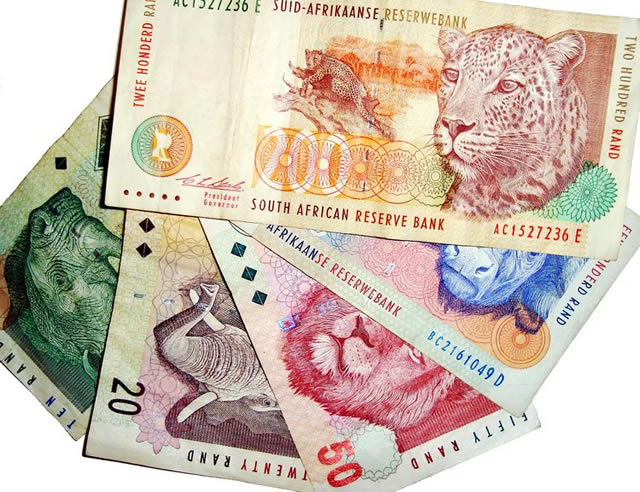
Herald Reporters
There has been mixed reaction to the use of the multi-currency system as some retailers are refusing to accept the South African rand as legal tender while the general public is rejecting the rand at the banks. Few local supermarkets including N. Richards and OK Zimbabwe supermarkets have embraced the rand and are also using Point of Sale machines to make transactions easier.The supermarkets have displayed the exchange rates for the bnefit of customers.
Harare City Council is also accepting the rand from ratepayers but only through the bank.
HCC acting corporate communications manager Mr Michael Chideme said residents could deposit their rand or Chinese yuan into the city’s bank account.
“Consumers can use different currencies to pay for water bills. They will deposit the money into our bank account and we will get an equivalent of that money in US dollars,” he said.
Some shops, especially those selling clothes, were however refusing to accept the rand. Most Indian and Chinese shops have also not embraced the rand while others still do not have PoS machines, suggesting that most of them were not banking their sales proceeds.
At the tobacco auction floors, some banks are offering the rand but few farmers are accepting the currency as they do not have confidence in it while some said they were put off by the fluctuating exchange rate.
Other farmers said they were not aware of the official rate and feared they could fall prey to unscrupulous business people.
On the other hand, traders in the informal sector are refusing to accept the rand as they are afraid to hold on to a currency that was likely to lose value in a short period.
Some service stations were offering a lower rate for the rand but using the PoS machines. Others were offering as little as $5, equivalent to R100.
Zimbabwe National Chamber of Commerce chief executive Mr Takunda Mugaga said it was difficult to have a currency competing with the US dollar at the moment.
“The US dollar is not only a credit currency, but is also being taken as a reserve currency. The US dollar strengthens when other currencies are going down. Thus the demand for the US dollar is normal,” he said.
Ironically in June, bankers and industry recommended the adoption of the South African rand as the major transacting currency to reduce concentration of risk associated with heavy reliance on the US dollar which currently accounts for 95 percent of all transactions.
This came as the Reserve Bank of Zimbabwe (RBZ) moved to expedite cash importation by banks after including cash imports under the priority one (high) category of foreign exchange payments.
Bankers said the adoption of the rand would be one of the measures needed to address the cash challenges the country is facing.
Mr Mugaga said in 2009, the rand and US dollar constituted 49 percent each with the remaining 2 percent being made up of other currencies.
“In 2013, the rand and US dollar constituted 50 percent each and the other currencies had been swallowed. In 2014 the rand was also being swallowed and now we have the US dollar as the dominant currency,” he said.
Mr Mugaga said it was not a good idea for Government to enforce the use of the rand and other currencies as it was lkely to fuel the emergence of another parallel market.
He said the public was also rational and made informed decisions.
Mr Mugaga encouraged Government to come up with a policy of encouraging shops to accept the rand.
“Companies should not refuse to transact using the rand. Parastatals should be in the forefront and lead by example by embracing the rand. Government departments and companies should be the first to embrace the rand ahead of the private sector.
“There should be confidence in the banking sector,” he said.
Economist Mr Midway Bhunu yesterday said the cold reception to the rand in the market hinged mainly on the power of the US dollar against other cur- rencies.
“However, this is putting a lot of pressure on the USD hence the shortages and restrictions on bank withdrawals.
“Although the rand is a strong currency in the region, it is unstable on the international market against other currencies.
“ People are calculative.
“We are operating in an environment characterised by too much speculation as it’s not business as usual due to other factors beyond the control of the last man in the street,” he said.
Government introduced multi-currency arrangements in payment transactions to promote financial sector stability.
The move was part of a plethora of measures introduced by Government through the RBZ aimed at ensuring soundness of the banking system and to alleviate the persistent liquidity challenges in the economy.
Arrangements included introduction of a pricing structure that includes the South African rand and other currencies within the multi-currency basket, alongside the US dollar and bond notes when introduced.
The bond notes are expected also to ease the current liquidity challenges and cash shortages.



 Online Reporter
 Peter Tanyanyiwa