Online Reporter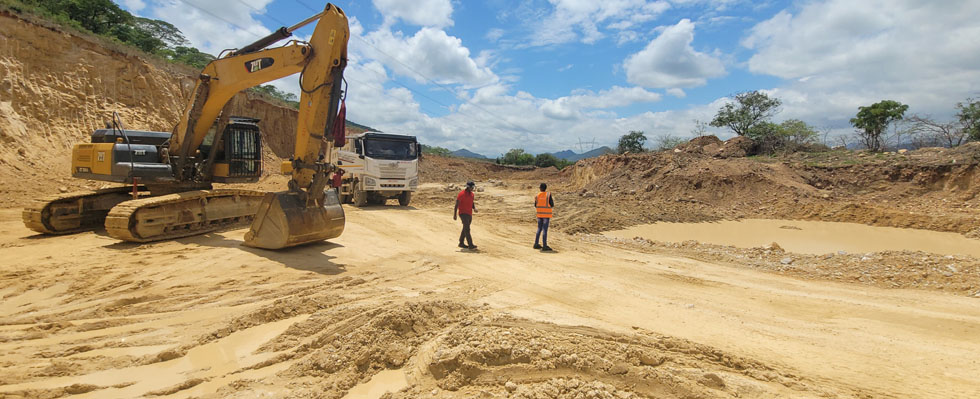
Samuel Kadungure
News Editor
THE construction of the 31,2 kilometre Christmas Pass Bypass Road is gaining momentum – with onsite engineers confirming significant progress on land clearance, road bed and subgrade preparation – giving the project a completion rate of over 20 percent.
A technical team from the Ministry of Transport and Infrastructure Development revealed on Wednesday that the contractor, Leengate Private Limited, is working diligently on the US$99 million project.
Though Leengate (Pvt) Ltd director, Mr Commence Chivanga, confirmed the progress, he refused to comment further, saying the information that had been requested by The Manica Post could only be provided by the client (Government).
Manicaland provincial roads engineer, Engineer Raphael Sigauke said 14,3km of land clearance from Romeo Shops Turn-off towards Feruka Road had been completed, along with major work on five ramps serving as key access points along the bypass route.
“Already 14,35km bush clearing had been completed, along with 6km of road bed preparation, 5km of subgrade preparation and eight culvert crossings,” said Engineer Sigauke, adding that of the 14,35km, 3km have been cleared near Border Timbers, while earthworks, including cutting, filling, road formation, and the installation of concrete culverts, have begun on the cleared stretches.
Pressed further to explain the technical jargon in a layman’s language, Engineer Sigauke had this to say: “Road bed preparation involves clearing, excavating, filling, and grading the area where the road will be built, creating a stable base. Subgrade preparation compacts and trims the top layer to support the road pavement. After subgrade preparation, the contractor will put two more layers. Both are crucial for a durable road, ensuring even weight distribution and preventing settlement or erosion issues, thus extending the road’s lifespan. So, in short, road bed preparation and subgrade preparation are like preparing the ground and laying a strong foundation, to ensure the road doesn’t crack or get damaged easily,” said Engineer Sigauke.
In a statement, the ministry spokesperson, Ms Judith Nhau, gave an overall insight into the progress since construction on the 31,2km Christmas Pass bypass road officially commenced in July.
“We have mobilised equipment and materials, established two site camps, and begun clearing the first section of the route. To date, approximately 11km of clearance has been completed from Romeo Shops towards Feruka Road, including work on five ramps. An additional 3km has been cleared near Border Timbers at our second camp. The ministry has also begun earthworks – including cutting, filling, road formation, and the installation of concrete culverts – on the cleared sections. Overall, more than 20 percent of the project has been completed,” said Ms Nhau.
Ms Nhau also admitted that given the magnitude of the project, a number of challenges straddling mobilisation of equipment, existing services, terrain and design, and logistical have been encountered, but they were proactively managing them, hence progress has been noted on the ground.
“Yes, we have encountered some challenges, which are common for a project of this scale. We are proactively managing them as follows; (i) Mobilisation of equipment: Mobilising the full complement of plant and machinery is an ongoing process, and we will continue to bring more equipment to site in a phased approach. (ii) Existing Services: The road corridor contains several existing services, such as ZETDC power lines and underground water and telephone lines. There have been some delays in obtaining clearances to have these utilities moved or rerouted. We are working closely with the relevant service providers to resolve these issues promptly, which may involve relocation or minor design adjustments. (iii) Terrain and Design: The bypass is specifically designed to reduce curves and steep slopes, addressing the safety hazards of the existing Christmas Pass route. The terrain has required some design refinements in certain sections to achieve this goal. And (iv) Logistics: Logistical factors such as weather and supply chains pose potential risks, but we are closely monitoring these and have plans in place to mitigate their impact. The project team is addressing these challenges through phased mobilisation, early site clearing, and continuous engagement with all stakeholders,” said Ms Nhau.
Despite the challenges, the ministry expressed optimism that the project will be completed by the end of 2026, having been proposed in 1992 for use by haulage trucks.
The project is a major infrastructure development aimed at decongesting Mutare Central Business District (CBD), reducing heavy vehicle traffic through the steep and winding Christmas Pass, and improving road safety.
The development of the road was necessitated by the high accident rate on the Christmas Pass curves, where haulage trucks carrying heavy loads often struggle to descend the steep slopes, resulting in brake failure and jack-knifes.
Most trucks passing through Mutare using the Beira Corridor will be destined for Mozambique, the Port of Beira, as well as Zambia, Malawi, and the Democratic Republic of Congo (DRC).
Hardly a week passes without an accident recorded along the Christmas Pass curves.
Its construction will also include the revamp of the problematic Sakubva (Murahwa) People’s Green Market Bridge.
The bypass road will feature two modern traffic interchanges, similar to the Trabant Interchange, at both ends of the road. The interchanges will enhance the overall safety and efficiency of the road network in the area.
“The project is expected to be completed within the next 15 months from its start in July. Factoring in potential challenges such as the rainy season and resource mobilisation, the projected completion date is by the end of 2026. Once complete, the bypass is projected to deliver several key benefits: (1) Improved traffic flow: The new route will divert heavy haulage trucks away from the steep and winding Christmas Pass, reducing congestion on the existing road and improving travel times for all vehicles. (2) Enhanced road safety: By providing a route with fewer curves and gentler slopes, the bypass will significantly improve safety. This design, along with interchanges at key junctions like the Romeo Turn-off and Chimanimani Road, will reduce accidents associated with brake failure, jack-knifing, and challenging gradients. (3) Stimulated economic activity: Improved connectivity along the eastern corridor – towards the Port of Beira in Mozambique and other regional destinations – will enhance freight movement, lower vehicle operating costs, and support trade flows. For the City of Mutare and the surrounding areas, this will translate into better logistics, greater accessibility, and the potential for new investment,” said Ms Nhau.