

 admin
admin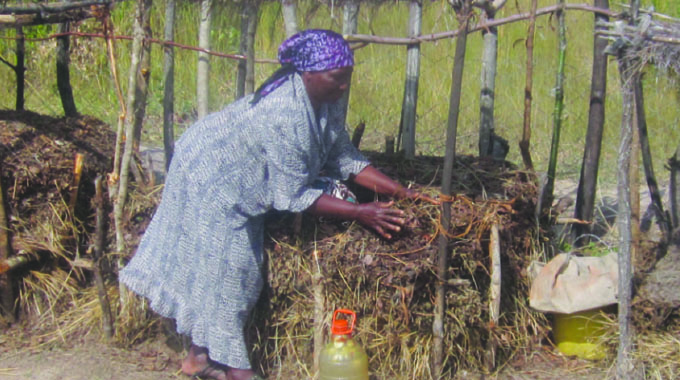
Obert Chifamba
Agri-Insight
COMING at a time like this when talk about mobilising inputs for the season is no longer up-to-date, the subject of using seed banks and organic fertilisers as alternatives to what agro-dealers have on offer may sound offish to many, but the time to start planning for the next season is now.
And planning for a novel season must obviously include exploring options at the farmers’ disposal, as they seek to escape punishing costs of production, while climate-proofing operations from the harsh effects of climate change has in recent years become their biggest nemesis.
It is no surprise that farmers’ unions recently went into overdrive calling on their members to consider creating seed banks and coming up with substitutes to chemical fertilisers.
At least the unions are not trying to introduce anything new, but just the revival of a practice that was popular in the traditional past for its good results.
In simpler terms, the unions are just telling farmers to go back to basics and use locally available solutions to solve their problems, which is something the Government has also been calling for.
Such a move would bring sustainability to farmers’ operations given that prices for both hybrid seed and chemical fertilisers have in recent seasons been characteristically higher than what most farmers can afford.
Of course the Government has chipped in by introducing various support programmes but those farmers intending to augment the support with their own inputs have found it difficult to do so with inputs priced out of their reach.
In most cases such farmers miss the most productive segments of the season, as they will usually struggle to put financial resources together and buy the inputs.
When they eventually mobilise enough capital to buy the inputs, they would have missed the critical heat units that crops need to grow to productive levels, which naturally impacts on the final yields.
Usually seed and fertilisers account for over 60 percent of total production costs for a one-hectare plot for a crop like maize.
The crux of the matter here is that the costs of agro-inputs that are confronting farmers mostly at the start of every soon in recent times are well beyond their reach.
Effectively, this gives logic to the idea that farmers need to come together and avail their own seed options while exploring alternatives to chemical fertilisers.
This may come as the only sustainable way for agricultural development, as it will complement the efforts Government and other stakeholders are putting in availing inputs, which in most cases do not match the entire farmers’ requirements.
It is worth noting that some farmers who received Government support but had plans to crop hectarages larger than the ones they are receiving support for, are still apprehensive as we speak as agro-input prices have remained high and out of their reach.
At this point it has become necessary for farmers to do some introspection on the contribution that hybrid seed and chemical fertilisers are making in the agriculture revolution.
They need to interrogate whether or not hybrid seed is the only answer and whether or not they cannot have alternative open pollinated varieties (OPV) that yield better.
And as my long-time friend and Zimbabwe Farmers Union (ZFU) secretary general Paul Zakariya would put it — the time has come for the nation to go back to the basics and develop its own seed, for example, what Zimbabwe Super Seeds that started in Masvingo has done to produce certified seed for both domestic and export markets at affordable prices.
This is not to push existing seed houses out of business but they should also appreciate that the farmers who are supposed to consume their products are failing to match the prices their commodities are being sold at.
It is a fact that the farmers still have to produce crops effectively regardless of the difficulties they go through to secure basic inputs so getting a cheaper, but productive alternative will not bring any kind of harm to anyone.
Small-scale farmers in the Uzumba Maramba Pfungwe in Mashonaland East and Tsholotsho in Matabeleland North, for instance, have established community seed banks where they store stocks for their use and even sell to generate some income.
In 2013, Zimbabwe Super Seeds developed certified seed for cowpeas, sugar beans, maize, sorghum and rice varieties better adapted to the high saline soils of Zaka where it originated than the varieties they were buying from agro-dealers.
The process of setting up seed banks is done diligently starting from the selection and management of the collected seed.
Collecting and cleaning seeds is largely carried out by farmers under the supervision of a selected seed bank management committee with guidance from Agritex officers.
Farmers trained in seed handling do collection of seed with that which is destined for storage taken through a winnowing or cleaning process to remove deformed seed, dust and dirt.
Seeds with higher moisture content than the recommended 11 percent are sun-dried at homesteads. Farmers test for acceptable dryness by breaking the grain with their hands or teeth.
Germplasm is stored either in plastic bags or tins. The management committee inspects all seed material before storage. When approved, seeds are placed in air-tight bottles.
Generally, most of the sorghum, pearl and finger millet and legumes such as groundnut, bambara nut, cowpea and indigenous vegetables that are grown around the country are sourced from farmer managed seed systems.
It, therefore, will not need rocket science for anyone to realise how farmers’ home-grown solutions have for centuries contributed to their food security and income generation.
Zimbabwe Super Seeds has over the years grown to be a leading producer and marketer of certified seed mainly OPVs for maize, sugar beans, cowpeas, sorghum, Bambara nuts and ground nuts.
A bit of history lessons here — farmers in the past demonstrated high levels of organisation and unity and formed cooperatives, for example, Farmers Coop (now Farm and City), which they equipped with agro-inputs for sale and later enjoyed dividends at the end of each year.
This comes as a reminder that farmers have always been business people but their problem is that they all seemed to believe that to be considered business people they had to have stores or other forms of trade where they would deal with cash on a daily basis or something.
The use of alternatives to chemical fertilisers such as garden compost and animal manure needs to be developed further and up-scaled. On the one hand, farmers must also appreciate that while maize hybrid seed has the potential to yield up to 15 tonnes per hectare, such yields are not automatic in the absence of optimal management.
It is also important to acknowledge that optimal management of OPVs can give yields of between six and seven tonnes per hectare for maize, which is way higher than what most farmers are getting on average.
The national average yield has in most years been below one tonne per hectare despite farmers having planted the hybrid seed.



 Online Reporter