admin
admin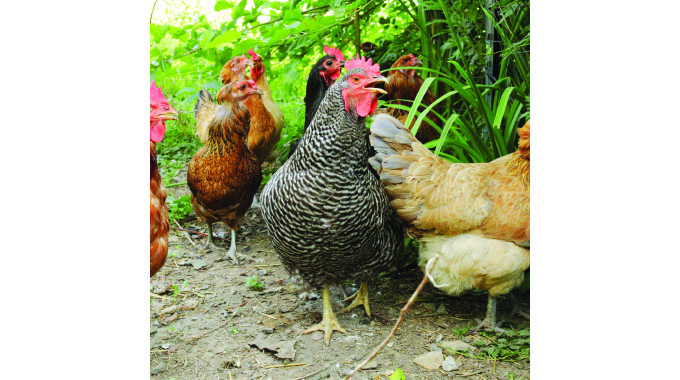
Sifelani Tsiko–Agric Editor
Just a year ago, Happiness Musarurwa and her husband, Nkosilathi Ndlovu, took an unusual decision.
The couple had a thriving chicken rearing project in Musina, South Africa and looked set for a cushy chicken business venture inside Africa’s largest economy.
Instead, they chose to pack up and return to their native country, Zimbabwe, to work on developing their chicken project on a homestead they had secured at Mkhaliphe village in Ward 20 of Gwanda rural district, a dry and arid region in the southern part of the country.
With rising anti-immigrant tensions and violence in South Africa that had led to the injury and death of scores of people from Zimbabwe and other African countries, Musarurwa and her husband felt strongly that there was no place like home.
Just recently, a mob went from house-to-house demanding passports before catching a Zimbabwean man and stoning and burning him to death.
The 6 April murder of 44-year-old Elvis Nyathi, is the latest episode of xenophobia inside South Africa that has elicited widespread condemnation.
The anti-foreigner groups are capitalising on the desperation spawned by rampant unemployment and deep inequalities within the South African economy to instil fear and cause more widespread violence that killed dozens of people in the past.
“We used to rent a small place on a plot in Musina where we had a thriving chicken project. We ran this project well and we built a good stock of more than 200 broiler chickens and ‘chicken makhayas’ (indigenous chickens),” Musarurwa said.
“We survived on this project and saved money to secure a homestead here at Mkhaliphe village where we started building in 2019. However, with rising anti-foreigner violence and rental costs, we decided to return home in November 2021.”
The Covid-19 pandemic and fear that some anti-foreigner group could seize or burn the project forced Musarurwa and her husband to trek back home.
Musarurwa and her husband grew up surrounded by agriculture – Gokwe and Gwanda respectively. Farming is in their blood.
The couple turned to farming. bucking a national and global trend – with a high percentage of people who work in agriculture dropping.
“At Musina we feared for our lives. We thought of home and we were hopeful that we could find a life in farming,” she said.
“Many people don’t want to work on farms anymore, but they don’t know that you make more money closer to the mouth than anywhere else. Farming is life.”
Musarurwa decided to branch out from life in the Diaspora to seek new life in the country of their roots.
“It was not an easy decision to make. Many Zimbabweans are struggling in South Africa. Life there is tough and very hostile. We feared for our life as we became more successful in our chicken project in Musina,” she said.
“Deep inside I felt that chicken farming could be the answer since back at home we could easily access land. Of course, farming has an image problem with many young people regarding it as badly paid work for unskilled people.”
Musarurwa did not have much capital and in-depth knowledge to venture into chicken rearing.
And, the coming in of the Planting for Progress project implemented by Practical Action in Gwanda and Bulilima rural district bolstered her chicken rearing interests.
The £1,49 million (nearly US$1,95 million) project implemented by Practical Action and funded by the UK Aid, a fund by the Foreign, Commonwealth and Development Office (FCDO) of the United Kingdom, has supported the setting up of solar powered systems in 14 gardens, installation of 12-solar-powered incubators for indigenous poultry projects and two sand dams for beneficiaries in Gwanda and Bulilima districts to empower women and improve livelihoods.
The project has helped to improve agricultural production through increased supply of water for irrigation to gardens and irrigation schemes through solar energy. The aim of this 29-month project is to increase agricultural productivity and incomes for 1 310 smallholder farmers in the Bulilima and Gwanda districts through adoption of agro ecology, solar irrigation and sand dams as well as access to finance and markets.
“For me this was a timely project. I badly needed knowledge to enhance my knowledge on chicken rearing,” Musarurwa said.
“I have benefited immensely from this project. I got training on vaccination, hygiene practices, poultry feeding and other ideas to contain diseases and boost our indigenous chicken stock.”
Musarurwa and other 20 members formed the Madida Project at Mkhaliphe village.
The group received 40 indigenous chickens made up of five cocks and 35 hens, a solar-powered incubator, some start-up stock feed and vaccines in December 2021.
The chickens included the popular road-runner breeds in Zimbabwe that include the Rhode Island, Boschveld, Black Australorp and the Potchefstroom Koekoek. Despite losing a huge chunk of chickens, the group persevered and managed to get their project running.
Since December last year, the group got more than 100 chicks from their solar-powered incubator. They have rebuilt their stocks to 130 chickens and 80 chicks.
The members sold some of the chicks for R2 and shared some among themselves to help individual members to have some chickens at their homestead, apart from the their Madida project stock.
“When we started, we lost a number of chickens. Only about 16 survived and we worked hard to rebuild our stock,” said Progress Ndlovu, secretary of the project.
“We almost gave up, but over time we persevered and built our stocks well. We now have got 130 chickens and 80 chicks that we have kept to increase our stocks. We have sold some and shared some amongst ourselves.
“I am grateful to Practical Action for the training and support we got. We are now able to do everything on our own, from handling the solar-powered incubator to produce chicks, making chicken feed and treating our birds.”
From the 30 chicks, Musarurwa got from the project, she now has 100 indigenous chickens at home.
“I now have 100 free range chickens of my own apart from the ones we co-own with others at the project,” she said.
“Chicken farming has always been my goal. I knew if I applied myself well, I could build a sustainable chicken farm project for myself. I have managed to build my house from chicken sales. I also have raised fees for my children and kept some money to buy food and other needs.”
Full article on www.herald.co.zw
The farmers have been trained to complete a checklist which includes information such as the type of local available feed, mortalities, number of day old chicks and quality of birds bedding as well as tips on how to diagnose diseases.
They were also taught on the importance of feeding chickens on time and how to contain chicken diseases.
Poultry contributes to improved household nutrition – in the form of proteins in eggs and meat, food security and improved incomes for smallholder farmers.
It acts as a key supplement to revenue from crops and livestock – helping to build the resilience of farmers to cope with droughts.
Poultry farming in Zimbabwe and most other African countries is one of the biggest business opportunities on the continent. Zimbabwe and Africa’s love poultry meat and eggs has grown at a staggering pace.
Every year, the continent imports more than two million metric tonnes of poultry products valued at more than US$3 billion to meet domestic demand.
All this is increasing with size of the rapidly urbanising population. Households, restaurants, schools, clinics and rural business centres constitute a large chunk of chicken and egg demand and makes a very good potential target for rural small-scale chicken breeders.
Increasing numbers of Zimbabwean farmers are turning to indigenous poultry due to the rising cost of feed, tedious management requirements for broilers and the high demand for indigenous species.
The quest for a healthy lifestyle change is driving demand for indigenous chickens, day-old chicks and eggs for farmers in Gwanda. Most buyers say indigenous chickens’ meat is tougher and tastier than the cage-raised broiler varieties and are free of chemicals or drugs.
Small-scale poultry farmers constitute 75 percent of poultry output in the country. Last year, Zimbabwe’s poultry production rebounded from a decline in 2020 due to a successful crop season.
Output was estimated to have increased to 156,078 tonnes in 2021.
“Zimbabweans love chicken meat and eggs and I am keen to make money from this kind of love,” said Musarurwa.
“I sell my chickens for R100 a bird. I am growing sunflower to enhance my bushmill chicken feed production. Just from my chicken sales I have made ever since I returned from Musina, I have bought three cows and nine goats, dug a well and built a chicken pen. I’m also working to finish my house.”


 Online Reporter