

 admin
admin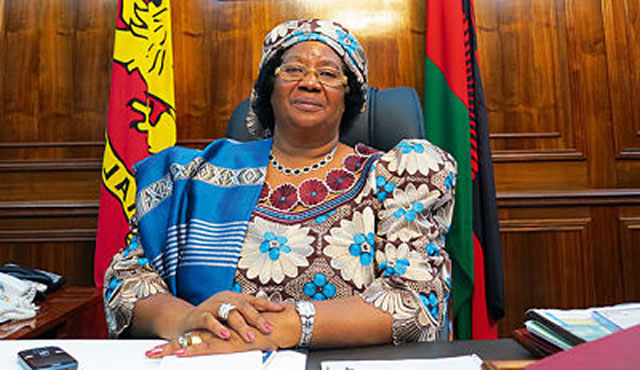

LILONGWE — As Malawians go to the polls to elect their president, lawmakers and local government leaders, the country’s electoral governing body yesterday declared its readiness to ensure peaceful tripartite elections.About 7,5 million registered voters out of Malawi’s estimated 15 million population will cast their votes today, in the country’s fifth elections since transition to multiparty democracy in 1994.
In a statement to the media, the Malawi Electoral Commission (MEC) expressed satisfaction on how the preparations for the elections have gone so far from the participating political parties to other interested parties.
“The Commission wishes to congratulate all the contesting candidates, their political parties and followers for the successful and peaceful campaign. It has been a peaceful campaign process where we did not record incidences of violence as has been the case in some past elections,” the electoral body said in a statement.
“We look towards this as an achievement. An achievement that should recognise the maturity of political parties, civil society organisations, and the media,” the statement added.
The electoral body has since hoped that the spirit shown so far ahead of the elections will continue during voting, counting and the announcement of results, adding that there is need to maintain peace, law and order in the country. Twelve political party candidates are competing for the presidential seat with 193 parliament seats and 444 local government seats to be won. The election campaigns have been peaceful despite a few pockets of violence.
Incumbent Joyce Banda, of the governing People’s Party (PP) faces stiff competition from mainly three candidates who includes Lazarus Chakwera of the Malawi Congress Party, Atupele Muluzi of the United Democratic Front and Peter Mutharika of the Democratic Progress Party.
Despite the elections being seen as “closely contested,” analysts have predicted that the Malawian leader will emerge victorious.
Among some think-tanks that have given the incumbent the possibility of pulling through includes the Economist Intelligence Unit and the African Confidential Report which tracks political developments on the African continent.
According to a special report of the African Confidential Report, the Malawian leader’s campaign has been well funded and organised and she is likely to get more votes from rural areas, especially from the womenfolk.
She however, faces stiff challenge to win votes in urban areas mainly due to a corruption scandal that rocked the country since last year. The scandal, according to analysts, will have a big impact on how many votes she gets from urban voters.
Despite the elections being preceded by a major corruption scandal which has been dubbed by the local media as “Cashgate” scandal, the Malawian leader still enjoys the privilege of the incumbency.
The scandal involves the siphoning of millions of public funds through fraudulent payments and loopholes in the government’s financial management system which has resulted in a number of high profile officials being arrested.
The electoral body has so far distributed election materials to all parts of the country while election observers are already in the country to ensure that the elections are held in a free and transparent atmosphere.
Among observer missions already in the country includes a 147-member mission from the Southern African Development Community (Sadc) which has been in the country since May 9.
Besides using the Sadc Principles and Guidelines Governing Democratic Elections and other regional, continental and international election instruments, the Sadc mission is being guided by two other election instruments namely the Norms and Standards for Elections in the Sadc and the Benchmark for Assessing Elections in Southern Africa.
Another mission observing the elections is a 10-member team from the African Union (AU), a team from the European Union (EU) as well as a team from the Common Market for Eastern and Southern African (Comesa).
Other observer missions are from the Sadc Parliamentary Forum, the Sadc Electoral Commission Forum, the Zimbabwe Election Support Network and the Nigeria High Commission, among others. — Xinhua.


 derick.khumalo
 Online Reporter