Chronicle Editor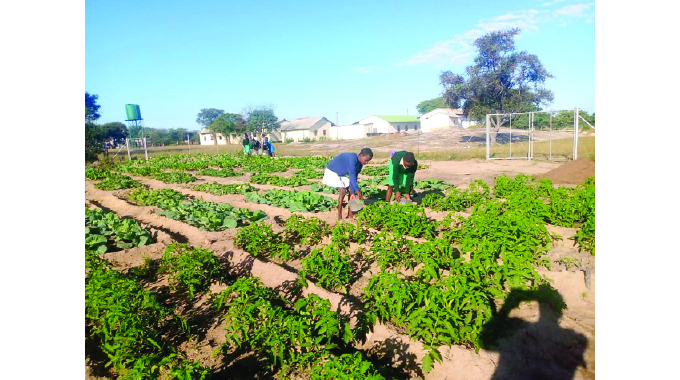
Sukulwenkosi Dube-Matutu, Chronicle Reporter
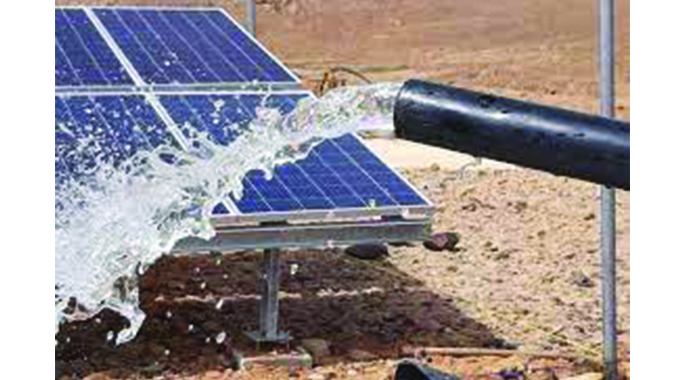
OVER 300 homesteads in Kwite East Village in Mangwe District now have a reliable water source after a solar powered piped water system was installed in their area under a World Vision project.
The project has also benefited a local school, Kwite Primary School.
Previously, learners and staff members at the school had to collect water from a nearby dam or community borehole, which was time consuming and unsafe.
The villagers are now accessing water from taps which are located a few metres from their homesteads.
They have also established small gardens in their area where they grow various vegetables.
Before the piped water scheme project came to their area late last year, villagers had to walk over five kilometres to collect water from a nearby river whenever their boreholes ran dry.
World Vision installed the solar powered piped water system and five taps which supply the community with water and one which supplies the school.
Under the project, an 80-metre-deep borehole was drilled at Kwite Business Centre and four water tanks were mounted in the area.
The school is now running a garden project and it is also set to start a fish farming project due to the availability of a reliable water source.
These projects will assist orphaned and vulnerable children.
A villager from Kwite East village, Ms Trinity Khupe, said the water project has brought huge relief to them as a community.
“We had a serious problem in accessing water in our area.
We had a few boreholes and to make matters worse these boreholes would dry up quickly as the water table was very low thereby making our life difficult.
When the borehole had water, we would queue for long hours as the water would stop coming out while we were collecting.
When the boreholes were dry, we had to walk to Mhlanga River which is about five kilometres away to collect water from there,” she said.
Ms Khupe said she was relieved as she now has to walk about 100 metres to get to the nearby tap and collect water.
Another villager, Ms Nomasonto Mabuza, said it used to be difficult for them to start gardening projects as they were experiencing water challenges.
She said she now has a garden where she grows vegetables. Ms Mabuza said she is able to feed her family and also sell some of the vegetables in order to get money to cover her expenses.
“We don’t only have water at our disposal but we also have a source of income because of this piped water scheme.
I have a garden where I’m growing vegetables. This means I now have a source of income and food as well.
We are relieved as a community that we now have a reliable water source,” she said.
The headmistress of Kwite Primary School, Ms Sibusiso Ncube, said the project has helped improve hygiene standards at the school.
She said learners now have access to safe drinking water and lessons were no longer being disrupted as water was now being collected from within the school.
Ms Ncube said the school’s garden project had also been revived. World Vision also assisted the school with a perimeter fence for their garden.

“Sometimes pupils had to collect water from a nearby dam which meant that they were at risk of catching diseases.
The situation has greatly improved now as the water is readily available within the school.
We are now able to conduct income generating projects such as gardening in order to assist orphaned and vulnerable children,” she said.
Ms Ncube said they were set to start a fish farming project at the school which will assist with income. She said they can now teach agriculture comprehensively.
Ward 1 councillor Bernard Tshuma said the piped water scheme has significantly improved the lives of community members and operations at the school.
He said the village used to rely on two boreholes.
Clr Tshuma said there are some villages within his ward that were also experiencing water challenges. – @DubeMatutu



 Online Reporter