Online Reporter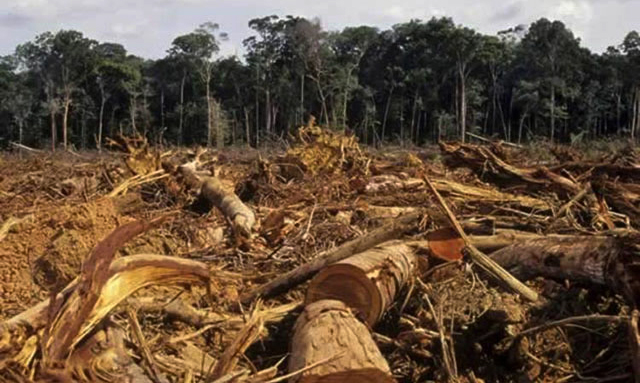
Tendai Gukutikwa
Post Reporter
MANICALAND has lost a staggering 21 000 hectares of forest cover since 2018, prompting provincial authorities to call for urgent action to reverse the trend, which is largely blamed on illegal harvesting, veld fires, energy shortages, and unsustainable farming practices.
Minister of State for Provincial Affairs and Devolution, Advocate Misheck Mugadza, warned delegates at the Manicaland Forestry Indaba in Mutare that if current deforestation trends go unchecked, the province risks losing its biodiversity, timber industry, and critical ecosystem services.
“Deforestation is a serious threat to our heritage, which seems to be taking place worldwide. Evidence of deforestation’s effects can be seen in the siltation of our water bodies and the alarming migration of wildlife due to habitat loss caused by excessive human-induced deforestation,” said Minister Mugadza.
Between 2018 and 2024, forest cover in Manicaland declined from 45 percent to 37 percent.
Minister Mugadza said effects of this reduction are being felt across multiple sectors – from water quality deterioration to dwindling wildlife numbers and increased vulnerability of communities – to effects of climate change.
Manicaland is home to the country’s most unique rainforest ecosystems and is the only province with soil and climatic conditions suitable for plantation timber, remaining critical to Zimbabwe’s forestry economy.
The province boasts a variety of protected forest zones, including Chirinda Forest in Chipinge, Vumba Botanical Garden in Mutare, and StapleFord Forests in Mutasa, among others.
“These ecosystems attract vital industries such as timber and tourism, which are central to both the province’s economy and environmental well-being. We must protect them if we are to ensure that no one and no place is left behind, in line with the development agenda set by His Excellency, President Emmerson Mnangagwa,” he said.
Minister Mugadza stressed that sustainable forest management is, not only about conservation, but also about livelihoods.
“Our indigenous forests are not just beautiful – they are a direct source of food, medicine, firewood, honey, and employment for thousands. This is why our office welcomes workshops like these, as they allow us to develop both administrative and policy responses to halt forest degradation,” he said.
Forestry Commission provincial manager, Mr Phillip Tom confirmed that forest loss in the province is accelerating due to multiple pressures.
“From 2018 to 2024, we have lost a total of 21 000 hectares of forest in the province. That is a significant figure when you consider that Manicaland currently has just 37,03 percent forest cover of its total land area,” said Mr Tom, further explaining that three major forest types are affected – natural indigenous forests, moist medium-altitude rainforests, and commercial timber plantations.
“All these are experiencing a decline. The main driver is energy poverty. Due to frequent power outages, most households rely on firewood as their primary energy source. That puts direct pressure on our forests, especially in rural and peri-urban areas,” he said.
Mr Tom also lamented the destruction of over 3 400 hectares of commercial timber in 2024 alone in the province due to forest fires, most of which were started through human negligence or deliberate acts of arson.
“Despite the beautiful natural ecosystem in 2024, unfortunately, forest fires destroyed 3 402 hectares of our valuable commercial timber. Losses are running into hundreds of thousands of dollars. These fires are largely human-induced, either through negligence or deliberate acts. That is why we applaud the Minister for calling this indaba so that our people understand the scale of the damage and the urgency to act,” said Mr Tom, adding that agricultural expansion is also playing significant role in the destruction of forests.
“Our districts are very active in farming. That means land clearance is happening on a large scale. Tobacco curing, in particular, has become one of the key causes of deforestation. Farmers cut down trees to use as fuel,” he said, adding that Manicaland is also the biggest contributor to Zimbabwe’s national deforestation rate.
“We are contributing 21 000 hectares to the deforestation rate, and because of this, we have taken a significant share of the national reforestation target,” said Mr Tom.
Nationally, Zimbabwe aims to plant 30 million trees, and Manicaland is responsible for a third of that figure – 10 million trees.
“We are making progress and have been meeting our targets over the years, but external factors are working against us. Climate change is affecting seedling survival, and in communal areas, our planted stocks are often destroyed by veld fires or grazed by livestock due to a lack of protection,” he said, also noting that reforestation efforts would only succeed if matched with public education, stronger policy enforcement, and sustainable alternatives for energy and livelihoods.
“Replanting trees is not enough. We need to tackle the root causes: energy poverty, poor land management, and a lack of environmental awareness in some communities,” he said.