

 Online Reporter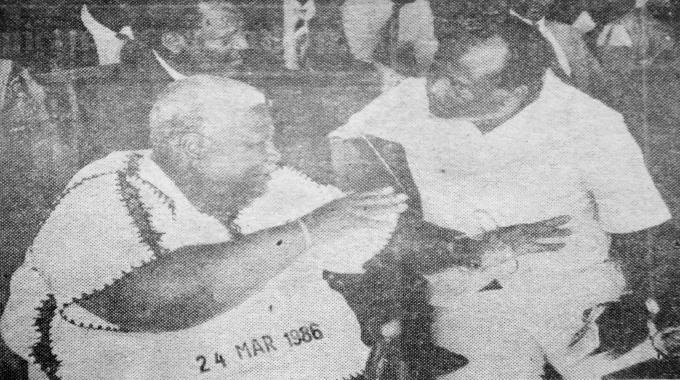
Mkhululi Sibanda, Assistant Editor
GROWING up during the formative years of our newly independent Zimbabwe in the 1980s, 18 April was always a day to look forward to. With the country still gripped by the euphoria of our new-found freedom following the dismantling of colonial rule, Independence Day celebrations brought great excitement.
The main festivities, held in the capital Harare, cascaded down to the provinces, districts and villages. It was no different for my home district, Matobo, in Matabeleland South Province.
Having returned home from Bulawayo where I attended primary school during the holidays to the serene environment of my village, Donkwe-Donkwe, we, like many others, would join both young and old in trooping to Kezi Business Centre, to mark the occasion.
For children like us, the main attraction was the entertainment: traditional dances, particularly the local Kalanga dance amabhiza, drills by ex-combatants, school choirs and football matches in the afternoon.
The Highlanders Football Club leadership at the time, perhaps in honour of the late local businessman Tafi Zibuya Moyo, whose homestead lies about three kilometres from the service centre would often send either their Under-18 or reserve side to face a locally assembled team, known as Kezi Strikers. This team included local civil servants, such as members of the police force.
In those days, no one could have imagined that Kezi as Matobo District is commonly known, would one day host the National Independence Day celebrations. Yet, fast forward to 2025, specifically Tuesday, 1 July, when the Minister of Information, Publicity and Broadcasting Services, Dr Jenfan Muswere, announced during his post-Cabinet briefing:
“Regarding the 46th Independence Day and Children’s Celebrations, Cabinet has approved Maphisa Open Space in Matobo District, Matabeleland South Province to host the event.
This strategic selection leverages Maphisa’s profound historical significance and multifaceted benefits. Notably, the event will catalyse infrastructure development, including the rehabilitation of key roads such as the Gwanda–Maphisa and Bulawayo–Maphisa roads.”
This piece, therefore, explores why the government made the right decision in choosing Matobo District at large and Maphisa in particular, as host of the 2026 Independence Day Celebrations.
The hosting of the Uhuru District in Maphisa is part of the devolution of national events by the Second Republic led by President Mnangagwa, inspired by his philosophy of “leaving no one and no place behind.”
The rotation of national events, particularly Independence Day celebrations, plays a vital role in preserving and entrenching the memory of national liberation across the country, serving as a powerful tool for collective remembrance and the formation of national identity.
As the nation prepares for next year’s event, it is worthwhile to spotlight the historical dimensions of Maphisa.
Maphisa: The name “Maphisa”, which has attained town board status, is named after Maphisa Fuyane, the founding chief of the iSizinda regiment during the Ndebele pre-colonial state. Of particular significance is the role played by Maphisa’s son, Mdilizelwa Fuyane, in the resistance against colonisation. During the Battle of Pupu, across the Tshangane River on 3 December 1893, when Ndebele warriors clashed with British forces in pursuit of King Lobengula, Mdilizelwa is reputed to have delivered the fatal blow to Major Allan Wilson. It is therefore, a great honour, to hold an occasion that celebrates the defeat of colonialism at a place named after one of the pioneers of the country’s struggle for self-rule.
Maphisa: The genesis of National Unity
With the peace brought about by the signing of the Unity Accord on 22 December 1987 between the late former President Cde Robert Mugabe and the late Vice-President Dr Joshua Nkomo, it is vital to acknowledge the role played by Maphisa Growth Point in that historic process.
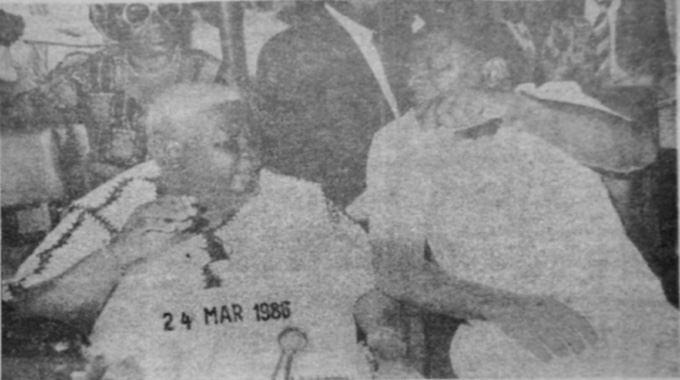
It was in Maphisa that the first tangible steps towards unity were taken. On 23 March 1986, Maphisa Growth Point hosted the first rally jointly addressed by politicians from both ZANU (PF) and PF-ZAPU, as efforts to resolve the volatile political climate of the 1980s intensified.
The main speakers were then PF-ZAPU President, Dr Joshua Mqabuko Nkomo and the then Minister of Home Affairs, Cde Enos Nkala. As described by The Chronicle:
“The rally was the first in Zimbabwe since the split in the nationalist ranks 23 years ago to be addressed by members of both ZANU (PF) and PF-ZAPU”

Prior to that, Dr Nkomo and Cde Nkala had been fierce rivals, marked by long-standing political tensions. The rally broke the ice and paved the way for the eventual signing of the Unity Accord on 22 December 1987.
Cde Nkala’s ZANU (PF) delegation included the current State President, Cde Emmerson Mnangagwa (then Minister of State Security), Industry and Technology Minister Dr Callistus Ndlovu, and the then Governor of Matabeleland South, Cde Mark Dube.
On the PF-ZAPU side, Dr Nkomo was accompanied by Central Committee members including Cde Stephen Jeqe Nkomo, Dr Isaac Nyathi and Cdes Micah Mahamba Bhebhe and Naison Khutshwekhaya Ndlovu.
At the rally, both leaders urged their supporters to turn the page and build the nation together. Their message was heeded, and the country has remained united under the banner of nationalist solidarity.
On 18 April 2026, President Mnangagwa will return to Maphisa to preside over the National Independence Celebrations. What an honour it is for the Head of State to bring such a prestigious occasion to this corner of the country.
Armed Struggle: The Role of Matobo District
Matobo District, where Maphisa Growth Point is located, was a strategic corridor used by recruits en route to join the armed struggle via Botswana and into Zambia. People from across Zimbabwe passed through Gwanda, Matobo, Mangwe, and Bulilima districts of Matabeleland South, owing to their proximity to the Botswana border.
Matobo and Gwanda were especially frequented thanks to the collaborative efforts of Pelandaba Bus crews, which operated routes throughout these districts. The owner of Pelandaba, the late Joseph Mtshumayeli Ngwenya, was a staunch supporter of the liberation struggle. Both ZPRA and ZANLA guerrillas were grateful beneficiaries of his benevolence.
At the height of the war, Matobo was a theatre of intense battles. The Rhodesian forces faced a daunting task as they fought against three guerrilla armies. Despite the long distance from Mozambique, where ZANLA had its training bases, their fighters still managed to infiltrate as far as Gwanda and Matobo, which fell under the operational codename “Gaza Province.”
Among the ZANLA fighters who saw action around Maphisa was the current Supreme Court Judge, Justice Charles Hungwe. His area of operation centred on St Joseph’s Mission—the home area of Dr Nkomo.
ZPRA forces under guerillas such as Cdes Jabulani Sibasa, Kenias Hove and Mkhize were also heavily deployed in the region and were later joined by fighters from South Africa’s uMkhonto we Sizwe as they made their way through Zimbabwe into neighbouring countries. Numerous battle sites and unmarked graves are scattered throughout the district—silent witnesses to the sacrifices made.
Home of Heroes
The district gave a number of its sons and daughters to the cause of the country’s liberation struggle, the most prominent being the late Vice-President, Dr Nkomo, his younger brother and the late Governor of Matabeleland South, Cde Stephen Nkomo, Jason Ziyaphapha Moyo, Vote Moyo, Boysen Mguni while the combatants who quickly to mind include the Maphenduka brothers, Bitwell who was the first commander of Gwayi River Mine Assembly Point and Soneni (Polate Moyo). The district also contributed Colonel Smile Madubeko Moyo, Alfred “Gibson Makwenga” Tshuma, Lot “Mahlala” Sibanda, Colonel Thomas Ngwenya, Major-Generals Exsebios Tshuma and Simo Maseko among others.
Sports
The district is the home of celebrated junior football coach, Albert “Baba” Dube who is credited to have nurtured the football skills of stars such the Ndlovu brothers, Madinda, Adam and Peter as well as those of Willard Khumalo, Mercedes Sibanda and Benjamin Nkonjera.
From the current Highlanders board, four are from the district. These being former club chairman, Peter Dube, Matthew Sibindi, Cosmas Sikosana and Methuseli Mafu. Former captain of the side, Bekithemba Ndlovu a winner of the Indepedence Trophy is also a local.
Maphisa, thus, is more than just a venue. It is a space where history, memory, struggle, and unity converge. The decision to hold the 2026 Independence Day celebrations here honours the stories etched into its soil and the lives that shaped our nation.


