Online Reporter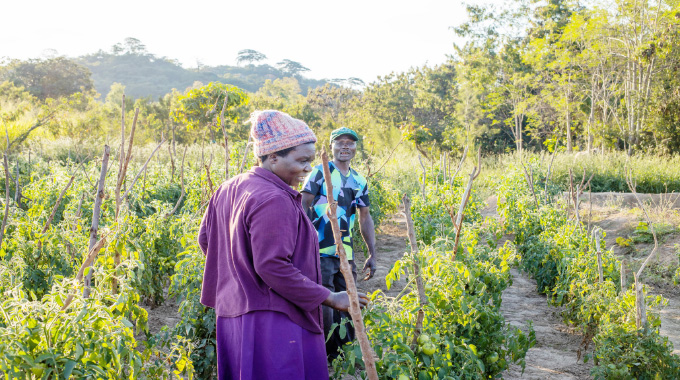
Theseus Shambare, Features Writer
THE smell of rotting tomatoes, cabbage and other fresh produce is a common reality at Zimbabwe’s markets.
Spoiled food, flies and lost income have become synonymous with the informal trading system.
For years, this was accepted as normal; farmers took their produce to markets hoping for quick buyers, but when demand dipped or transport failed, the food simply rotted.
Loss became part of the farming experience.
But in an era defined by climate change, characterised by erratic rainfall, prolonged droughts and increasing heat waves, smallholder farmers can no longer afford to lose even a single fruit or vegetable.
“Every tomato that goes bad is a meal lost, a dollar lost,” said one vendor at Garikai Market in Masvingo.
According to a report by the United Nations Food and Agriculture Organisation (FAO) titled Horticulture Losses in Zimbabwe, Africa loses around 37 percent of its total agricultural output after harvest.
For Zimbabwe, the situation is equally concerning, with country-level estimates showing that post-harvest losses stand at between 20 and 30 percent in storage alone and can rise to as high as 40 percent when field losses, transportation, handling and processing are included.
This broad estimate cuts across all major agricultural categories, including fruits, vegetables and cereals.
Zimbabwe, like many of its southern African neighbours, is experiencing the accelerated effects of climate change.
Rural communities, where the majority of people rely on agriculture for food and income, are the most affected.
In places such as Masvingo, Rushinga and other drought-prone districts, farmers now contend with dry soils, erratic planting seasons and frequent crop failure.
Traditional farming methods are no longer reliable.
It is within this challenging context that the R4 Rural Resilience Initiative, implemented since 2018 by the World Food Programme (WFP) in collaboration with the Government of Zimbabwe and other development partners, has emerged as a critical lifeline for thousands of farmers.
With more than 30 000 smallholder farmers reached so far, the R4 programme aims to build long-term resilience by integrating climate-smart agriculture, financial inclusion and market access.
It supports Zimbabwe’s Vision 2030 of achieving an upper-middle-income economy by promoting inclusive rural development.
It also aligns with several Sustainable Development Goals (SDGs), particularly those targeting poverty reduction, food security, gender equality, climate resilience and economic empowerment.
Ms Lucia Gonera, a widow and mother of three in Masvingo, is one of the farmers whose life has been transformed through the initiative.
After losing her husband, she returned to her rural home with little more than determination.
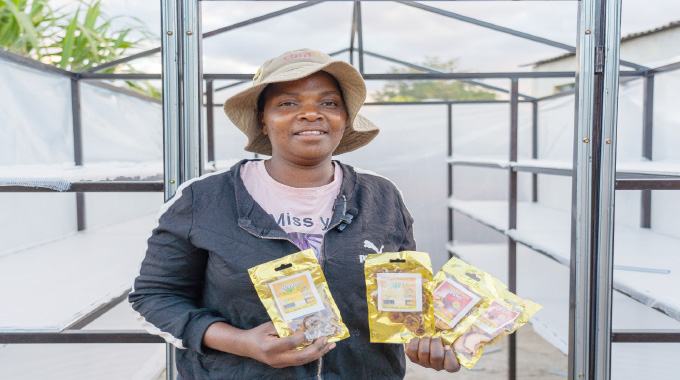
Through R4, Ms Gonera was trained in solar-powered irrigation, post-harvest preservation, poultry and fish farming.
She joined a vibrant savings group and began selling both fresh and dried vegetables to local markets.
“We learned how to dry our vegetables without losing nutrients,” she explained during a recent field visit.
“What used to rot now earns money.”
Her story reflects a growing shift — from coping to adapting, and from adapting to thriving.
The introduction of solar dryers has allowed farmers like Ms Gonera to preserve surplus crops, reducing food waste and increasing household income.
At Garikai Fruit and Vegetable Market in Masvingo, the difference is also visible.
Farmers from Tashinga Garden have moved away from random production and now operate under formal supply agreements.
The market informs the farmers of what crops are in demand — whether tomatoes, leafy greens, or traditional vegetables — allowing them to grow with purpose and precision.
“When we have excess, we dry it. When prices fall, we wait. When schools order, we deliver,” said Mr Shaka Martin, the chairperson of the association.
Among the 92 members of Tashinga Garden, 80 are women, and they are actively involved in managing production cycles, savings clubs, poultry projects and irrigation schedules.
Their participation underscores the importance of gender equality in achieving sustainable rural development, one of the core aspirations of SDG 5 and Zimbabwe’s Vision 2030.
Further north in Rushinga’s Ward 5, Mashonaland Central, the Tungamirai Goat Project tells a story of reinvention.
Initially, smallholder farmers struggled to profit from selling goats to informal traders.
Some tried transporting their animals to Harare, only to lose money on transport and accommodation.
After receiving market access training through the R4 initiative, the group learned that a local abattoir was offering three times more for their goats than the middlemen.
“And it was right here in Rushinga,” said Mr Philip Tsongora, a group member.
By aggregating livestock locally and supplying directly to nearby butcheries, the project has seen profits rise and farmers reinvest in poultry, goats, school fees and even household infrastructure.
This localised value chain development is not only reducing losses but also helping Zimbabwe plug into the wider African Continental Free Trade Area (AfCFTA), which emphasises intra-African trade and agro-processing.
In the same district, sesame farming has emerged as a new lifeline.
More than 2 700 farmers are now participating in a contract farming system supported by R4 and are benefitting from a newly established 400-tonne aggregation hub at Rusambo.
Previously, sesame growers sold to Mozambican cross-border traders under unpredictable terms.
Today, they operate with trusted buyers, stable pricing and export-focused systems.
“Before, we sold to anyone who came. Now, we know the market and we know what it is worth,” said Mr Alexander Gusinyu, a sesame producer in Rushinga.
Such structured trading systems position Zimbabwean farmers to tap into regional and international value chains, strengthening the country’s agricultural export base in line with both SADC industrialisation goals and the broader AfCFTA framework.
Back in Masvingo, Ms Reska Tope reflects on her personal journey.
Once dependent on casual piece jobs, she is now a proud farmer and saver.
Through a community garden and savings group under R4, she grows sesame, participates in a Savings and Credit Co-operative (Sacco) and has started building her own house.
“If not for farming and saving, I would not even have a roof over my head,” she said.
At the heart of all these stories is the programme’s integrated model, which combines conservation agriculture, solar irrigation, micro-insurance, aggregation centres and value addition to form a resilience network.
It is a model designed not only to respond to the immediate impacts of climate change, but to build durable livelihoods that align with national and continental development blueprints.
“When you bring together conservation farming, savings and markets, you are not just building food security,” said Mr Julius Siwadi, a Sacco leader in Masvingo.
“You are building entire livelihoods.”
As Zimbabwe navigates a future shaped by rising temperatures, erratic weather and economic pressure, programmes like R4 are showing that resilience is possible.
With the right support, even the smallest plot of land can become a platform for empowerment, sustainability and prosperity — feeding not just families, but national vision and continental ambition.