Online Reporter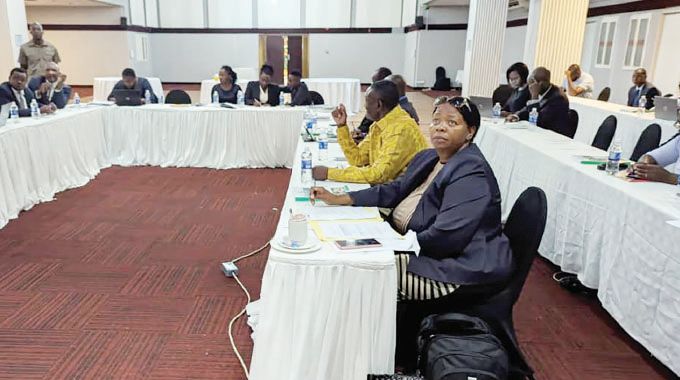
Sukulwenkosi Dube-Matutu, [email protected]
THE last journey towards achieving an upper middle-income economy by 2030 demands higher performance, accountability, clarity of results, and co-operation from all stakeholders. Minister of State for Matabeleland South Provincial Affairs and Devolution, Albert Nguluvhe, said this on Monday during a ceremony to officially open the Matabeleland South Office of the President and Cabinet strategic plan workshop.
He said the strategic plan should inspire players in the province to work harder collectively and ensure the attainment of set results.

The Matabeleland South Office of the President and Cabinet is developing its five-year strategic plan, which will align provincial programmes with the National Development Strategy (NDS: 2026–2030).
The workshop also provides an opportunity to review performance under National Development Strategy 1 (NDS1: 2021–2025) and to strategically align future programmes with NDS2, which was recently launched by President Mnangagwa.
Minister Nguluvhe said the OPC has a central co-ordinating role in Government and acts as an engine that guides, co-ordinates and ensures performance across all ministries, departments and agencies.
“As the highest co-ordinating office in Government, the Office of the President and Cabinet must fully embrace the strategic planning process under the theme: ‘An Agile Public Sector Ecosystem for the
Accelerated Implementation of NDS2 for Impactful Development.’ This is not optional; it is a policy requirement,” he said.
“Strategic planning is essential for us to effectively carry out our mandate and deliver meaningful results. Unlike line ministries, the Office of the President and Cabinet carries the enormous responsibility of co-ordinating, guiding, and leading the entire Government system to drive transformation and development under Vision 2030.”
Minister Nguluvhe said the OPC strategic plan will serve as a guiding compass that helps co-ordinate ministries, departments, and agencies towards improved performance and the achievement of real and visible development outcomes.
He said the strategic plan development process can help establish locally developed, modern and efficient systems of governance that respond to the expectations of the people and address emerging global challenges.
Minister Nguluvhe said the OPC holds a heavy responsibility to carefully develop a strong and practical roadmap that will accelerate the achievement of Vision 2030, which is now only five years away.
“We must remember that achieving this vision will also lay a strong foundation for the long-term development goals of our province. All ministries, departments, and agencies in Matabeleland South look to us for leadership, guidance, and direction in sustaining and expanding the development momentum being driven by His Excellency the President and the Cabinet.
“As officers serving in the Office of the President, we have no excuse for failing to meet the high standards of performance, flexibility, and delivery expected from those working in the highest office in the land,” he said.
The minister further called for a strong, practical, people-centred strategic plan that delivers measurable outcomes, promotes transparency, strengthens accountability, and results in tangible improvements in the lives of citizens, particularly in Matabeleland South Province.
He said the process must be guided by the needs, priorities, and expectations of the people of Matabeleland South Province. Nguluvhe also reiterated the need for modernisation, digital solutions, stakeholder engagement, and robust monitoring and evaluation systems in achieving high performance and results-based governance.
Permanent Secretary for Provincial Affairs and Devolution, Mrs Lathiso Dlamini-Maseko, said the workshop has three objectives, the first being to conduct a frank and rigorous analysis of performance and the provincial landscape against the 10 priorities of NDS2.
The second is to build unified, actionable, and measurable strategies that will form the office’s definitive five-year plan.
Lastly, it seeks to foster absolute commitment and ownership of the plan across all departments and units.
“It is worth mentioning that the National Development Strategy 2 was crafted to propel Zimbabwe forward by focusing on 10 key priority areas, all aimed at leaving no one and no place behind.
Our provincial strategy, therefore, must be intricately linked to the national framework, ensuring every objective and initiative designed drives the entire provincial machinery towards the achievement of NDS2 and Vision 2030 for a prosperous, inclusive Zimbabwe,” she said.
Mrs Dlamini-Maseko said the strategy developed must provide a framework on how the province will move forward within the national plan. — @DubeMatutu