


 Chronicle Editor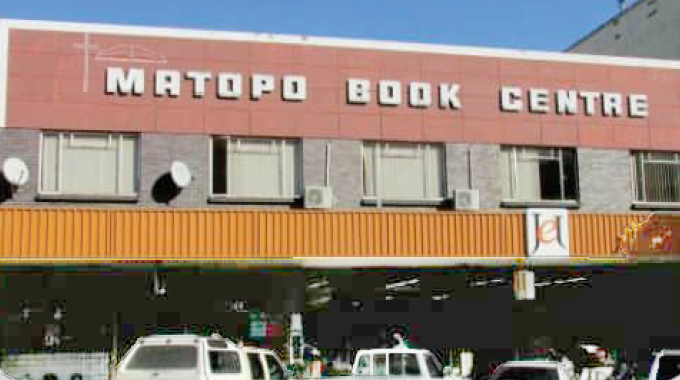
Far from the majestic granite of the Matopo Hills in the heart of the cities and towns of Zimbabwe you come across a bookshop displaying the name Matopo Book Centre. One may wonder what the name Matopo has to do with a bookshop in Gwanda, Beitbridge, Gweru or Filabusi.
The genesis
Matopo Book Centre was founded by early missionaries of the Brethren in Christ Church (BICC) who first established a mission station in 1898 at the present-day site of Matopo High School, 45 kilometres south-west of the city of Queens and Kings, koBulawayo.
The early Evangelist Missionaries to Africa realised that to effectively spread the word of God there was a need to teach communities to read and write so that they could understand the scriptures better. In addition, they realised the need to train teachers who were going to teach others how to read and write. With this process came the need for educational and religious supplies to feed into the educational programme which had two closely interwoven assets, namely academic and Christianity knowledge.
In 1939, Bookroom (Matopo Book Centre) was born after missionaries in Matopo Mission had set up a thatched room to operate in. Initially it was meant for Christian literature books. The church had grown and ran many primary schools in the areas around Matopo, Mtshabezi, Umzingwane and Filabusi. The church provided its own teachers as well as school inspectors to run the school programmes.
In some schools there was a large imposing structure of a thatched church. In most of these schools teachers and headmasters participated in heading the religious services at the school as well as the communities. This arrangement provided a hundred percent captive market for Matopo Bookroom (as it was initially called).
Turnaround of Matopo Bookroom
In 1959, the Bookroom moved to a rented premise in Bulawayo at the then corner Selbourne and Jameson Streets, presently L Takawira and Herbert Chitepo Street. By this time the clientele had increased and the Bookroom was also serving members of the public with various religious and educational book supplies. The church purchased an empty stand adjacent to the rented shop and constructed the present day two-storey building housing Matopo Book Centre.
The building was commissioned in 1970 and the Bookroom assumed the name “Book Centre” a sign that it had grown out of the thatched bookroom in Matopo to a fully-fledged business owning considerable assets.
The government of the day then took the decision to hand over all the running of schools to rural councils after the church had a challenge to pay teachers’ government stipulated salaries. This meant that the Brethren In Christ Church no longer owned some of its schools which were mostly concentrated in most parts of Matabeleland South province. The book shop business came under threat from the exercise of schools transfer to the local authorities. Matopo Book Centre continued to have a competitive advantage in that, the teachers and headmasters that were in these council schools were educated under the Brethren In Christ church missions.
In addition, Mtshabezi Teacher Training College was still run by the church. However, this change of school management meant that Matopo Book Centre had to engage councils in soliciting for business and as such, this required more sales representatives and motor vehicles to serve the market.
The new Zimbabwe
At independence the government opened education opportunities for the previously disadvantaged communities. More schools were built, and more children enrolled into primary, secondary and tertiary sectors of education. Matopo Book Centre expanded to other city centres and operated the following branches: Harare, Gweru, Gokwe, Gwanda, Beitbridge, Hwange, Zvishavane and Bulawayo (Hebert Chitepo, Main Street), Nkulumane Complex and National University of Science and Technology (Nust).

Demand for educational supplies increased, and Matopo Book Centre came at the nation’s service in providing textbooks in partnership with established publishers as well as new publishers.

The government continued to give assistance to schools in the form of per-capita grant funding for schools and Matopo Book Centre supplied the textbooks to the remotest schools under the P3 donation programme from the Netherland funding. Matopo Book Centre also supplied stationery and textbooks to school development associations on the easiest of the terms. The government has expanded tertiary education and with this expansion the demand for tertiary books has also increased and Matopo Book Centre had met the needs and demand of the tertiary student.
The writers came onto the market under newly established publishers. This has seen the development of locally produced tertiary books. Matopo Book Centre also supported the efforts of these writers as they played a vital role in developing the education system.
Matopo Book Centre (Private) Limited
For all these years, Matopo Book Centre operated under the Brethren In Christ Church Bookroom administrative committee. The management reported to this committee of the church since the Matopo Book Centre (MBC) was not a registered company. In 2017, the church decided to private the bookshop business and registered Matopo Book Centre as a private company, though still fully owned by the Brethren In Christ Church.
From there, Matopo Book Centre (Pvt) Ltd became a stand-alone private company with an independent board of directors who are technocrats in their different fields of specialisation.
This gave the organisation a new lease of life to venture into diverse business which now includes hardware and groceries suppliers. The company is now compliant will all Government procurement requirements like VAT registration, PRAZ registration, among many. — (Advertorial).


 Online Reporter
 Bongani Ndlovu