Online Reporter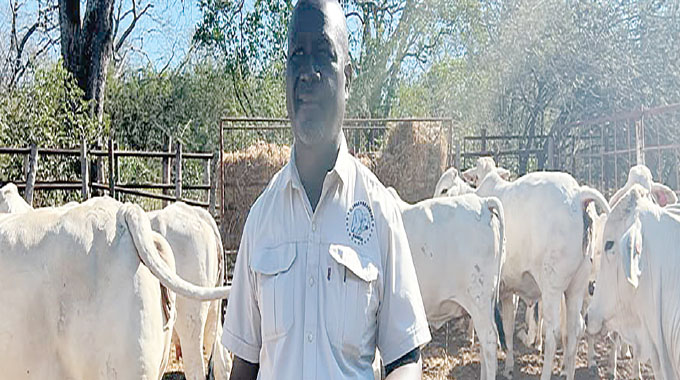
Sukulwenkosi Dube-Matutu, [email protected]
LIVESTOCK farmers in Matabeleland South are increasingly embracing artificial insemination as a cost-effective way of improving cattle breeds, with the Matopos Research Institute Gene Bank emerging as a game-changer in the province’s quest to build climate-resilient and high-performing herds.
Established by the Government through the Green Climate Fund (GCF), which is administered by the United Nations
Development Programme (UNDP), the animal gene bank laboratory at Matopos Research Institute is conserving indigenous breeds while providing farmers with affordable, high-quality semen for artificial insemination.
The facility, which stores more than 50,000 semen straws from breeds such as Tuli, Mashona, Brahman, Bonsmara and Nguni, is playing a leading role in improving livestock productivity and safeguarding valuable genetics against climate shocks such as droughts and disease outbreaks.
The Tuli breed, renowned for its drought tolerance, is of particular importance to Matabeleland South, where farmers are increasingly seeking hardy breeds capable of thriving under harsh climatic conditions.
For many farmers, the gene bank has become an affordable alternative to importing expensive breeding material from abroad.
Umzingwane District livestock farmer Mr Jairos Mahlangu said the facility has significantly reduced the cost of acquiring quality genetics while improving the productivity of his herd.
“To improve our breeds, we sometimes introduce semen from countries such as South Africa and even the United States of America. We target bulls with genetics and traits that we know will perform well in our environment and use artificial insemination to improve fertility, growth rates and overall animal performance,” he said.
“We are benefiting greatly from the gene bank at Matopos Research Institute. Some of the semen comes from local breeders and in some instances, farmers can even access semen for free. The cost of buying semen locally is far lower than importing it from outside the country.”
Mr Mahlangu, who specialises in Brahman pedigree cattle and dairy cows, said artificial insemination has enabled farmers to access superior genetics without the financial burden of purchasing expensive breeding bulls.
Matabeleland South provincial Agricultural and Rural Development and Advisory Services (ARDAS) director Mrs Shupikai Sibanda said the Matopos Gene Bank has become the backbone of artificial insemination programmes in the province.
She said the facility is preserving climate-adapted genetics while making them accessible and affordable to farmers.
“The Matopos Research Station Gene Bank, which was supported by the Green Climate Fund, has become the province’s core source of semen. It is already the backbone of artificial insemination in Matabeleland South because it is conserving adapted genetics and making them affordable,” said Ms Sibanda.
“In the long run, it will become the province’s most important tool for climate-smart livestock production through faster breed improvement, lower production costs and the development of drought-proof herds.”
Mrs Sibanda said artificial insemination has the potential to reduce the time required to improve cattle breeds from about 15 years to between five and seven years.
She said semen supplied by the Matopos Gene Bank currently accounts for 60 percent of the semen used in the province, while private suppliers contribute 30 percent and the Department of Veterinary Services provides the remaining 10 percent.
A semen straw costs between US$5 and US$8 at the gene bank, compared to imported semen, which ranges from US$25 to US$45.
“The main adopters of this technology are commercial and A2 farmers, dairy farmers around Bulawayo, and progressive communal farmers in districts such as Gwanda, Umzingwane and Bulilima,” she said.
“They are using artificial insemination to access Tuli, Brahman and Bonsmara genetics without having to buy breeding bulls that can cost up to US$3 000.”
Mrs Sibanda said the current conception success rate stands at between 45 and 55 percent, but this could improve to as much as 65 percent with increased farmer training and the adoption of timed artificial insemination.
Beyond improving breeds, she said the technology also reduces the transmission of venereal diseases and enhances meat quality, allowing farmers to fetch better prices on the market.
“There is generally increased productivity and profitability. Farmers are reporting improved meat quality and better market prices. In a nutshell, the Matopos Gene Bank is the technical hub that is making artificial insemination viable in Matabeleland South,” said Mrs Sibanda.
“Farmers are gradually taking livestock genetics as a serious business and the trend is rising rapidly in our favour. Within the next five years, if the Department of Veterinary Services, private inseminators and farmers scale up training, artificial insemination adoption could rise to 40 percent.”
Mrs Sibanda said this would transform Matabeleland South from a cattle-holding province into a cattle-breeding hub.
The gene bank laboratory was established under the Building Climate Resilience of Vulnerable Agricultural Livelihoods in Southern Africa programme, which is being implemented by the Ministry of Agriculture,
Mechanisation and Water Resources Development in partnership with UNDP through the Green Climate Fund.
The facility allows the harvesting of between 1,500 and 3,000 semen straws from a single bull per season for artificial insemination.
Under natural mating, however, a bull can service only between 25 and 30 cows in the same period.