Online Reporter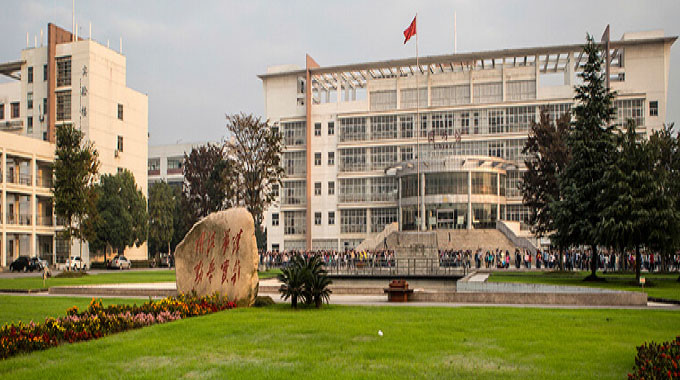
Tawanda Musarurwa in JIANGYIN, CHINA
ON the morning of June 16, a delegation of Zimbabwean fiscal, tax and monetary policy experts arrived at Jiangyin Polytechnic College expecting a conventional academic visit. Many anticipated lectures, presentations and policy discussions.
What they encountered instead was an institution operating almost as an extension of the industrial ecosystem around it. Inside classrooms and laboratories, students were not merely absorbing theory. They were running import-export simulations, analysing global advertising campaigns and designing industrial components used by enterprises in Jiangyin.
The experience captured a central feature of China’s development model: education is not treated as a separate social service but as a strategic component of industrial policy. The alignment between training institutions and production clusters is deliberate — and its precision is also a product of China’s institutional environment, where government, enterprises and education providers operate within a highly coordinated development framework. The challenge for other countries is not simply adopting the institutions, but creating the relationships and incentives that make them function.
Later that same day, the delegation toured CITIC Pacific Xingcheng Special Steel — a 100-billion-yuan enterprise and one of the leading players in Wuxi’s special steel industry. What they saw was not just a factory, but the final stage of a system that begins in classrooms and laboratories. The furnace, the production line and the global market were connected to the training institutions that produced the engineers, technicians and innovators required to sustain them.
That system — China’s education-industrial complex — is one of the least understood drivers of the country’s economic rise. For Zimbabwe, which, under the National Development Strategy 2 (NDS2) is seeking accelerated industrialisation, value addition and a transition towards a knowledge-driven economy, the lessons are significant.
The Zimbabwean delegation was in Jiangyin as part of a broader two-week programme: a Seminar on Tax, Fiscal and Monetary Policy hosted by the Central University of Finance and Economics (CUFE) in Beijing. The Jiangyin leg — which ran from June 15 to June 20 — was the fieldwork component of that seminar, offering a ground-level examination of how Chinese industrial policy translates into local economic structure.
Professor Qian Hong’s opening lecture at Jiangyin Polytechnic College offered a glimpse into why the city has become one of China’s strongest manufacturing centres. Jiangyin, a riverside city located along the middle and lower reaches of the Yangtze River, has built an economic ecosystem that combines industrial depth, entrepreneurship and innovation. According to data presented by Professor Qian, the city has 267,893 market entities, including 97,988 enterprises, 1,234 high-tech enterprises and 3,256 national technology-based small and medium enterprises.
These figures reveal an important feature of Jiangyin’s model: its industrial success is not built only around a handful of giant companies, but around a dense network of businesses operating at different levels of the value chain. At the top are globally competitive firms. Professor Qian highlighted that Jiangyin has 68 listed companies, including 44 domestic listings, making it the leading county-level city in China by this measure. The city is also home to national manufacturing champions, specialised “little giant” enterprises, unicorn companies and innovative SMEs.
This combination — large firms, specialised manufacturers and technology-driven smaller enterprises — creates the industrial ecosystem that allows innovation to move from laboratories into production. Jiangyin’s five industrial pillars — metallurgy, high-end textiles, precision machinery, packaging and paper production, and fine chemicals — require highly specialised skills.
The city’s vocational and polytechnic institutions evolved alongside those industries, ensuring that the workforce produced matched the needs of companies operating within the cluster.
Professor Qian argued that Jiangyin’s rise was not accidental. Its location along the Yangtze River created economic advantages, but institutional design ensured those advantages translated into sustained industrial competitiveness.
The river provided connectivity. Manufacturing provided an opportunity. Education provided the human capital.
WHAT A POLYTECHNIC ACTUALLY DOES
A key lesson from Jiangyin Polytechnic is that modern technical education is not simply about producing graduates.
It is about producing problem-solvers for specific economic sectors. China’s vocational education system functions as an industrial talent pipeline, transforming students into future-ready professionals by combining classroom knowledge, hands-on production experience and continuous engagement with enterprise needs.
The institution works closely with enterprises to shape curricula, develop practical skills and expose students to real industrial challenges. The relationship is continuous: companies provide input into training programmes, equipment and research priorities, while the institution supplies skilled workers and innovation support. The result is a lower-friction labour market where firms spend less time retraining employees and more time improving productivity.
However, closely linking education to industry also carries risks, including over-specialisation. The lesson for Zimbabwe is not to train students only for today’s jobs, but to build adaptable professionals capable of evolving with changing technologies and industries. Jiangyin is part of a broader Chinese strategy to modernise vocational education by strengthening links between schools and enterprises, particularly in advanced manufacturing and technology-driven industries — the same philosophy Zimbabwe is seeking to advance through NDS2, which recognises that industrial transformation requires stronger linkages between education, research, innovation and production.
Zimbabwe’s own Education 5.0 framework, which reorients universities around research, community engagement and industrialisation rather than teaching alone, is an attempt to encode exactly this logic — though the gap between policy architecture and the kind of dense, enterprise-driven feedback loops visible in Jiangyin remains wide.
RESEARCH AND DEVELOPMENT AS THE MISSING BRIDGE
Beyond skills development, China’s model demonstrates the importance of research and development in moving from manufacturing to innovation-driven growth. NDS2 places science, technology and innovation at the centre of
Zimbabwe’s development strategy, recognising that economic transformation requires more than importing technology — it requires the ability to create, adapt and commercialise solutions locally.
The strategy seeks to raise budgetary support for science and technology research to at least 1 percent of GDP, and provides for a National Research, Development and Innovation Fund.
The Jiangyin example shows why such investments matter. The city’s high-tech enterprises and technology-based
SMEs form part of an innovation pipeline where research, entrepreneurship and manufacturing reinforce one another.
This relationship was most clearly articulated during the delegation’s visit to Suzhou DCCK Measurement and
Control Technology Co., Ltd — visited on June 18 as part of the Suzhou leg of the programme, which also included field research on urban development in Suzhou’s downtown areas.
DCCK is pushing the broader adoption of artificial intelligence (AI) in Chinese industry, particularly through the use of machine vision. A corporate values banner on the wall of one of its meeting rooms states the philosophy plainly:
“Industry empowers education — Education cultivates talent — Talent underpins industry.”
DCCK solutions and scheme engineer Mr Tang Zhi described the firm’s active collaboration with Jiangyin Polytechnic College:
“We set up a laboratory for Jiangyin Polytechnic College. We want machine vision to be one of the key subjects at colleges and universities. Major vocational schools have set up courses for machine vision, with majors in subjects such as algorithms, machinery and software development. Colleges give us their requirements and we help map them
out for them.”
DCCK has implemented machine vision solutions for a shrimp manufacturer and a biscuit manufacturer, among other projects — showing how research and training move from classrooms into commercial applications. The
objective is research that improves production, creates companies and solves industrial challenges.
THE CIRCUIT RUNS BOTH WAYS
The education-industrial relationship is not one-directional. Enterprises do not simply receive graduates from
institutions; they actively shape those institutions. Chinese companies invest in training centres, laboratories, equipment and joint innovation programmes. At CITIC Pacific Xingcheng Special Steel, the company’s training infrastructure — which included an exhibition hall, a digital and intelligent centre, and a training academy — demonstrated how enterprises build internal capacity while maintaining close relationships with education providers.
The same pattern was visible across Jiangyin’s industrial ecosystem: companies, polytechnics and research institutions continuously exchange knowledge. Like any model viewed through an official visit, Jiangyin represents a showcase of what works. The deeper question for policymakers is which institutional conditions can be realistically adapted elsewhere. Such capacity does not emerge automatically. It requires deliberate investment in education, research and industry partnerships — precisely the direction Zimbabwe’s NDS2 seeks to promote through stronger collaboration between Government, academia and the private sector.
INDUSTRIAL POLICY BEGINS WITH PEOPLE
Perhaps the biggest lesson from Jiangyin is that industrialisation is ultimately a human-capital challenge.
Continues on www.chronicle.co.zw
While factories can be built quickly and machines can be imported, the ability to design, operate, improve and innovate around those systems requires people.
NDS2 recognises this by placing emphasis on education reform, skills development, science and technology advancement, and research capacity. The strategy envisages stronger research institutions, merit-based recognition of researchers, and long-term research chair positions in priority sectors such as agriculture, energy, digital technologies and health. The goal is to create an economy where knowledge generation feeds directly into national development.
Zimbabwe does not need to replicate China’s scale.
But, observers say it can replicate the connections. Polytechnics, universities and industry should collaborate around priority sectors — mining, agriculture, energy and manufacturing — with training and research linked directly to economic needs. The challenge is not simply building institutions, but creating systems where knowledge moves into production.
In Jiangyin, that system is already built. The furnace and the classroom are part of the same machine.