Andrew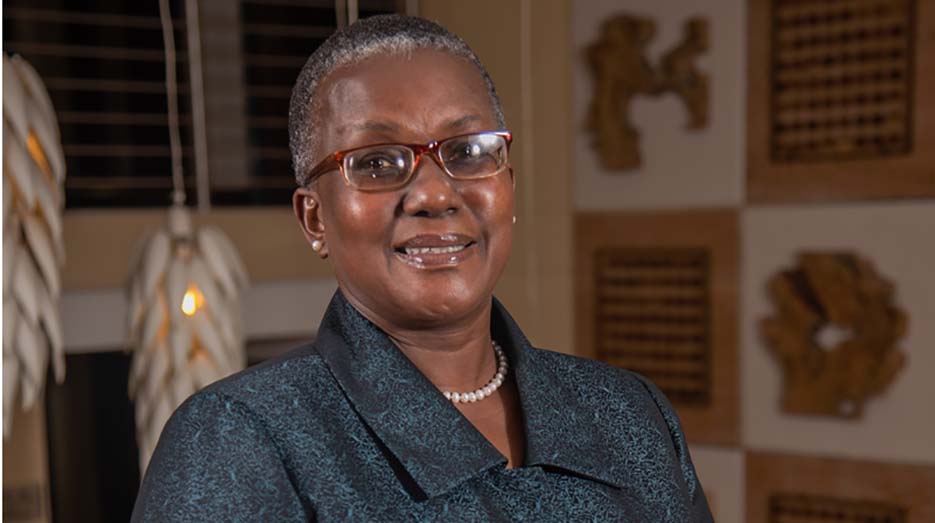
Business Reporter
AFTER 14 years at the helm of the Southern African Development Community Accreditation Service (SADCAS) and a career spanning over 40 years in standardisation, quality assurance and accreditation, Zimbabwean executive Mrs Maureen Mutasa retired as chief executive officer of SADCAS last week.
SADCAS assures the technical competence of providers offering calibration, testing, medical laboratory and inspection and certification services in 14 countries across Southern Africa.
Through this role, the organisation is also a key enabler of trade and the protection of health, safety and environment within SADC.
Mrs Mutasa was appointed SADCAS’ founding CEO in June 2008.
With an initial grant from the Norwegian government, she has been at the forefront of establishing the accreditation body as a globally recognised institution.
At its inception, it was the first multi-economy accreditation body in the world, a model that has since been replicated in the Gulf, French-speaking West Africa and the Caribbean.
“It all started with the vision of a few of us in the SADC standards, quality assurance, accreditation and metrology structure believing that we can create this multi-economy accreditation body to service a number of countries within the region, most of which did not and still do not have the capacity to do so alone,” she said.
“Being the first is never easy. The first leg can often determine the destiny of an organisation, and we experienced the ups and downs that all start-ups do, but I believe we have proved that the
SADCAS model is a viable, cost effective and sustainable way of providing accreditation services to a number of countries.”
During her pioneering tenure, SADCAS has received international recognition for six of the eight accreditation schemes it offers.
It has issued 259 certificates to 209 accredited facilities in 13 of the 14 SADC member states it services and two non-SADC countries — Ghana and Ivory Coast.
Dependence on Government funding declined from 100 percent as at March 31, 2009 to 14 percent as at March 31, 2022, having weathered the Covid-19 by swiftly adapting and migrating to remote assessments and online training.
Over the years, Mrs Mutasa has contributed immensely to the development of accreditation infrastructure not only in the SADC region, but Africa as a whole.
She retires as one of the continent’s foremost authorities on accreditation, standardisation and quality assurance.
Her diverse experience extends across the food industry, agricultural research and management.
She has been a member of the International Accreditation Forum (IAF) executive committee and the
Joint International Laboratory Accreditation Cooperation (ILAC)/IAF executive committee.
Notably, she also served as chair of the ISO Policy Committee of Developing Countries (ISO DEVCO), vice chair of the African Accreditation Cooperation (AFRAC), and chair of the SADC Accreditation Co-operation (SADCA), including chair of SADC Co-operation in Standardisation.
She currently chairs the AFRAC Mutual Recognition Arrangement, a position which she will carry to the end of her term in September 2023.
She is an experienced peer evaluator for the African Accreditation Cooperation (AFRAC) and Asia Pacific Accreditation Cooperation (APAC), and has undertaken various peer evaluations of accreditation bodies in Africa (Kenya, Egypt, Mauritius) and in the Asia Pacific Region (Japan, India, Thailand).
Prior to joining SADCAS, Mrs Mutasa spent 20 years with the Standards Association of Zimbabwe (SAZ), where she managed the National Food Laboratories, set up the Standards Development and Training units and rose through the ranks to the position of director-general — a position she held for eight years until her departure to join SADCAS.
Her management experience includes previously holding directorships on various company boards such as the South African National Accreditation System, Zimbabwe Food Standards Advisory Board, Dairibord Holdings and Standard Chartered Bank Zimbabwe, among others.
She intends to continue to contribute to the development of quality infrastructure across Africa with a focus on the accreditation pillar.
A distinguished scholar who holds a first-class degree from University of Wolverhampton (UK) and a Master’s Degree in Food Science with distinction from the University of Zimbabwe, a Beit scholar, Eisenhower Fellow and Standard Chartered Bank Singapore International Foundation scholar, Mrs Mutasa is passionate about imparting the knowledge she has acquired throughout her career.
She has lectured on food and animal microbiology and biochemistry at graduate and post-graduate level at the University of Zimbabwe, and she hopes to inspire the next generation of female leaders.
“It has been a long, but very fulfilling journey,” she added.
“I am delighted to say I leave SADCAS with so many happy memories and I am grateful for the many people that have contributed to my journey. As the Yoruba Proverb goes, ‘if we stand tall it is because we stand on the shoulders of those who came before us’.”



 Online Reporter