

 admin
admin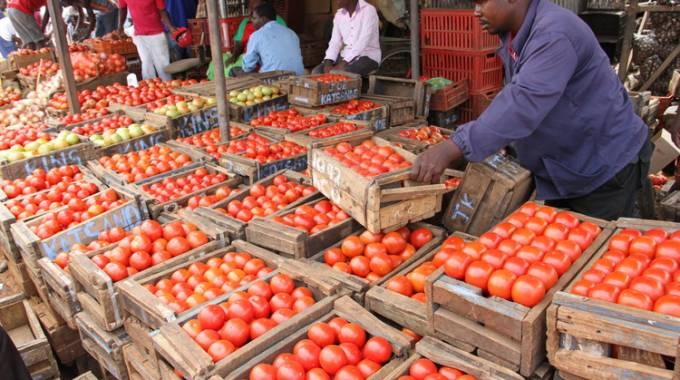
Elton Manguwo
THE onset of the wet season has triggered an increase in fresh produce prices, as remotely situated farmers are failing to readily access transport services, which has created a deficit in produce supply against a growing demand.
“The rains have affected the movement of food from production zones to the market given the slippery nature of roads in most rural areas and this has resulted in prices for some commodities going up,” Knowledge Transfer Africa chief executive officer, Mr Charles Dhewa commented yesterday.
Mr Dhewa observed that like any free market economy, the country’s big farmers’ markets dance to the laws of supply and demand adding that the advent of the rains had caused shortages of some commodities on the market amid increased demand.
“Food production remains an important aspect of African food systems, however, there is a strong need to attend to the whole value chain in order to ensure that food reaches the end consumer at affordable prices,” said Mr Dhewa.
The major projects being implemented by the Government from the establishment of horticulture gardens to resuscitation of irrigation schemes present the need for strong support systems such as good road networks and market infrastructure that complements the increased production.
More so, there is need for trucks to be readily available in production areas, as very few transporters are willing to reach remote areas due to poor road networks.
“These are some of the issues that need to be addressed if we are to connect production and the markets towards the growth of the agriculture sector,” suggested Mr Dhewa.
The Government it targeting to transform the horticulture industry into a billion-dollar sector by 2025 through the Presidential Horticulture scheme that is set to benefit 1, 8million households. It is essential for Investments in proper markets to be fast-tracked to match the production rate and safe storage.
Mr Dhewa added: “We need to invest and commit resources to the entire value chain to ensure that there is a return on investment, which can only be realised when farmers sell their produce to buyers at affordable prices.”
Furthermore, the coming of the rain has saw post-harvest loses rising due to lack of adequate storage facilities, as farmers cannot easily access the market to sell the produce.
“We have to think critically about the demand base and then set up aggregation centres where commodities can be stored in production zones before they are transported to the market,” said Mr Dhewa.
Big markets such as Mbare Musika play a pivotal role in diversifying the country’s sources of food while creating employment through the value chain therefore they have to be safeguarded.



 Online Reporter
 Bongani Ndlovu