

 daniel chigunwe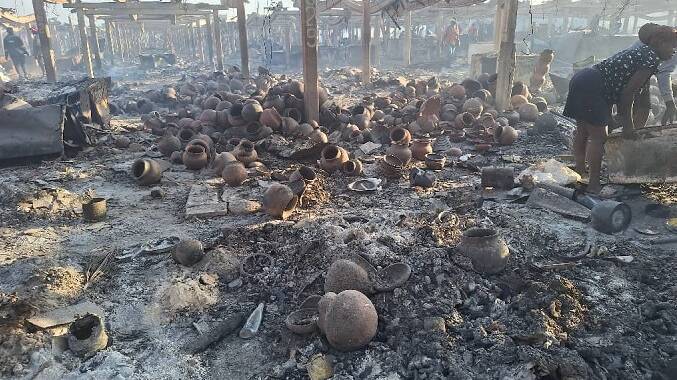
Last Word
The destruction by fire of the Mbare Traders Market has opened doors to accelerating the necessary revamp, modernisation and formalisation of the main markets while ensuring suitable and better premises for the traders.
The Government’s first reaction was to support the traders, and there are 4 695 of them at the Mbare Traders Market, averaging almost three to a table, who saw their stock in trade destroyed, wiping out their meagre working capital as well as destroying their point of sale.
So President Mnangagwa declared the fire razed trading market a state of disaster under the Civil Protenction Act, allowing the Government to take a range of emergency actions. That declaration had followed promises from Government that a system of loans backed by guarantee rather than assets would be made available so traders could rebuild.
But the Government has raced on and accepted suggestions that it should not just take the leading role in the rebuild, but have a proper and modern market built at Mbare with the private sector coming in as a serious investor for the design, engineering, procurement, construction and finance.
Initial discussion is looking at a proper multi-storey market, or at least at a suitable design that can allow such a market to be built in stages if necessary.
We think there can be reasonable flexibility in the interior design, allowing a range of stall sizes and preferably having each trader in their own stall as a direct tenant, rather than the sharing of tables that was so common in the old market.
This is important for both the financial viability of the market and for the formalisation or partial formalisation of the traders through a rational if modest taxation system. In other words it is important who pays the rent, even if this is just US$1 a day, and who pays the taxes, again even if this is just US$1 a day.
The tenants and taxpayers need to be on lists and need to be held responsible.
The private sector should be interested, in fact very interested. We are talking about a cash flow of more than US$1 500 a day if we have just a US$1 a day rent for a table, and more than US$4 000 a day if we are talking about the same rent for each trader. In fact with different bay sizes that figure could be a higher, with the smallest shelves perhaps being less than US$1 a day, perhaps ZiG15 or so, and the larger stalls being several multiples of that.
Local Government and Public Works Minister Daniel Garwe told a press conference this week that the market has a turnover in excess of US$2 million a day, and while it works by cutting profit and other margins to the bone, there is certainly money available for modest rents and for payment of modest taxes.
Even if that turnover figure is on exceptional days, we are still talking about what happens when a lot of traders are assembled into one spot, with the accumulation being one of the important marketing points.
None of those traders would earn as much operating in some isolated point. There huge total stock and range of stock ensures that shoppers come in, and their position in the middle of the largest and most densely populated suburb in Harare Metropolitan means there is a large customer base. Being a transport hub adds a lot more customers.
Traders will want value for both rent and tax payments, but we would assume that some sort of security, of tenure, order, physical security and of law enforcement, plus obvious extras like proper washing facilities, bathrooms and fire prevention and protection would make the large total daily take in rent and taxes worthwhile.
A number of standards will have to be set by the Government before the private sector is invited to climb aboard.
There are the obvious standards of safety and health, so the fireproof materials, the fire fighting equipment on site, the fire prevention measures, the sanitation arrangements and others are just reading off the appropriate regulations.
But other design and engineering standards are required. For a start low-maintenance finishes and a structure that is easy to clean and keep clean seem essential. There is a good chance that the structure will have to be upgraded over decades, and the basic frame and shell should be capable of this.
What would be a reasonable quality market in 2024 Mbare might need more work to be a reasonable quality market in 2050 Mbare, but would still be a useful asset.
This is where flexibility in bay sizes goes beyond just the first batch of tenants but also allows for reallocations of space in the future by just moving fireproof partitioning and rebolting it to the frame.
The need for hardwearing and low maintenance finishes is obvious when tens of thousands of people pass through every day, possibly seven days a week, and so the whole complex needs a lot of design help to look decent a respectable year after year.
While the Government and the private contractor will play a leading role, with possibly the City of Harare brought in, the designers will need to talk to and consult the traders, and should consult potential customers, and certainly look around as many market complexes as possible, including informal markets, to see how everything can be improved.
Informal markets, which tend to just grow organically, can often provide some good ideas over customer flows and the like, since the structure in these cases follows the needs, rather than having the layout governed by the structure.
Minister Garwe sees the Mbare Trading Market as just a starting point for converting the major market areas in urban centres into proper and orderly trading markets.
His major leap out of a lot of previous thinking and defined positions is to retain the markets where they are wanted and where they are at present open. This goes against some councils, and even some urban planners, who see markets as a nuisance that should be moved to somewhere where people do not live or work and where no one goes.
The Minister rightly wants to start with what we have got where we have got it. But that given, there is no reason to have ungovernable markets or even to assume they are ungovernable. They can and should be governed and the rents collected by efficient officials, not by criminal space barons, order should be kept and taxes should be paid.
The next market he wants rebuilt is the furniture and other crafts market in Glen View, which has been gutted by fire at least twice in the last few years. Power tools require certain standards of both cabling and connection, and industrial premises of any form require regular removal of waste, especially waste like saving and sawdust that can burn.
Some of the design ideas of the Mbare markets can be adopted, but in many cases there will need to be some original thinking.
The taxing of the informal sector has been exercising the minds of the Ministry of Finance, Economic Development and Investment Promotion for some time, with a growing number of ideas some of which are actually working.
Formalisation is a process of more than one stage. The first stage is to at least have potential taxpayers listed, and to collect a presumptive VAT tax, which everyone is supposed to pay regardless of the size of their business. With traders in proper stalls it should actually be possible to move into the next level of gauging the actual VAT each is supposed to pass along.
Traders, in legal theory, do not pay VAT. Their customers pay the final tranche that starts with the VAT paid at a factory gate or import entry point. Most of the VAT due at a market stall has already been paid earlier in the value chain, but the trader is still collecting the last bit and is supposed to hand that on to Zimra.
Income taxes will be less likely. Many traders do not earn enough after legitimate costs to come close to the threshold where the income tax starts, but tax collectors need to keep a look out and at least get people to start keeping books of account and registering for tax, even if they have a zero return.



 Online Reporter