admin
adminbehaviour that is accorded to the dead, the departed and the bereaved by society.
The passing on of Higher and Tertiary Education Minister Isaak Stan Gorerazvo Mudenge in a hotel room in Masvingo received a hilarious, insidious and heinous coverage by the private media. The private media parroted, hyped and scrawled the death of the veteran educationist, historian, diplomat, bureaucrat, politician and national hero, as a direct result of the Zanu-PF strategy to “cling onto power until death”.
While the tirade and ranting by the private media carry with it, the idea of a guaranteed freedom of speech as epitomised by the current Constitution, the societal value of this political and partisan literature accords a total shudder.
This type of behaviour goes far and profoundly explains the “foreign faces behind the editorial desks” of such media institutions and political parties. Deaths are supposed to bind a nation through the realisation of the pertinent residence of susceptibility and vulnerability of every human being to mortality on this earth.
Death must initiate a common resolve; a common standpoint and a common alignment where people heartily transmit grief over their mortality life, futility, fatality and putridity in all their cardinal existence and in God’s eyes.
Those among us who refuse to realise the need for collectivism in times of death of our leaders, public and honourable citizens, by getting synonymous with foreigners whose existence among us does not add value to the enduring traditions of our societies, makes us look stupid.
Those among us who pirate ideas of the good of deaths for political mirage and mileage synonymises themselves with double standards set and paraded by the United States and her leashed Western allies who, unashamedly, condemn and unleash a political tirade over the death of Chris Stevens, an American diplomat who was attacked and killed in Libya in the aftermath of the protests against a film “Innocence of Muslims” directed by an American resident, Nokoula Basile Nokoula, in September 2012, while the brutal assassination of an African leader, Muammar Gaddafi, went without much saying and condemnation.
The death of Stevens was calamitised as a “brutal act of barbaricism orchestrated by savages” in Africa. The United Nations General Assembly was left mesmerised by the “gross lack of realisation and the deliberate ignorance” exuded by president Barak Obama in failing to draw the line between the death of Gaddafi and Stevens from different spheres of definitions.
Gaddafi meant much to Africa, but was a political and economic expendable in the eyes of the US and Nato. To Africa, Gaddafi was a man who championed, with great passion, spirit and drive, the establishment of a “United States of Africa”, but he received his death through people who defined his existence in a far different sphere.
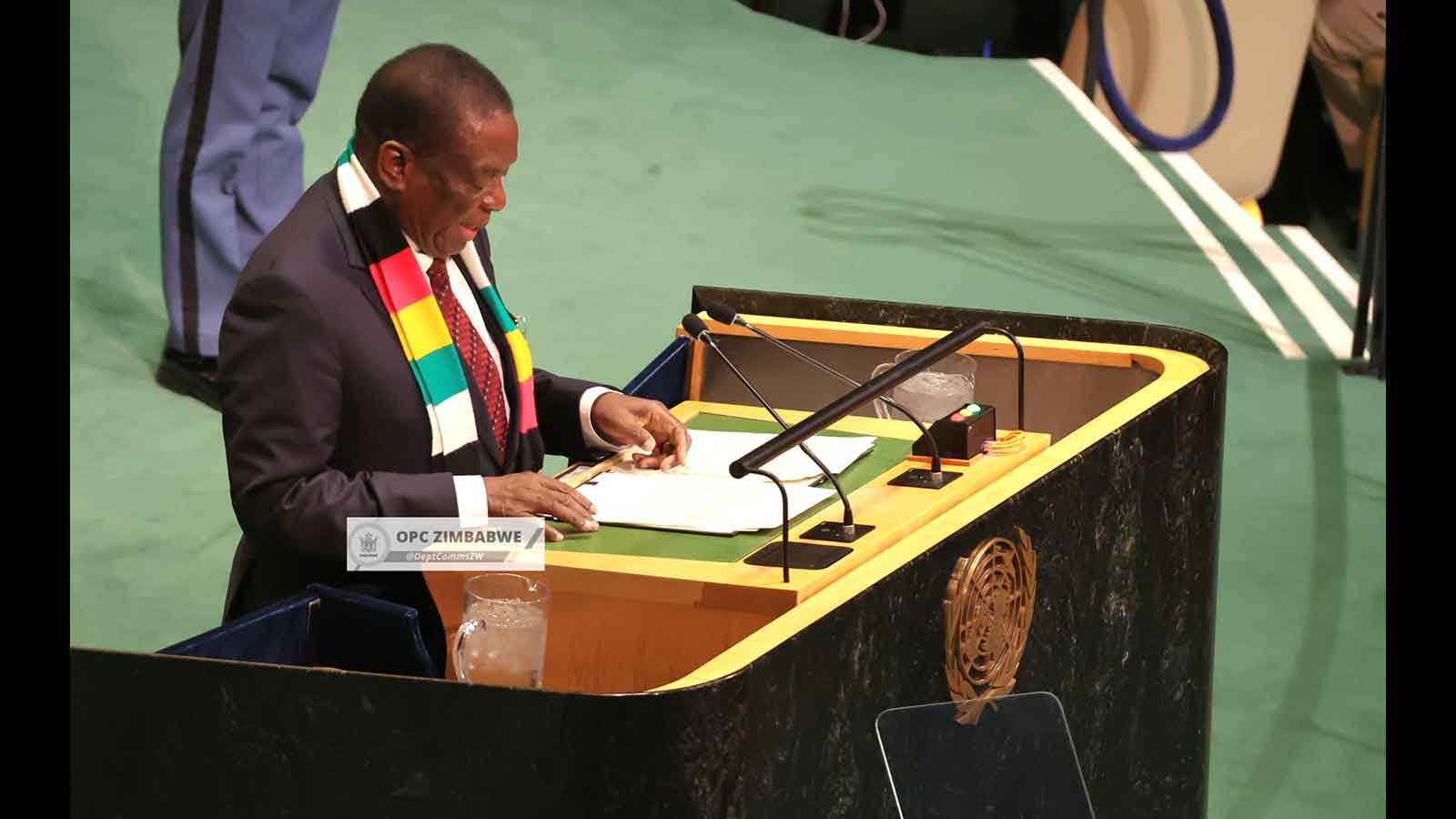
Hence President Mugabe, on behalf of Africa, remarked during the 67th Session of the United Nations General Assembly, “As we in spirit join the United States in condemning that (Stevens) death, shall the United States also join us in condemning that barbaric death of the head of state of Libya — Gaddafi? It was a loss, a great loss, to Africa, a tragic loss to Africa.”
This is the same binary definition of death that the private media was trying to utter into our society after the death of Cde Mudenge. How absurd?
Death, surely, should squarely afford us, as a nation, to measure the depth and length of our journey thus far in upholding the ideals of our revolution.
As Zimbabweans, the illustrious sons and daughters who took up arms to wage the war of liberation did that for us all. That struggle was based on an idea to bring back the stolen dignity of the African, to restore the freedom of the native African, to reclaim the territorial ownership of Africa by Africans, indeed of Zimbabwe by Zimbabweans.
The dignity of the African is not dependent upon the benevolence of its former colonial masters, neither is the freedom of the African based on the legal definitions provided by those who yesterday enslaved Africans. Yet those among us who refuse to realise the need for collectivism in bereaving the deaths of our visionaries and senior citizens of a historic epoch, synonymises themselves to the “lost generation”, which pirates the idea of a chaotic, rapturous, volatile and unstable society.
Surely the debate on whether the death of Cde Mudenge, late Vice President Joshua Nkomo, Simon Muzenda and Joseph Msika, must never be viewed, premised and interface Zanu-PF strategy for functionaries to die in office. This is completely uncultured, uncalled for and an abomination to our nationhood.
The immense contributions made by these great sons of our revolution are immeasurable hence their deaths were never to be viewed with political lens. These contributions, if taken interface their deaths in office, creates an unbalanced analysis of their indispensable value, their significance, importance and relevance to the history of this great nation, Zimbabwe.


Online Reporter
- Herald , none
- September 26, 2026
- 37 views
Zim earns respect of nations, businesspeople
Mukudzei Chingwere Senior Reporter ZIMBABWE’S independent foreign policy and willingness to speak its mind on global affairs are earning the country growing respect among the comity of nations and on…