Online Reporter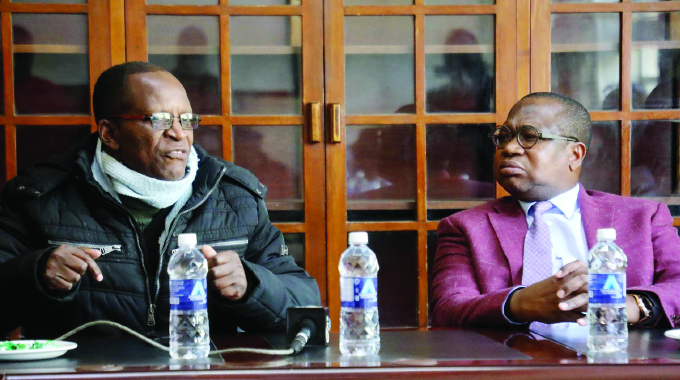
Raymond Jaravaza, [email protected]
MPILO Central Hospital in Bulawayo has recorded a marked improvement in the availability of critical medical supplies over the last few months as the Government steps up efforts to revitalise the country’s health system.
This resurgence in stock levels comes on the back of President Mnangagwa’s recent unannounced visits to two major referral hospitals in Harare, Parirenyatwa Group of Hospitals and Sally Mugabe Hospital, where he witnessed first-hand the state of public health institutions.
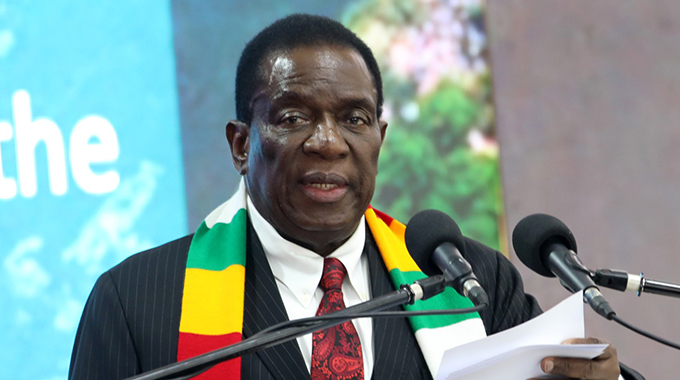
The visits sparked interventions aimed at addressing both resource shortages and working conditions for health personnel.
Speaking during a recent tour of the hospital by the Minister of Finance, Economic Development and Investment Promotion, Professor Mthuli Ncube, Mpilo’s chief medical officer Dr Narcisius Dzvanga revealed that the hospital’s medical stock levels have risen from a precarious 35 percent to around 50 percent.
“Our medical stocks had dropped to alarming levels of about 35 percent, but we have seen that trend improving significantly to the current levels of 50 percent of medical stocks at Mpilo Hospital,” he said.
“We would like to thank the Government for making sure that our medical stocks stand at levels where, as a hospital, we can give our patients basic and life-saving medication without turning them away.”
While applauding Government efforts, Dr Dzvanga noted there is still a long way to go to reach optimal levels.
“We need more, there is no doubt about that, but at the same time, we appreciate that the Government is doing its best to improve our medical stock levels,” he said.
Prof Ncube toured Mpilo Hospital’s solar plant, recently built incinerator and other facilities, to have an appreciation of how Bulawayo referral hospitals are operating.
The boost in hospital supplies is just one facet of a programme by the Second Republic to modernise healthcare delivery across Zimbabwe, from rural clinics to major hospitals, in line with Vision 2030, which seeks to transform the country into an upper-middle-income economy.
Under the National Health Strategy (2021–2025), the Government has prioritised access, equity and quality in healthcare.
Key pillars of this strategy include upgrading health infrastructure, increasing human resources, expanding primary healthcare services and leveraging technology to reach marginalised communities.
Notable achievements since 2018 include the construction and equipping of over 50 rural health centres, particularly in previously marginalised districts, the installation of solar energy systems in district and provincial hospitals to maintain operations during power outages and the launch of the National Ambulance and Air Ambulance Services, which now provide emergency care across provinces using six state-of-the-art helicopters..
Others include local manufacturing of essential medicines, supported through partnerships with NatPharm and private sector players to ensure steady supply and affordability.
Meanwhile, Mpilo’s ground-breaking post-basic nursing diploma in accident and emergency management, a first in the country, is facing a setback due to a high dropout rate.
The programme, launched in January in partnership with South Africa’s Witwatersrand University, aims to align emergency care in Zimbabwe with international standards.
Although Dr Dzvanga did not disclose the reasons behind the student attrition, he reaffirmed the hospital’s commitment to continuing the programme, which he described as critical to the country’s emergency response systems.
“The post-basic nursing programme is ongoing, but a number of students have dropped out,” said Dr Dzvanga.
The course includes specialised training in managing patients during air transport, dovetailing with the Government’s Air Ambulance initiative launched in August last year alongside the 44th SADC Summit.
The service currently operates six medically equipped helicopters stationed in Harare, Bulawayo, Victoria Falls and Manicaland.
The helicopters, fitted with intensive care-grade medical equipment and staffed by trained personnel, are designed to overcome geographical barriers and provide rapid emergency assistance.
The Second Republic has embarked on a mission to modernise the country’s healthcare system to achieve the goal of becoming a modern, prosperous and industrialised country by 2030. President Mnangagwa visited Russia in June to seek investors to establish an air ambulance service.
The health sector revamp is a key pillar of the Second Republic’s development agenda, as Zimbabwe targets universal health coverage and improved service delivery in pursuit of Vision 2030.