Sundaymail Editor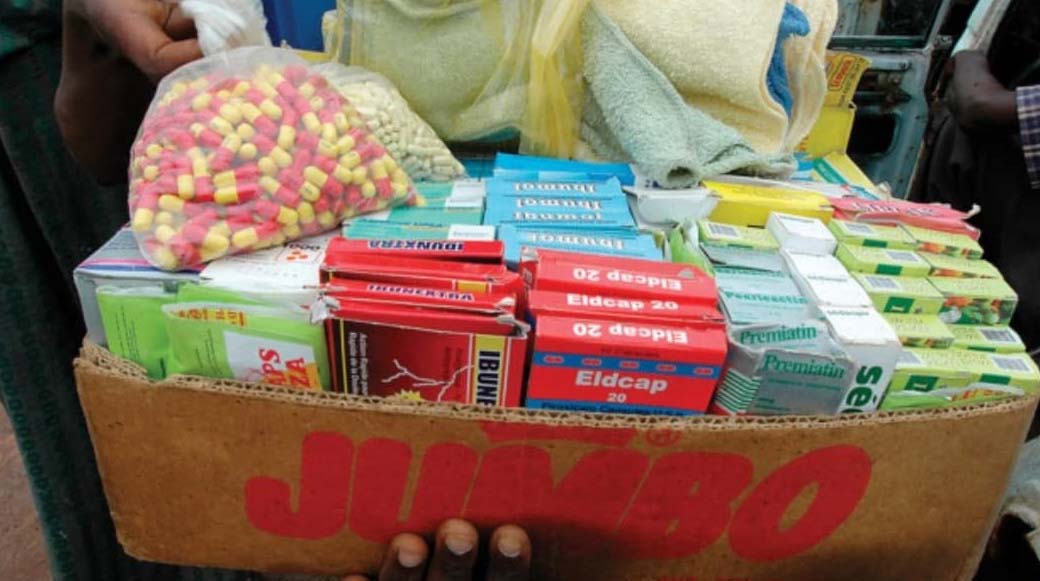
Emmanuel Kafe
WHEN Engelbert Ndumani developed breathing problems three years ago, he did not hesitate to turn to a local street “pharmacy” for assistance.
He reasoned that consulting a professional medical doctor would be a waste of time and money.
The street drug hawker he consulted, who operates in central Harare, prescribed him a Vasoprin 75mg course to treat his condition.
After taking the medication for a few months, the 34-year old’s condition would not improve.
Instead, it took a turn for the worse.
“I was given Vasoprin 75mg after I had told them that I was having heart-related problems,” Ndumani told The Sunday Mail.
Unbeknown to Ndumani, Vasoprin is a prescription drug which can only be dispensed on the advice of a qualified doctor.
It is only prescribed to treat pain, heart attacks and fevers.
“I later realised that I was given a drug that prevents blood clotting and strokes. After months of taking the pills, I would feel nauseated, stomach pains, heartburn and eventually gastrointestinal bleeding,” he said.
Ndumani was later diagnosed with kidney failure, which doctors attributed to the drugs he had been taking for more than five months.
Pervasive
Ndumani’s ordeal mirrors that of thousands of Zimbabweans who are putting their lives in harm’s way by turning to street “pharmacies”.
Street-side drug hawkers have become almost ubiquitous across the country, especially in Harare.
Drugs sold on the streets include an assortment of prescription antibiotics, sex enhancement drugs and skin lightening creams.
The major draw is the “pharmacies” competitive pricing and claims of having medication that can cure all manner of disease.
For those who patronise these street establishments, the option of negotiating prices and the no-questions-asked policy is also a major motivator.
However, for the dealers, the desire appears to be just to make money.
As a result, many people are being put on wrong and sometimes expired medication, to the detriment of their health.
There are fears that these quack drug merchants are fuelling a public health crisis and drug abuse by illegally selling prescription medicines.
Research has shown that the selling of counterfeit medicine is contributing to the increase in health complications such as tuberculosis and HIV drug resistance.
About 100 000 deaths a year in Africa are linked to the counterfeit drug trade, according to the World Health Organisation.
There are fears that Zimbabwe is fast becoming a haven for substandard, spurious, falsely labelled, falsified and counterfeit (SSFFC) medical products—- as they are officially called.
Selling drugs on the streets is illegal in terms of the Medicines and Allied Substances Control Act (Chapter 15:03).
Experts argue that the drugs being hawked are often exposed to the vagaries of weather, thereby affecting their efficacy and utility.
Public health physician Dr Tonderai Munondi said exposing drugs to the elements of weather was dangerous.
“These people are not trained in any way,” he charged. How do they know the safety of what they are prescribing let alone the complications one can develop from taking that medication.”
He said patients who use drugs bought from the streets risk developing organ failure. Patients, he said, can develop liver and kidney complications.
Other risks associated with using drugs not prescribed by doctors include addiction. Zimbabwe is currently battling a raging drug abuse epidemic among young people.
In some cases, patients overdose on these medicines leading to life-long health complications.
Street doctors
In downtown Harare, a collection of bubble-wrapped pills is scattered across a rudimentary table.
There are crumpled boxes of lubricants, anti-fungal powders and all manner of tablets.
A youthful vendor behind this street enterprise shuffles through a pile of shiny sachets before trimming off a section containing two antibiotic capsules off the sheath.
He hands over the pills to a clearly pleased customer before collecting in return $300 for the medicine.
Patrons call these pharmaceutical vendors “doctor” or “mukoti”.
On an adjacent table sits Lucia, who is also a drug vendor.
Her merchandise comprises cartons of pills stacked one on top of the other.
Most of the drugs on her table are prescription drugs such as misoprostol (Cytotec), a synthetic prostaglandin medication used to prevent and treat stomach and ulcers.
This drug is also used to induce labour or cause an abortion.
The Sunday Mail observed her clients purchasing such medicine without producing a doctor’s prescription.
Aside from selling the drugs, Lucia was offering medical consultations, including advice on how to use the drugs. Lucia is not a pharmacist nor is she a trained drug dispenser. In fact, she is a hairdresser.
She said given her five years’ experience of selling drugs on the streets, she has the expertise to offer medical advice.
“I learnt a lot of these medications from home, my mother was a nurse,” she said.
“These pills pose no harm to my clients,” she claimed almost nonchalantly.
International links
This publication established that most of the drugs being sold on Harare’s streets are smuggled into the country from Zambia and Mozambique.
Medicine control regulations in the two countries are said to be unrestrictive.
Most of the drugs are either unregistered here in Zimbabwe or are counterfeit.
Medicines Control Authority of Zimbabwe acting director-general Mr Richard Rukwata said while the authority does not have arresting powers, it had instituted a joint operation with law enforcement agencies to take the illicit drugs off the streets.
“The authority works with the different law enforcement agencies like ZRP’s CID Drugs and Narcotics, National Prosecuting Authority (NPA) to curb illegal sales of medicines and prosecution of offenders,” he said.
“These joint operations have been successful to a great extent as a number of arrests have been made and perpetrators prosecuted,” he said.
“The Authority also conducts training with Zimbabwe Revenue Authority (ZIMRA) officials stationed at all ports of entry to verify medicinal consignments correctly, and to quarantine any smuggled medicines.”
He said authorities need to severely punish those who illegally sell drugs.
New approach
Dr Richard Sekere, a pharmacist and a former lecturer at the University of Zimbabwe, said there was need to ensure quality and control in the pharmaceutical industry.
“We need to empower people economically.
“You will agree with me that selling these drugs is not something people look forward to doing but they are trying to make ends meet.
“This is, however, posing huge risks to the public. It’s bad to imagine what the public health crisis will look like when almost every citizen in need of income turns to prescribing drugs.”



 Online Reporter