

 admin
admin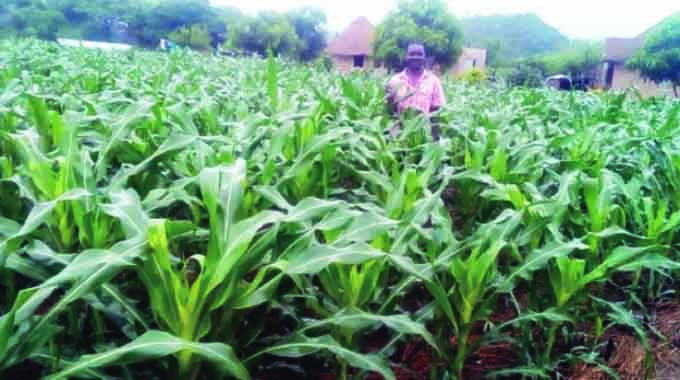
Lovemore Chikova-Development Dialogue
Listening carefully to President Mnangagwa’s speeches when he talks about development, aspects that always stand out include consultation and meticulous planning.
And when he speaks on development, President Mnangagwa always includes lines like: “I sat down with my minister of —, or I called the minister of —, or I brought the issue before Cabinet —, or we agreed that — or we have to consult the people”.
All these statements indicate how President Mnangagwa takes consultation and planning seriously when it comes to implementing developmental projects.
In actual fact, planning has become the hallmark of development in the New Dispensation, and this explains why all the projects being implemented to uplift people out of poverty are recoding a huge success.
When President Mnangagwa sits down with his ministers or other experts to plan on development, it means there is a vision, goals and objectives to be achieved.
A good example of such planning has been in agriculture.
The successes being enjoyed now in agriculture and the food security that has taken root in the country has been a result of careful planning led by President Mnangagwa.
For this season, the nation expects to harvest more than three million tonnes of maize, enough for local consumption and enhancing the national strategic reserves.
Last year, the country achieved self-sufficient in wheat after producing a record 375 000 following shrewd planning that aided the realising of the massive harvest.
To illustrate how President Mnangagwa has made planning a hallmark of the Second Republic, one simply has to listen to the speech he made at a field day at his Pricabe Farm in Kwekwe last Saturday.
This planning in agriculture, according President Mnangagwa, started with the anchor project — Pfumvudza/Intwasa — which assured food security at the household level.
President Mnangagwa revealed that Pfumvudza/Intwasa was well planned.
“It is our philosophy, the philosophy of the Second Republic is that we must develop an agricultural production model first, which must provide food security at the household level,” he told the guests at Pricabe Farm.
“So under the late Cde Perrance Shiri, who was the Minister of Agriculture, before we had Cde (Anxious) Masuka, we introduced Pfumvudza. Pfumvudza is designed to provide food security at the household level, at the village level and at the community level, and that we have achieved.
“If there is a household or family that does not have enough food, it means that they are not taking up Pfumvudza. If you follow what is required under Pfumvudza, you will never go hungry.”
Under Pfumvudza/Intwasa, the planning involved Government providing inputs such as seed and fertiliser for each household.
Evaluating the programme, President Mnangagwa said it was a huge success.
“I am happy that it is a success,” he said. “In fact, we are expanding that model of agriculture. So, if the household has food security, it follows that the village will have food security and it follows that the community will have food security.”
Alongside the planning for Pfumvudza/Intwasa, President Mnangagwa said they sat down to discuss and plan how to make commercial farming profitable.
“Once that is done (Pfumvudza/Intwasa), we move to the second level where people are regarded as farmers who now have to be supported through a programme where they access loans per each season — summer and winter — in order for them to be productive,” he said.
To enhance the Pfumvudza/Intwasa model, a mechanical implement has been made to help with digging of the holes.
“There is now an instrument which digs holes for you and in a year or two we should be distributing these,” said President Mnangagwa. “So, instead of you digging the holes, you just walk, you press a button and the hole is dug.
“And we uplift the ordinary household at that level from poverty to prosperity. They must have enough food and surplus.”
President Mnangagwa said in planning for agriculture, the task is to make the land productive, with the assistance of the Government.
“We must modernise, we must mechanise for us to be self-sufficient,” he said. “It’s a priority of our Government for our people to be food secure. We are now in the second year of being food secure. We will never again, under the systems and models of agriculture we have introduced, be food insecure.”
President Mnangagwa outlined how he planned expeditiously with the Minister of Lands, Agriculture, Fisheries, Water and Rural Development Dr Anxious Masuka and other experts to achieve food security.
“I have asked my people, Minister of Agriculture and his experts to say how many hectares in this country should be under irrigation in order to produce enough for a year for the nation,” he said.
“And they have made that calculation. So we have a programme to make sure that the number of hectares is under irrigation. We are doing this because of climate change. There is no guarantee anymore that we will have enough rainfall each year.
“So whether there is rainfall, as long as we have water bodies and we have more than 10 000 water bodies in this country, we also have a programme now of dam construction, this is designed to guarantee us food security to mitigate against climate change.
“And we have now succeeded; we will never again go hungry. If we receive poor rains, the area under irrigation can produce adequate food for ourselves. Yes, we will continue increasing hectarage under irrigation. I am happy to say that first we are a very modest people as a people of Zimbabwe, we are most welcoming we are friends to all an enemy to none as our foreign policy. Our primary focus is: one; to be food self-secure, number two; we want to develop and modernise our country.”
The planning involved setting up innovation hubs at universities to promote science, technology and innovation that feeds into the modernisation of various sectors of the economy, including agriculture.
“We began the process of space science three years ago,” said President Mnangagwa. “None of us dreamt before, but because of the promotion of science and technology in our universities we said let us also branch into aerospace technology and we are now one of the few third world countries in space.
“We now don’t borrow information about the weather to guide us in our agricultural policies because we get facts from our own spacecraft.”
Chiefs were not left out in the planning for the success of agriculture since they lead rural communities that depend on farming, and they had a role in ensuring free inputs reached their people.
Part of the planning involves the drilling of solar-powered boreholes in each village across the country to provide for irrigation.
“I asked my Minister (of Agriculture) to count the villages in this country, he said there are 35 000 villages,” said President Mnangagwa. “We have now decided to buy 100 rigs, and I understand 40 have already arrived, so that each single village in this country in two years there will be a solar powered borehole and the programme has already began.
“Women, young people, instead of loitering in towns, they can now create production in the countryside because electricity is now being provided, solar, water is getting available.”
President Mnangagwa said the record wheat harvest recorded last season took a lot of planning.
“Let me talk about wheat, for the rest of the history which we know, or from the time we began eating bread, we never produced enough wheat to make bread in the country,” he said. “We had to import the wheat, we had to import the fertilizer.
“So, I sat down with my Ministers of Agriculture and of Science and Technology and asked Professor (Murwira) and said, ‘You professor, students must study subjects in order produce products.”‘
President Mnangagwa said the planning for development was anchored on using local resources.
“We have to use our domestic resources to develop our country,” he said. “Brick by brick, stone upon stone. We don’t have all the skills we need, we don’t have all the competences we need, we don’t have all the technology we need, but all these things can be acquired and be domesticated.”



 Online Reporter