

 admin
admindue to their rigidity, which has also led to an estimated US$3 billion to be circulating in the informal market with dire consequences on the economy, reeling from a liquidity crunch.
MFIs could once again salvage the situation given the Government’s latest move to license the institutions allowing them to take deposits from the public.
Finance Minister Tendai Biti announced while presenting the Mid-Term Fiscal Policy Review Statement a week ago that Cabinet had approved a new law “which for the first time creates an institution of a deposit taking micro-finance institution”.
Previously, the MFIs had been restricted to channelling small loans mostly to small and medium scale enterprises as well as individuals.
Though some have earned the sector the title “loan sharks” due to their exorbitant interest rates, the public has not had a choice but to rely on the institutions to access emergency funding.
Some MFIs had before the Government’s decision, already taken the initiative to start taking deposits from the public, albeit illegally, and not surprisingly were getting massive support from the public due to the high interest rates which they were offering on deposits.
Banks, on the other hand, have not been awarding anything on deposits while charging exorbitant rates for maintaining accounts in what Minister Biti has described as “voodoo banking”.
The Government has since announced its intention to force the banks to award interest on deposits as well as put a cap on interests on loans.
It is this stiffness which has resulted in the public opting to stay away from banks and keeping their money under pillows and mattresses.
A recent survey by the central bank showed that only around 24 percent of Zimbabwe’s adult population was banked.
Most critically, the survey revealed that 40 percent of the adult population was not banked and that Zimbabweans used informal mechanisms for savings, insurance and borrowing.
As analysts point out, the strict rules used by banks for one to open an account, while reasonable as part of the “know your client” rule, have turned many away from the financial institutions.
And this is exactly where MFIs have an advantage over traditional banks as they are located right in the heart of where people live.
Operators in the sector believe the MFIs have psychological and emotional advantages over banks when it comes to their relationship with the public.
MFIs are not only more in terms of numbers but they are also spread out across the country, allowing easier access to the majority of the population who do not live in cities and towns.
While latest statistics from the RBZ show that there are 163 licensed MFIs, players in the sector believe that there are many more operating underground and who will soon be regularising their status, making them the best instrument to absorb the money circulating in the informal.
Zimbabwe Association of Microfinance Institutions executive director Mr Godfrey Chitambo contends that the move by Government would open doors for more investment in the sector.
“This will sanitise the industry. What this means is that it is going to put a seal of approval on the sector and it could bring in more investors as the MFIs will be a sector recognised by law,” he said.
However, given recent developments in the banking sector where a number of banks have closed shop
and were found to have been abusing depositors’ funds, the RBZ would need to strengthen its surveillance arm to ensure that MFIs do not fall into the same trap.
The decision to grant MFIs authority to take deposits from the public is a step towards improving liquidity flows and ensuring that people do not keep their money under pillows and mattresses with the catch being the interest that they are going to offer on deposits. — New Ziana.


Online Reporter
- Chronicle , Herald , Manicapost , SundayMail , SundayNews
- September 19, 2026
- 72 views
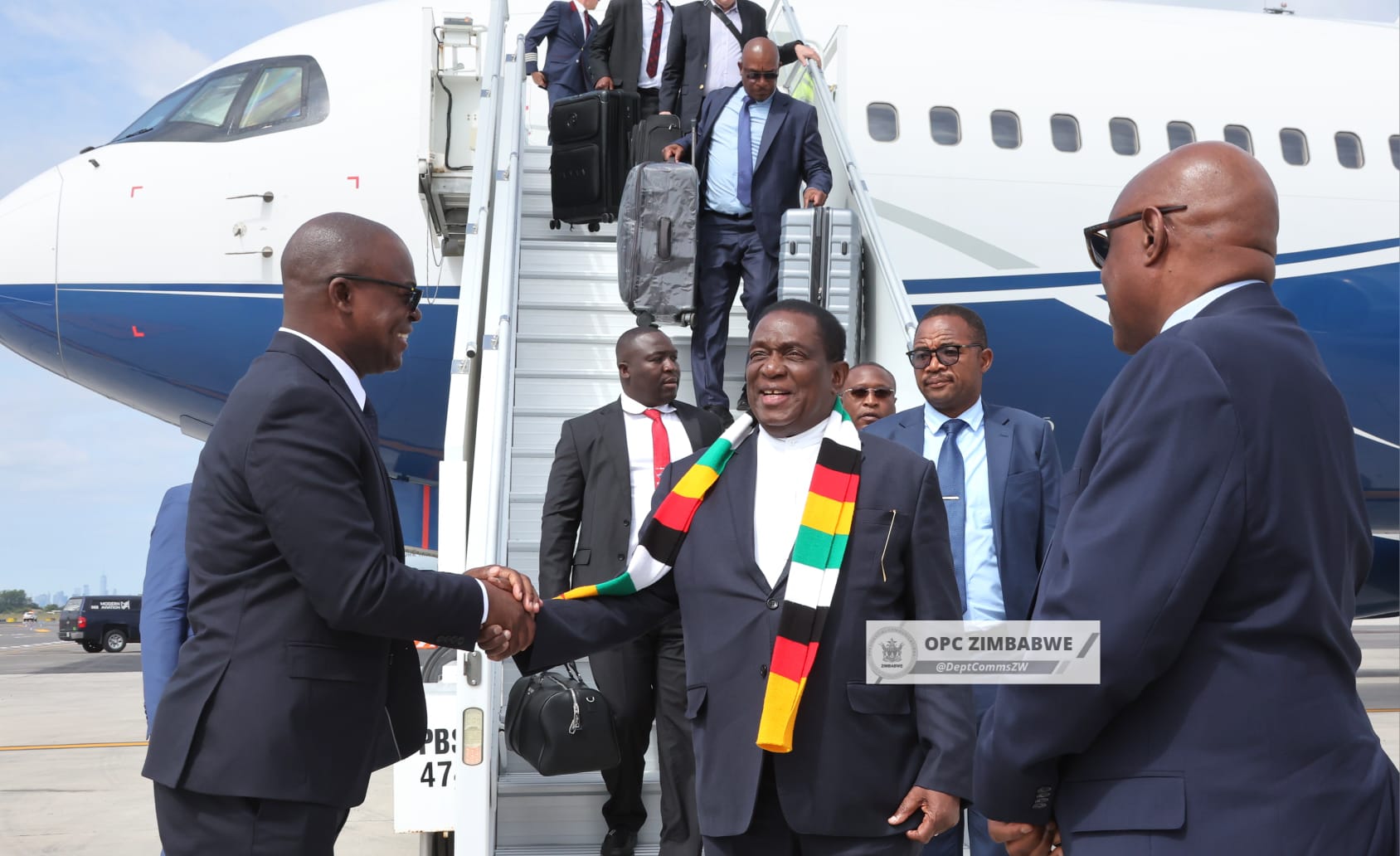
NEW: President Mnangagwa arrives in New York, to attend Zimbabwe Business Forum tomorrow
Wallace Ruzvidzo in NEW YORK, USA PRESIDENT MNANGAGWA has arrived in New York to join fellow Heads of State and Government at the 81st Session of the United Nations General…
