Online Reporter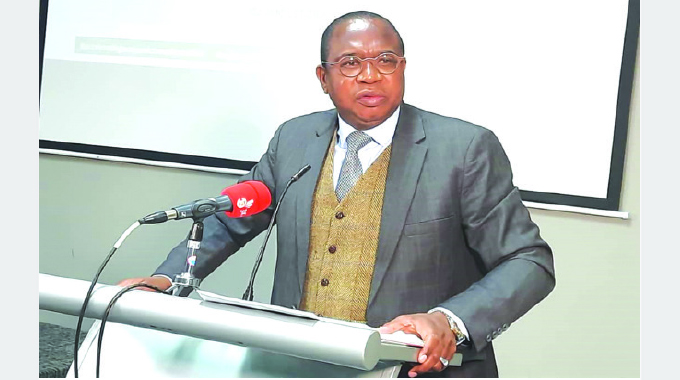
Nqobile Bhebhe
Zimpapers Business Hub
EXPECTATIONS are high ahead of the 2025 Mid-Term Budget Review, which is widely expected to consolidate the prevailing economic stability while providing a clear roadmap for sustained growth during the second half of the year.
The review, set to be presented by Finance, Economic Development, and Investment Promotion Minister Professor Mthuli Ncube anytime soon, comes at a time when the economy is showing signs of durable stability and resilience, following the introduction of the Zimbabwe Gold (ZiG) currency in April last year.
Strong performance of the mining sector and rising investor confidence have also strengthened bullish sentiments among policy makers and analysts for the rest of the second half economic outlook.
This mid-year fiscal policy provides authorities the opportunity for recalibration, where need be, to reinforce key macroeconomic policy measures, correct imbalances, and respond to emerging domestic and global headwinds.
The Treasury is aiming to maintain the positive trajectory to achieve the targeted 6 percent expansion, following the El Niño-induced drought slowdown to 2 percent in 2024, when nearly 70 percent of agricultural produce was destroyed.
Agriculture is one of Zimbabwe’s main economic sectors, accounting for around 11,5 percent of the gross domestic product in 2023. The sector’s contribution shrank to 8,7 percent of GDP due to drought last year.
Key expectations include focus on policy consistency and fiscal discipline the Treasury pushes towards a strong rebound in growth this year.
This comes after the Zimbabwe National Statistics Agency (ZIMSTAT) recently revised the country’s GDP estimate for 2024 to US$44,7 billion, up from US$35,2 billion, following an economic census that factored in informal sector activity.
The development has highlighted the vast potential within the informal economy and the need for fiscal strategies to harness its value.
Reserve Bank of Zimbabwe (RBZ) Monetary Policy Committee member and economist Mr Persistence Gwanyanya said the mid-term review was critical to sustaining the momentum built since the introduction of the ZiG currency.
“We expect the Treasury to reinforce measures to sustain stability and economic resilience in the coming mid-term fiscal policy review,” said Mr Gwanyanya.
“Tight monetary policy stance has mainly been stable after the introduction of ZiG and sustaining this requires complementary fiscal policies,” he added.
A central expectation from the review is a suite of measures to boost demand and confidence in the ZiG, with the Government, controlling over 70 percent of the economy, expected to lead the charge through statutory instruments, public procurement and tax measures.
“It’s comforting that authorities have so far enacted a law that compels payment of 50 percent of corporate taxes in ZiG. We expect more measures to increase the use of the local currency,” said Mr Gwanyanya.
“Government has the power to influence the usage of ZiG in the economy through its procurement processes and, as already highlighted, through duties, taxes, and other statutory fees,” he added.
The International Monetary Fund (IMF) recently acknowledged Zimbabwe’s progress in restoring macroeconomic stability, particularly following the launch of ZiG and urged authorities to sustain deep structural reforms to solidify resilience.
This comes amid relative stability of both the exchange rate and inflation, which has boosted market confidence and ushered in a more predictable environment, creating conducive conditions for business and economic growth.
The central bank has already presented evidence of a rapidly stabilising economy, revealing in its second quarter economic performance snapshot that local currency monthly inflation averaged 0,5 percent since February.
Economist Ms Alice Chikonzi said the IMF’s recognition presents a unique opportunity for Zimbabwe to consolidate credibility, attract investment and move closer to international re-engagement.
“The recent IMF commentary should not just be seen as a pat on the back, but as a signal to build stronger institutions, deepen reforms and signal to investors that Zimbabwe is serious about economic transformation,” said Ms Chikonzi.
She said the Mid-Term Budget Review must outline measurable reform milestones, especially around fiscal transparency, debt restructuring, and institutional efficiency.
“If we can show clear commitment to reforms such as improving public financial management, formalising the informal sector, and boosting transparency in procurement, then we open doors for stronger investor confidence and potentially renewed access to concessional financing,” she said.
Formalisation of the informal economy is also emerging as a strategic priority, given its significant yet untapped contribution to GDP.
“At a revenue to GDP ratio of more than 16 percent against the average of 10–15 percent for developing countries such as Zimbabwe, it demonstrates that there is a significant economy which is unaccounted for,” said Mr Gwanyanya.
“The recent economic census reveals this. After accounting for the previously unaccounted economy, the GDP is now estimated at US$44,7 billion, up from US$35,2 billion in 2024. This only demonstrates why measures to incentivise this previously unaccounted economy to contribute to the fiscus are necessary.”
The Treasury is also expected to tackle pressing debt issues. Ms Chikonzi said public debt, particularly short-term domestic instruments, remains a major fiscal risk.
“Public debt, particularly short-term domestic instruments, continues to pose risks to fiscal sustainability. The cost of servicing debt is high and crowds out social and productive sector spending,” she said.
“The Mid-Term Budget Review must clearly outline a debt management framework that focuses on extending maturities, reducing borrowing costs, and improving transparency in debt reporting and contracting.”
Her sentiments echo calls from several economic analysts urging the Government to take advantage of the current economic stability to restructure debt obligations and improve creditworthiness.
Economist Mr Tinashe Dube said while the economy has stabilised, the review must now shift focus from stabilisation to growth acceleration by supporting productive sectors and unlocking domestic demand.
“To achieve a 6 percent growth rate, the Mid-Term Fiscal Policy must prioritise targeted support for high-impact sectors such as agriculture, manufacturing, construction and SMEs. These are the engines of job creation and export growth,” said Mr Dube.
He urged the Government to enhance capital expenditure efficiency, align public procurement with local industry capacity, and boost liquidity to productive sectors through structured financing models.
“It’s not enough to have policy stability, there must be fiscal stimulus directed at domestic production, particularly in value chains where Zimbabwe has a comparative advantage,” he said.
Mr Dube added that empowering SMEs, de-risking agriculture, and ramping up support for domestic manufacturing were essential if Zimbabwe is to transition from recovery to transformation.
As the country counts down to the Mid-Term Budget Review announcement, expectations are also high that the policy statement will solidify recent gains, broaden the growth base, and advance the country’s re-industrialisation agenda.
“Ultimately, the 2025 Mid-Term Budget Review is more than a fiscal checkpoint, it is a strategic opportunity to refine and accelerate Zimbabwe’s development agenda,” said Mr Dube.
“By maintaining stability, responding to IMF reform recommendations, driving local currency usage, unlocking productivity, and supporting industrial growth, the Treasury can lay a firm foundation for attaining the six percent growth target and positioning the country for lasting economic transformation.”