admin
admin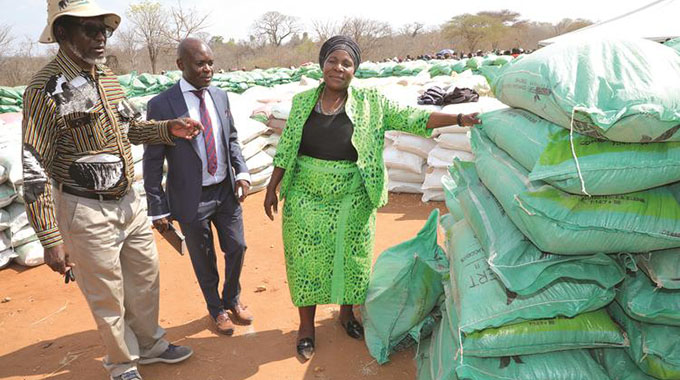
Munyaradzi Musiiwa Midlands Correspondent
The Midlands Province is targeting to put more than 80 150 hectares under maize using the inputs being handed out under the Presidential Input Support Scheme. The province has so far received close to 2 006,75 tonnes of seed maize, 931 tonnes of basal fertiliser (compound D), 299,75 tonnes of Ammonium Nitrate (AN), and 95 tonnes of sorghum seed.
Provincial crop and livestock officer Mrs Madeline Magwenzi said the province had already started receiving the inputs under the presidential input support scheme programme which is set to benefit every household and communal farmers.
“Most districts have started receiving the inputs. We are going to be distributing the inputs to all households in the province. We also received the inputs for small grain,” she said.
Mrs Magwenzi urged farmers to be fully prepared ahead of the summer cropping season to ensure optimal yields.
The Meteorological department has indicated that the country will receive average to below average rains this season.
Meanwhile chemists have urged Government to embrace new farming technologies to ensure optimal yields and avert hunger.
In an interview on the sidelines of Zimbabwe Chemical Society workshop, the society’s registrar and founding executive president Mr Fastino Madzima said Government should implement Scientific driven farming methodologies.
Mr Madzima said the country has failed to achieve optimal yields due to primitive farming methods.
“Global warming is a result of certain chemical processes. The temperatures and rainfall patterns that are changing are a result of chemical processes. The only people who can deal with this are chemists,” he said.
“Extension officers in the Ministry of Land, Agriculture and Rural Resettlement use the push factor driven decisions. We now want to use the science driven decision making. “People have been farming on the same fields for more than a century. So the PH has changed. Government should invest more in people who have the knowledge.
Who can measure the PH levels and then we are able to maintain the yield at any given time under any weather.”
The country received below average rains last year resulting in poor yield. The drought in the province claimed more than 2048 cattle leaving the provincial herd at 922 890.
Gokwe North was the most affected after losing 570 herds of cattle.


 Online Reporter