Online Reporter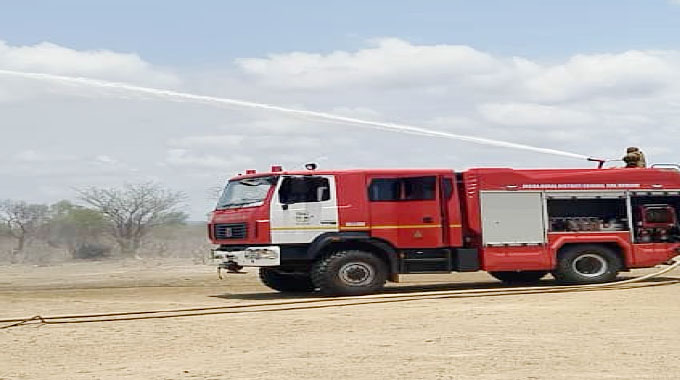
Sukulwenkosi Dube-Matutu, [email protected]
MINISTER of State for Matabeleland South Provincial Affairs and Devolution, Albert Nguluvhe, has called for stronger co-ordination in the prevention of veld fires, warning that the persistent outbreaks are a major setback to development and a direct threat to household livelihoods.
In a speech read on his behalf during a belated launch of the veld fire awareness campaign at Msundu Business Centre in Insiza District, Secretary for Provincial Affairs and Devolution, Mrs Latiso Dlamini-Maseko, said communities, authorities and stakeholders must work collaboratively to reduce losses caused by veld fires.
The event also coincided with the commemoration of the International Day for Biodiversity.
Matabeleland South continues to record high levels of destruction from veld fires. In 2022, the province lost 194 000 hectares, while 100 000 hectares were destroyed in 2023. During the 2024 season, 33 000 hectares were burnt.
Minister Nguluvhe said the country’s National Veld Fire Management Strategy — anchored on prevention, suppression and post-suppression interventions — must be effectively implemented at community level.
The strategy includes awareness campaigns, community involvement and construction of fireguards, mobilisation of firefighting equipment, and proper reporting and communication systems.
“All of us gathered here today have a stake in ensuring the effective implementation of this Fire Management Strategy,” said Minister Nguluvhe.
He said this year’s national theme, “Prevent Veld Fires – Protect Our Environment,” underlines the need for a whole-of-Government and whole-of-society approach.
“Preventing veld fires builds towards long-term environmental and economic sustainability and has a major bearing on achieving the National Development Strategy 1 (NDS1) and Sustainable Development Goals (SDGs),” said the minister.
In provinces like Matabeleland South, where cattle farming underpins local livelihoods, the destruction of grazing land continues to harm rural economies. Minister Nguluvhe said communities must prioritise fireguard construction, biomass reduction through hay baling, and the formation and training of firefighting teams.
Forestry Commission Matabeleland South manager, Mr Bekezela Tshuma, said veld fire prevention is not solely the responsibility of authorities, but requires involvement of all stakeholders, including community members.
He urged districts and institutions to craft and implement fire action plans that outline prevention measures and response mechanisms.
“Veld fires destroy forests, which are a key source of livelihood for many communities,” he said.
Environmental Management Agency (EMA) Insiza District environmental officer, Mr Mgcinisihlalo Ndlovu, said 14 out of 23 wards in the district have already been affected by veld fires this year. Insiza routinely records the highest number of fires in the province, with lives, property, wildlife, and livestock having been lost.
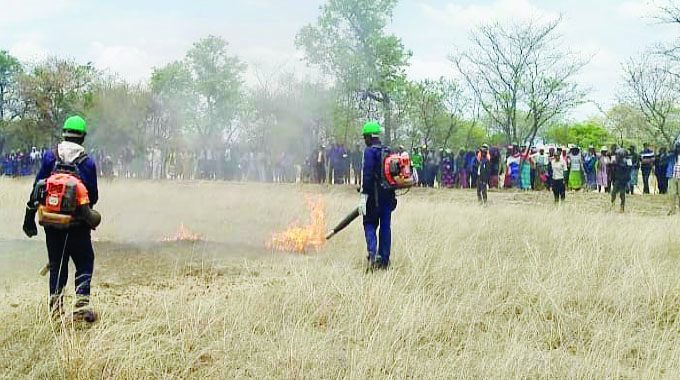
“What we need to do is plan ahead of each season by putting up measures such as fireguards and acquiring fire beaters. Failure to implement these measures has serious consequences. Traditional leaders are also encouraged to penalise those who break environmental laws,” he said.
Insiza North Member of Parliament, Cde Delani Moyo, encouraged communities to embrace fire awareness education, adding that the fight against veld fires requires unity, discipline and active participation from all citizens.
“This campaign is timely and essential as it brings communities together to safeguard our environment, livelihoods and future,” he said, commending President Mnangagwa’s leadership under Vision 2030.
The second week of May is marked annually as the National Veld Fire Week launch in Zimbabwe. Set aside under the Government’s 2006 Fire Management Plan and Strategies, the week serves to raise awareness and promote practical measures to safeguard ecosystems and communities.
Zimbabwe loses over one million hectares of grasslands and forests annually to veld fires. The 2025 fire risk prediction model shows that 43 percent of the country faces a high fire risk, 27 percent medium risk, 12 percent low risk, while 18 percent is classified as extreme risk. — @DubeMatutu.