

 Chronicle Editor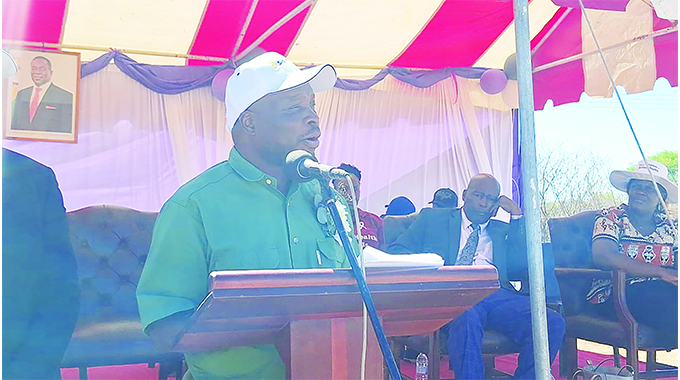
Natasha Mutsiba, [email protected]
MATABELELAND North Provincial Affairs and Devolution Minister Richard Moyo has highlighted the negative impact of vision impairment on adults, including lower rates of employment, high rates of depression, social isolation, difficulty in working, and a high risk of falls and fractures.
He was speaking during World Sight Day which was held at Nyamandlovu Hospital, Umguza district on Thursday.
Cde Moyo emphasised the importance of multi-sectoral co-ordination among the Government, international organisations, and local communities to prevent, manage and control eye diseases.
“Multi-sectoral co-ordination among the Government, International organisations and local communities remains vital on the prevention, management and control of eye diseases. They are thus indebted to the support that we continue to receive from our partners like Sightsavers in making eye health a possibility.
“We urge all stakeholders to mobilise resources, raise community awareness and avail eye health to the nearby population and affordable pricing. Decentralisation of services to primary care level is central in ensuring equality in access for the marginalised population groups,” he said.
Cde Moyo also advocated for environments that promote good eye health through adequate water and sanitation.
“We continue to advocate for an environment which promotes good eye health through adequate water and sanitation. Equally access to eye health services and timely provision of interventions like preventing impaired vision and blindness. The need for inclusive policies and strategies to reduce preventable blindness offer vision care and enhance the system for eye health cannot be over emphasised,” he said.
He also highlighted the staggering burden of eye diseases worldwide, with approximately 2,2 billion people experiencing near or distance vision impairment.
“The burden of eye diseases is unimaginable and requires prompt action to address it. Globally at least 2,2 billion people have a near or distance vision impairment of which about a billion of these cases could have been prevented or corrected. It is estimated that 15,3 percent of the world’s blind population lives in Africa. About 20,3 million people in the African region have a form of visual impairment and 20,4 million have low vision while 5,9 million people are expected to be blind. Low and middle-income countries continue to carry the heavy diseases burned with high prevalence of vision impairment and blindness,” he said.
In his speech, Sightsavers Country Director, Mr Peter Bare, underlined the importance of equal access to eye health services for all individuals, regardless of their location, gender, health status, or background. Through the Ministry of Health and Sightsavers, 332 people from Umguza district did eye examination with 110 individuals going home with their glasses which were donated by the people from Sightsavers.
“Everyone, including remote and rural communities, women and girls, people with disabilities, should have access to the services they need. Yet the availability of eye health services and products like glasses varies across and within countries. They are often easily accessible in urban areas but less so in other places and for marginalised groups.
“Eye health should be equally available to everyone, no one should be disadvantaged because of where they live, their gender, health, or background. But currently it is inaccessible for some sectors of society and even a luxury for those in urban areas. This needs to change. When we tackle these issues, children can learn, and adults can earn. Eye health equals a ripple effect on the lives of individuals, families, and communities, helping nations to thrive and reducing poverty and inequality” said Mr Bare.
Mr Bare said as Sightsavers, they remain committed to supporting the Ministry of Health and Child Care.
“Sightsavers remains committed to supporting the Ministry of Health and Child Care in strengthening inclusive eye care services in the country. As part of this commitment, we have an Inclusive Eye Health Project running in this province from 2022 to 2024, focusing on reducing preventable blindness and strengthening the health care system. Today (Thursday), as we are here commemorating World Sight Day in this district, there are free eye examinations and provision of glasses for community members. I encourage all of you to take your health into your own hands and have an eye examination,” concluded Mr Bare.
Provincial Medical Director (PMD), Dr Admire Kuretu emphasised the importance of eye health in the workplace.
“We need to prioritise vision screening in the workplace at all levels, health initiatives, support employees and employers to prioritise eye health and encourage workplaces to make eye health initiatives standard practice. Every workplace should promote eye health habits that will benefit the well-standard practice,” he said.
He said the consequences of inadequate eye health interventions have been significant, resulting in productivity losses and avoidable blindness. He said this burden has placed additional strain on an already struggling healthcare system. Particularly concerning the early onset of irreversible severe vision impairment in young children, which can lead to delayed motor, auditory, psychological, social, and cognitive development,” he said.
Some of the people who attended the event were honourable chiefs and village heads from the district, representatives from partner organisations such as Trinity who also donated food to the district.
World Sight Day is an international day of awareness held every October to focus attention on the global issue of eye health. — @TashaMutsiba.


 Online Reporter