

 admin
admin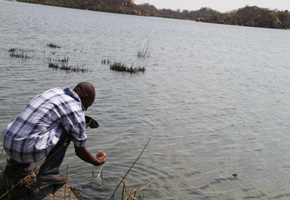
The secretary-general of the Bulawayo United Residents Association (Bura), Mr Samuel Moyo, said in an interview yesterday that the council should leave Khami water alone and concentrate on viable options like the Nyamandlovu Aquifer and Mtshabezi Dam.
“Khami water is heavily polluted with raw sewage and industrial waste. I do not think it can be purified enough to be used for anything. What guarantee do we have that it can be purified and be safe for drinking?” asked Mr Moyo.
He said if council wanted to use the water, it should experiment with it on trees first.
“They also have an uphill task to overcome the psychological barrier that residents have concerning the bodies of people who were thrown into the dam. Actually, they should not even be dreaming of the project. Anyway all those people making noise about the purification of the water are not experts,” he said.
Bulawayo Progressive Residents Association (BPRA) co-ordinator, Mr Roderick Fayayo, said it was time for people to stop trying to get political mileage out of the issue.
“Right now, Bulawayo needs every drop of water that it can get. We should stop politicking over the survival of the people of Bulawayo. Although we know there is a history of bodies having been thrown into the dam, it is time to solve that issue and really start considering drawing water from Khami dam,” said Mr Fayayo.
He said the Bulawayo City Council had an excellent track record of providing clean water for residents and there was no need to doubt the local authority’s ability in this regard.
“They are the experts and we have to listen to whatever they say,” said Mr Fayayo.
Contacted for comment, Nust’s director of information and public relations Mr Felix Moyo said the institution’s Department of Applied Chemistry was still carrying out research on the water.
“It is still too early to say whether the water will be fit for human consumption. Further tests still have to be carried out and a report will be released in due course,” said Mr Moyo.
Council gave Nust the go-ahead to do a study of the water at Khami Dam in November last year.
Khami Dam was decommissioned in 1988 after a study proved that the water was unsuitable for human consumption following the dumping of raw sewage and industrial waste.
It is almost full largely because of the industrial and sewage deposits.
Political leaders have always been against the use of the water for any purpose, arguing that some freedom fighters who were imprisoned at Khami Prison were murdered by the Ian Smith regime and their bodies thrown into the dam.



 Online Reporter