

 admin
admin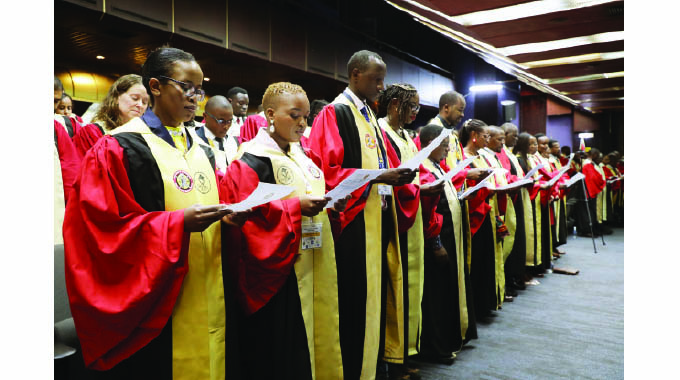
Rumbidzayi Zinyuke-Senior Reporter
The growing number of trained medical specialists is transforming cleft care across Africa, including Zimbabwe, paving the way for improved treatment options for countless children and adults born with cleft lip and palate.
Cleft lip and palate are the most common congenital craniofacial conditions worldwide, affecting approximately one in every 700 babies in Africa.
Unfortunately, these conditions often go untreated due to barriers such as cost, lack of access to trained professionals and social stigma.
Without timely intervention, children face lifelong challenges with eating, speaking, breathing and mental health.
Surgery can effectively correct these issues.
Despite the ability to treat cleft conditions, access to surgical care remains limited, exacerbating health challenges for affected individuals.
This week, 138 specialist surgeons graduated from the College of Surgeons of East, Central and Southern Africa (COSECSA), joining over 900 certified surgical specialists.
An additional 1 200 are in training.
Among the recent graduates, 17 were supported by Smile Train, while another 18 received assistance from Operation Smile.
Dr Senior Banda from Malawi, emphasised the significance of comprehensive training in addressing prevalent surgical conditions in Africa.
“I chose paediatric surgery because it allows me to address conditions in infancy or childhood that are often correctable,” said Dr Banda.
“We face many challenges in our health systems due to limited human and financial resources. Training more doctors is essential for building a resilient and sustainable health system.”
Co-founder and CEO of Emeritus of Operation Smile, Dr Bill Magee, underscored the need to address broader healthcare challenges linked to cleft conditions.
“The child with a cleft condition took us back to the community, to show us the need and get us to pay attention to the health system.
“Every child matters. Each surgery, each smile restored, is a step closer to ensuring that the most vulnerable populations receive the care they need,” said Dr Magee.
Mrs Nkeiruka Obi, vice president and regional director for Africa at Smile Train, highlighted the importance of empowering surgeons for continuous care.
“Seventeen graduates may look like a small number, but truly speaking, if you look at the ripple effect of how much these 17, who eventually become trainers and leaders, would have on the surgical healthcare system in Africa, it is phenomenal,” said Mrs Obi.
She added that skilled surgeons are essential for treating cleft conditions.
“The only solution to cleft is surgery in the hands of a good surgeon, hence there is a lot of work to be done to ensure availability of these specialists.”
Health and Child Care Permanent Secretary, Dr Aspect Maunganidze, acknowledged COSECSA’s transformative role in enhancing surgical training and access across the continent.
“We acknowledge the established sustainable network of highly-skilled surgeons that the college has produced over the years in improving our access to quality surgical care.”
The increase in specialist surgeons marks a crucial step forward in the fight for cleft care in Africa.
By addressing training, resources, and accessibility, the continent can move closer to ensuring that all individuals born with cleft lip and palate receive the care they need to thrive.


 Online Reporter