


 malvernmugadzikwa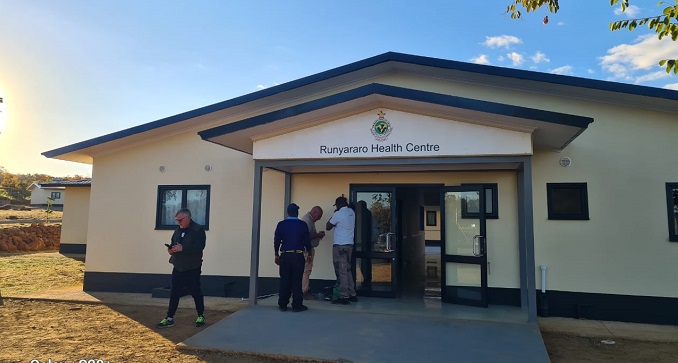
Dr Aspect Maunganidze
THE Ministry of Health and Child Care made significant strides in improving health outcomes last year.
Notable developments were in infrastructure development, acquisition of medical equipment, development of human resources, epidemic and disease control, HIV/AIDS and health financing, among other areas.
The ministry looks forward to continued and accelerated improvements to health facilities across the country.
Key priorities shall be in the following areas: improved domestic financing, implementation of the Health Workforce Strategy, acquisition of modern medical equipment, digitalisation of health systems, infrastructure development and improved access to medicines and sundries.
Below are highlights of the ministry’s achievements and prospects for 2025.
Infrastructure
The ministry has initiated construction of new health facilities and refurbishment of existing ones for better service delivery to the people of Zimbabwe.
Examples include completion of the Runyararo Health Centre in Chimanimani and Mataga Hospital in Mberengwa, as well as construction of the National Tuberculosis Reference Laboratory at Mpilo Central Hospital.
The ministry has managed to solarise more than 1 000 health facilities across the country.
This ensures uninterrupted power supply at the facilities, hence increasing theatre time and guaranteeing the potency of vaccines and medicines.
A total of 94 pharmacies have been completed, with 26 pending completion.
Key projects included the construction of oxygen plant rooms at Lupane Provincial Hospital and Chinhoyi Provincial Hospital, which is underway.
The two projects are, on average, 85 percent complete.
This gives the ministry the capacity to generate its own oxygen, which has cost huge amounts since it is currently being purchased from private players.
Medical equipment
The ministry has installed X-ray machines at 14 health facilities across the country.
This has significantly improved access to diagnostic services for many patients.
Moreover, the sophisticated cancer machines at both Parirenyatwa Group of Hospitals and Mpilo Central Hospital were successfully repaired in 2024.
Parirenyatwa Group of Hospitals resumed radiotherapy and so far, no challenges have been reported. At the same time, Mpilo Central Hospital is expected to resume the service anytime soon.
A lot of other equipment have been purchased and distributed to health facilities across the country. These include incubators, monitors and anaesthetic machines.
Human resources for health
The ministry developed a Health Workforce Strategy and signed the Compact Investment Case in Human Resources for Health with its partners and other Government departments to address the shortage of critical skills in the health sector.
The main target is to double the sector’s workforce by 2030.
Epidemic and disease control
The ministry successfully responded to and controlled disease outbreaks during 2024. The country was faced with Mpox and cholera outbreaks, which the established emergency preparedness and response teams managed very well and averted loss of lives.
The ministry successfully carried out mass drug administration for bilharzia, blinding trachoma and filariasis, providing over eight million treatments across the country.
HIV/AIDS interventions
The ministry has made the country proud by achieving the 95-95-95 global target, which is still an aspiration for many countries throughout the world.
The introduction of Cabotegravir long-acting injectable pre-exposure prophlaxis (CAB-LA) as part of HIV prevention efforts was another significant milestone.
Health financing
The ministry facilitated a health financing dialogue to find ways of increasing domestic funding for health.
The Government has also increased the ministry’s budgetary allocation from 9,86 percent to 13,1 percent, which is a significant move towards the realisation of the Abuja Declaration.
Prospects for 2025
Some of the significant priorities for 2025 are as follows:
Improving domestic funding through review of the user fee policy to allow for cost recovery, expediting the National Health Insurance Bill and ring-fencing of taxes earmarked for health
Accelerating implementation of the Health Workforce Strategy and the Compact Investment Case in Human Resources for Health
Continued construction and refurbishment of health facilities
Digitalisation of health systems
Reducing maternal and perinatal mortality
Establishing mental health rehabilitation centres
Improving availability of medicines
Repairing, servicing and replacing capital equipment
The ministry would like to thank all its stakeholders for supporting it in 2024. It is the ministry’s hope that the spirit and efforts continue in 2025 as it strives to deliver its mandate to the people of Zimbabwe.
Dr Aspect Maunganidze is the Permanent Secretary in the Ministry of Health and Child Care. He was responding to questions from The Sunday Mail’s Tanyaradzwa Rusike.



 Online Reporter