Online Reporter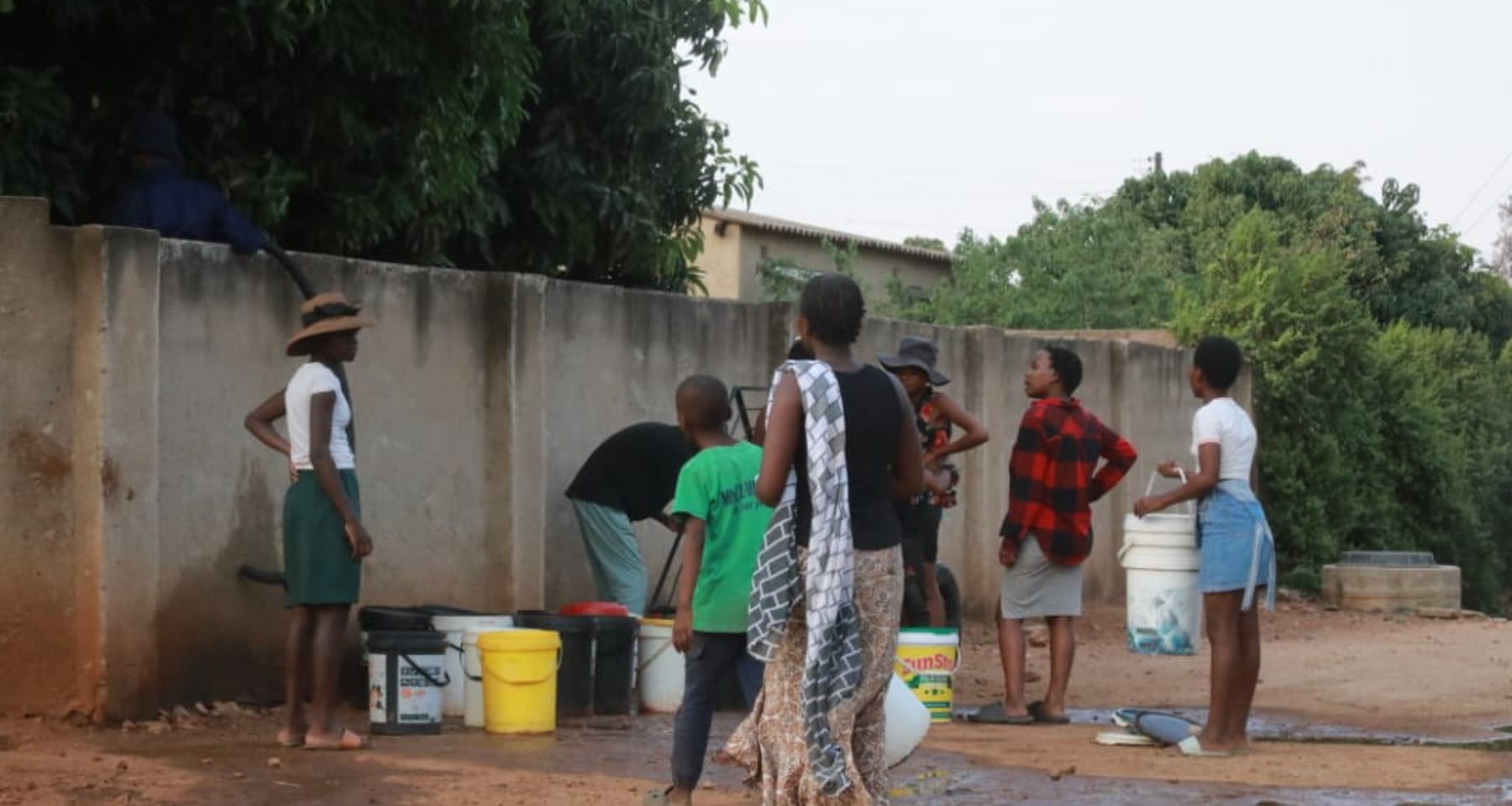
Raymond Jaravaza, [email protected]
BULAWAYO residents who are already enduring prolonged water shedding must brace for a worse situation after the Bulawayo City Council (BCC) announced that the completion of upgrade works at the Umzingwane Pump Station have been further delayed.
According to a council notice released yesterday, all parts of the city, except for the industrial areas and the central business district (CBD), will not have water until Wednesday.
Residents are already enduring long hours without water, which has deepened frustration across the city. Some suburbs have gone for days without running water, forcing residents to rely on boreholes and water bowsers.
Water shortages have long haunted the city, worsened by aging infrastructure, erratic rainfall and population growth. The situation has recently been compounded by frequent mechanical breakdowns and power outages affecting pumping stations.
Residents in high-lying suburbs such as Magwegwe, Cowdray Park, Pelandaba and Pumula have been the hardest hit, often going for more than a week without water.
“The City of Bulawayo would like to advise residents and stakeholders that the ongoing upgrade works at the Umzingwane Pump Station, which were initially scheduled for completion on Friday 10 October 2025, have been further delayed.

“This is due to the transformer systems failing the performance tests,” Town Clerk Mr Christopher Dube, said.
“The City of Bulawayo further advises of water supply interruptions to all city areas except industry and central business district (CBD) due to the Zimbabwe Electricity Transmission and Distribution Company (ZETDC) planned maintenance works, scheduled for Tuesday 14 October 2025.
“As a result, there will be no pumping to the city and subsequently no water treatment. To protect the supply and distribution reservoirs from collapsing, the City of Bulawayo will cut off water supplies with effect from Monday 13 October to Wednesday 15 October.”
Mr Dube said the restoration of supplies after the scheduled maintenance is expected to resume after pumping and stabilisation of reservoirs.
“The City of Bulawayo sincerely apologises for the inconvenience caused,” he said.
The city relies on six supply dams — Umzingwane, Inyankuni, Upper Ncema, Lower Ncema, Mtshabezi and Insiza — which often run critically low during drought periods.
The shortage has forced the local authority to implement strict water-shedding schedules, with some suburbs going for days or even weeks without water. Residents often turn to alternative sources such as boreholes, wells, or unsafe water points, raising fears of water-borne disease outbreaks.
Additionally, illegal gold panning along river catchments has worsened the crisis by disrupting inflows into dams.
Ageing sewer and water reticulation infrastructure compounds the problem, resulting in frequent sewer bursts, pipe leaks and contamination risks.
Over the years, proposals such as the National Matabeleland Zambezi Water Project (NMZWP) have been touted as long-term solutions, but implementation has been slow.