Online Reporter
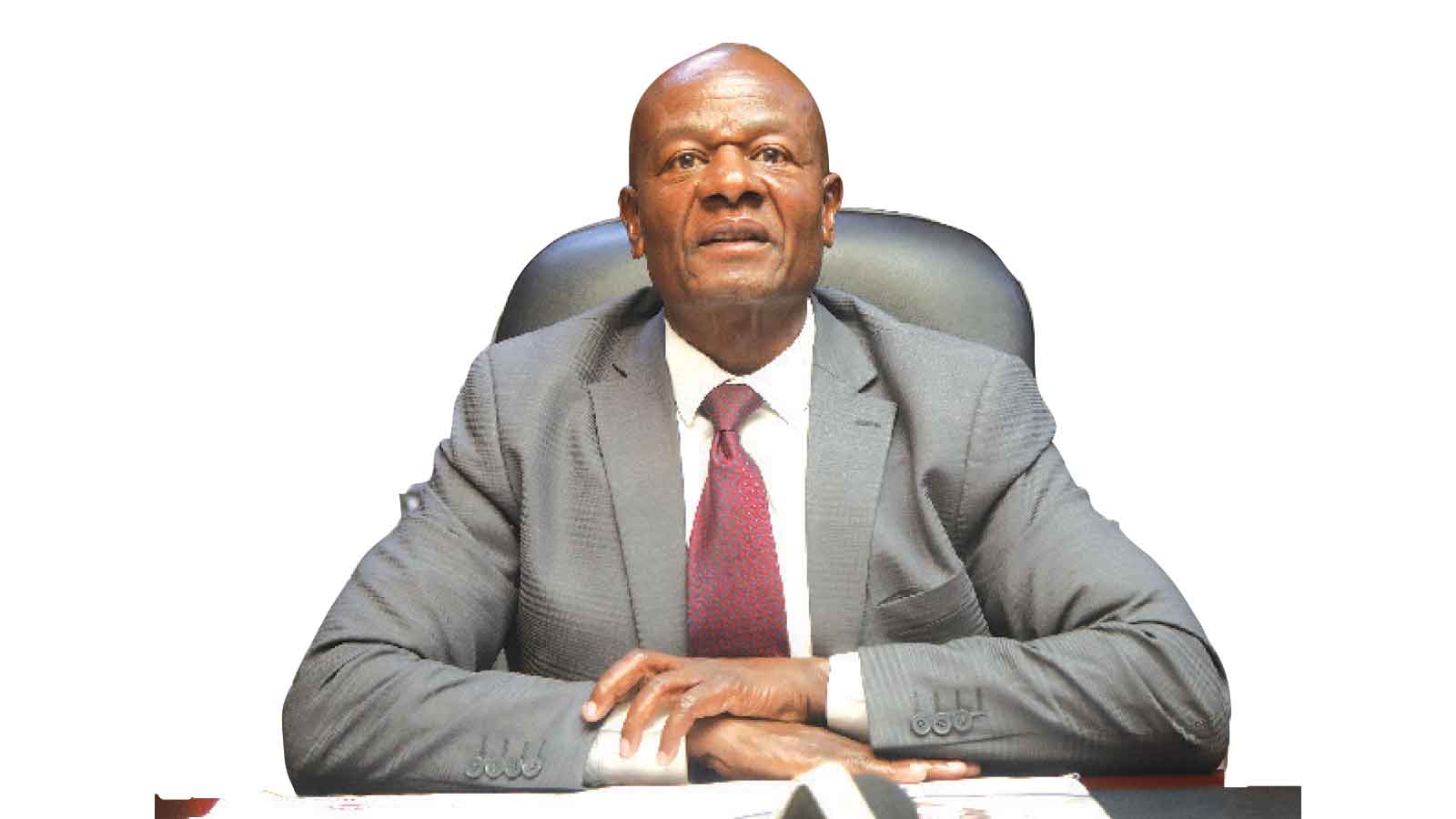
In November 2023, President Mnangagwa officially launched the blueprint “A Call to Action. No Compromise to Service Delivery” to modernise the operations of local authorities. In essence, the blueprint required every local authority to have an operative master plan by June 30, 2024 and to meet a stipulated minimum threshold of service delivery before its budget could be approved. Since last year, the President has been chairing bi-annual review meetings to assess the performance of all local authorities in a bid to improve service delivery in towns and cities. The Sunday Mail’s REMEMBER DEKETEKE sat down with Local Government and Public Works Minister DANIEL GARWE to discuss progress on implementing the blueprint. Below are excerpts from the interview.
******************
Q: Since President Mnangagwa launched the blueprint “Call to Action. No Compromise to Service Delivery” two years ago, how many local authorities have met the minimum service delivery thresholds required before budget approvals?
A: If you look at the “Call to Action”, there are many interventions that local authorities have to meet, in line with the blueprint. It is not only about budgets, but many others. Generally, most local authorities have done well in trying to meet what is stipulated in the blueprint since it was launched.
However, we have seen that some have done well on some issues, while lagging on others, and vice-versa.
Let me try to give a general synopsis of how the local authorities have fared on some of the deliverables.
On the issue of budgets, the ministry has been consistently conducting annual assessments for local authorities’ budgets. Their approval has been contingent upon the local authorities’ compliance with the requisite legal and policy provisions.
In 2024, for example, all local authorities were required to set aside 7 percent of their budgets for the building, maintenance and renovation of sports facilities, and no budget was approved without demonstrating compliance to this directive.
We have also been continuously reviewing the performance of local authorities, with the assistance of a consultant — Best Practices.
The reviews are conducted on a bi-annual basis.
Moving forward, reviews will be conducted based on the achievement of the service delivery levels outlined in the Minimum Service Delivery Standards Framework, which was launched by His Excellency, President Mnangagwa, this year.
Q: Can you provide a breakdown of which local authorities have fully complied, partially complied or failed to comply with the stipulated benchmarks outlined in the blueprint?
A: As I have said, some have done well on one aspect and others have done well on other aspects, so measurements cannot be generalised, but I am happy that while the local authorities are at different stages of implementation, all of them have already started taking measures to implement all of what is stipulated in the blueprint.
For example, on the issue of valuation of properties for rating purposes, as of now, 70 local authorities engaged the ministry to facilitate the updating of their valuation rolls, while 22 opted to procure the services of private valuers.
Of the 92 local authorities, 47 — representing 51 percent — have had their valuation rolls duly approved. A further 24 — constituting 26 percent — currently have their rolls on public display.
Fourteen (or 15 percent) are at the report compilation stage; four — representing 5,4 percent — are at the inspection stage; and 3 percent remain at the budget formulation stage. So, you can see that all our 92 local authorities are already at some stage.
Same with other deliverables; they are also at different stages, and it is not possible to rank them generally considering many factors such as size, capacity and location.
Let me also touch on the issue of leasing and selling of communal and agricultural land by local authorities.
As a ministry, we are engaging traditional leaders to address this.
The ministry continues to collaborate with village heads in the issuance of communal land permits as a means of curbing illegal settlements within communal areas.
Policy formulation regarding the leasing and disposal of land within servitudes is underway.
Capacity-building initiatives, including training sessions and awareness campaigns on land management, have been conducted for traditional leaders.
Furthermore, districts have completed the identification of all servitudes and undertaken a comprehensive review of existing leases.
Consultations have also been held with the Ministry of Lands, Agriculture, Fisheries, Water and Rural Development concerning leases administered under their purview. Educational outreach programmes have been carried out to enhance lease holders’ understanding of servitude regulations and obligations.
Q: One of the key directives was that all local authorities must have operational master plans by June 30, 2024. How many councils have produced these plans on time and how many are still lagging behind?
A: Two local authorities — Bulawayo and Mutare — had updated master plans well before the launch of the “Call to Action”.
As for the remaining 90, all have submitted their master plans to the ministry for review, with technical teams having already completed initial assessments.
We have assessed them, and, as we speak, they are now under public scrutiny. We wait for 90 days for public scrutiny to take place, after which we then start implementation.
Q: The blueprint also called for the establishment of a service delivery inspectorate. How effectively has this inspectorate been monitoring local authorities and what major compliance gaps has it identified so far?
A: The ministry has set up the inspectorate department, headed by a director, and it is now fully functional.
As stated in the blueprint, the department is key as it will provide oversight in the implementation of the Minimum Service Delivery Standards (MSDS), which were developed out of the “Call to Action”.
If you look at the MSDS policy, it has targets and parameters, which councils must meet, as we journey towards Vision 2030, and this department will be there to ensure that local authorities meet these targets and also proffer solutions where local authorities will be facing challenges.
Q: From the biannual review meetings chaired by the President, what recurring weaknesses or areas of poor performance have emerged among councils and which authorities have shown the most improvement?
A: The biggest problem featuring in most councils is provision of basic services, such as water and sanitation.
However, you might be aware that, as Government, and under the leadership of His Excellency, President Mnangagwa, we are now exploring the route of privatising some of the services.
In Harare, we have privatised solid waste management, and you can attest that since Geo Pomona started collecting garbage, there has been an improvement.
It is work in progress, but we hope to see great change.
We are also moving to water and other services.
Our aim is to ensure that this is replicated in all local authorities, so that we can move with the same pace to ensure that our cities meet targets set to achieve Vision 2030.
Q: To what extent have local authorities implemented modernisation measures, such as digital systems, revenue automation or improved urban planning, as prescribed in the 2023 intervention framework?
A: There has been a significant improvement in the adoption of enterprise resource planning (ERP) systems by local authorities, such as SAGE Evolution and LADS.
At present, 91 out of 92 local authorities have successfully deployed ERP systems to modernise their operations.
Rushinga Rural District Council remains the only authority yet to implement such a system, and the ministry will continue to extend the requisite support to ensure its eventual acquisition.
Because of this, significant progress has also been recorded in revenue collection.
Rural local authorities now have a collection efficiency of 70 percent, while their urban counterparts have reached 60 percent.
This is largely attributable to coordinated sensitisation initiatives and awareness campaigns spearheaded by the ministry, which have ensured that stakeholders nationwide appreciate and align with the imperatives of this programme.
Furthermore, councils have enhanced the utilisation of online payment platforms such as mobile money payments and various internet banking facilities, thereby improving convenience and advancing the ease-of-doing-business agenda.
However, challenges persist, such as the delayed disbursement of devolution funds, which has adversely affected both revenue collection efficiencies and the timely completion of capital projects across local authorities.
Regarding financial reporting, 24 out of 92 local authorities are current with the auditing of their financial statements, while 68 authorities remain outstanding, each at different stages of compliance.
Q: Several residents’ associations have raised concerns about erratic waste management, water supply and road maintenance. How do these concerns reflect the actual performance of councils relative to the benchmarks set in the blueprint?
A: As I alluded before, the ministry is aware of these concerns and that is why I outlined some of the interventions, which we have already taken to address them.
I talked about the privatisation of solid waste and water in Harare.
These are some of the steps we are now taking to address the gap.
As I have already said, this model will be taken to other councils so that we have improved service, as stipulated in the blueprint.
Q: Going forward, what consequences or corrective actions will be taken against local authorities that repeatedly fail to meet service delivery standards, despite clear timelines and Presidential oversight through the review meetings?
A: The blueprint is clear — One of the interventions is that in the future, the ministry will not approve budgets of local authorities that have not met what is outlined in the blueprint. We are also not approving unnecessary workshops for council officials to ensure that they channel their resources to service delivery.
In serious cases like what you saw in Harare, we have recommended that commissions of inquiry are set to probe some of the problems.
These are just a few among a host of interventions we are taking to ensure that there is improved service delivery.
But, as the parent ministry, we are not just vindictive; our teams are also sitting down with those local authorities that are failing, hear their concerns and help.
For example, as I alluded to, we are even encouraging local authorities to privatise those services for which they do not have capacity.
Our aim at the end is to ensure that local authorities take a leading role in modernising service delivery, in line with Vision 2030.